
We quizzed test takers on kidney function. 81.64% of respondents chose the best answer. We want to share this important updated information, so you can pass it on to people living with diabetes and your colleagues, plus prepare for exam success!
Before we start though, if you don’t want any spoilers and haven’t tried the question yet, you can answer below: Answer Question
Question: Evaluating kidney function is important to determine the most beneficial treatment interventions. Which of the following measurements would indicate that JR has healthy kidney function?
Answer Choices:
- Urinary albumin creatinine ratio of 30-299 mg/g with GFR of 45.
- GFR of 60 or greater and urinary albumin creatinine ratio of 2 mg/g.
- Urinary albumin creatinine ratio less than 30 mg/g and GFR of 30-45.
- Creatinine of 1.5 and urinary albumin creatinine ratio of 300 mg/g or greater.
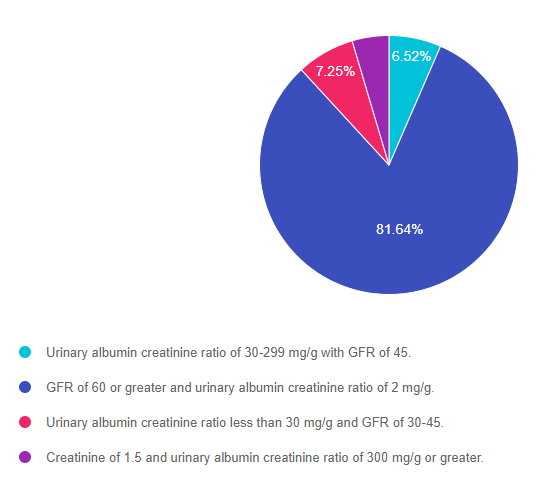
As shown above, the most common choice was option 2, the second most common answer was option 3, then option 1, and then finally option 4.
Getting to the Best Answer
Answer 1 is incorrect. 6.52% chose this answer, “Urinary albumin creatinine ratio of 30-299 mg/g with GFR of 45.” There are two major indicators of kidney health for people with diabetes, Glomerular Filtration Rate (GFR) and Urinary Albumin Creatinine Ratio (UACR). According to the ADA Standards, to have a healthy kidney function, JR would need a GFR of 60 or greater and a UACR less than 30 mg/g. Give that JR’s UACR is elevated at 30 mg/g or greater and the GFR is sluggish at 45, this is not the best answer.
Answer 2 is correct. 81.64%% of you chose this answer, “GFR of 60 or greater and urinary albumin creatinine ratio of 2 mg/g.” YES, GREAT JOB choosing the BEST answer. There are two major indicators of kidney health for people with diabetes, Glomerular Filtration Rate (GFR) and Urinary Albumin Creatinine Ratio (UACR). According to the ADA Standards, to have a healthy kidney function, JR would need a GFR of 60 or greater and a UACR less than 30 mg/g. Since JR meets both of these criteria, we can rest well knowing JR’s kidneys are healthy and flowing.
Answer 3 is incorrect. 7.25% of respondents chose this answer, “Urinary albumin creatinine ratio less than 30 mg/g and GFR of 30-45.” There are two major indicators of kidney health for people with diabetes, Glomerular Filtration Rate (GFR) and Urinary Albumin Creatinine Ratio (UACR). According to the ADA Standards, to have a healthy kidney function, JR would need a GFR of 60 or greater and a UACR less than 30 mg/g. Even though JR’s UACR is less than 30mg/g, the GFR is sluggish at 30-45. For this reason, this is not the best answer.
Finally, Answer 4 is incorrect. 4.59% chose this answer, “Creatinine of 1.5 and urinary albumin creatinine ratio of 300 mg/g or greater.” There are two major indicators of kidney health for people with diabetes, Glomerular Filtration Rate (GFR) and Urinary Albumin Creatinine Ratio (UACR). According to the ADA Standards, to have a healthy kidney function, JR would need a GFR of 60 or greater and a UACR less than 30 mg/g. In this response, we only know the creatinine level (which is elevated), but no GFR is calculated. In addition, the UACR is very elevated at 300 mg/g. For these reasons, this is not the best answer.
We hope you appreciate this week’s rationale! Thank you so much for taking the time to answer our Question of the Week and participate in this important learning activity!