Comparing the newly released 2026 Dyslipidemia Guidelines and 2026 ADA Standards of Care
Cardiovascular disease remains the leading cause of mortality in individuals with both type 1 and type 2 diabetes, emphasizing the importance of risk reduction.
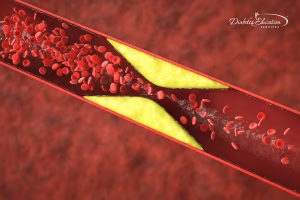
The 2026 ADA Standards & Dyslipidemia Guidelines from ACC & AHA
The current Standards of Care in Diabetes from the American Diabetes Association (ADA) recommend comprehensive risk reduction through screening, pharmacologic therapy to achieve individualized blood pressure and lipid goals, and lifestyle interventions focused on diet and physical activity.
The 2026 Dyslipidemia Guideline from the American College of Cardiology and the American Heart Association (ACC/AHA), together with guidance from multiple professional societies, provides updated recommendations for assessing cardiovascular risk assessment and treatment.
Both guidelines emphasize the importance of screening (with new additions within the ACC/AHA guidelines), pharmacologic treatment for primary and secondary prevention and highlight lifestyle management to reduce atherosclerotic cardiovascular disease (ASCVD).
The 2026 ADA Standards of Care ASCVD Recommendations
The 2026 ADA Standards of Care recommend individualized medical nutrition therapy (MNT) based on an individual’s eating patterns, preferences, age, comorbidities, treatment plan, and metabolic goals.1 Recommended patterns include Mediterranean-like diet, Dietary Approaches to Stop Hypertension (DASH), and plant-based approaches, all of which are associated with reduced ASCVD risk.
Key strategies include increasing plant-based proteins, reducing saturated fat (replacing it with monounsaturated and polyunsaturated fats), increasing dietary omega-3 fatty acids, increasing fiber rich carbohydrates (particularly soluble fiber), and increasing plant stanols or sterols.1 Limited research exists regarding ASCVD prevention specifically for individuals living with type 1 diabetes, so most recommendations are extrapolated from type 2 diabetes research, including dietary approaches, with implied benefit for both groups.1
The 2026 Dyslipidemia Guidelines from ACC/AHA Recommendations
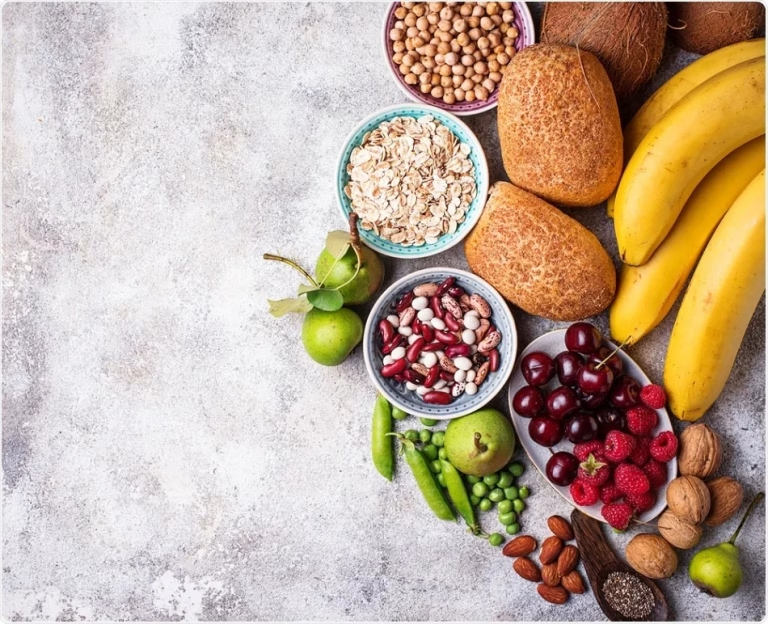
The 2026 Dyslipidemia Guideline has comparative recommendations, encouraging a dietary pattern rich in fruits, vegetables, nuts, legumes, whole grains, and fiber, while reducing saturated fat and replacing it with mono and polyunsaturated fats. It noted that dietary patterns that reduce saturated fat and increase unsaturated fat was more effective than restricting dietary cholesterol.2
The guideline reinforces the cardiovascular benefits of the Mediterranean, DASH, and vegetarian eating patterns and highlights the under-recognized Portfolio dietary pattern, which was shown to lower LDL by approximately 26 mg/dL. This dietary pattern emphasizes inclusion of 50 grams of plant-based protein per day, 45 grams of nuts, at least 10 grams of viscous fiber, and 2 grams of plant sterols per day.3
Additional guidelines are given for hypertriglyceridemia depending upon level of elevation2. If triglycerides (TGs) are 150-499, added sugars are limited to 6% of calories, total fat is 30-35%, and alcohol is to be avoided. If TGs are 500-999, added sugars are limited to <5% of calories, total fat to 20-25%, and it is recommended to abstain completely from alcohol. If TGs are over 1000 mg/dl, added sugars are eliminated, total fat is limited to 10-19%, and again, alcohol abstinence is recommended.
For all groups, 150 minutes of activity is recommended, and 5-10% weight loss is considered for individuals who may benefit. Consideration of the amount, type, and quality of carbohydrates shows efficacy in lowering TGs. In addition to LDL and TG lowering, dietary patterns aim to improve overall metabolic health, including weight reduction, reduced inflammation, and improved blood pressure and glucose control.2
The Impact of Nutrition Cannot be Underestimated
45% of CVD-related deaths are linked to poor diet quality4; however, the Dyslipidemia Guidelines call out the conundrum of individual variability in LDL response to dietary changes, particularly reductions in saturated fat intake2. While replacing saturated fats with foods high in monounsaturated and polyunsaturated fats is consistently associated with LDL-C reduction4, individual responses vary widely.5
These individual differences mean that two people on the same heart-healthy diet may see different LDL outcomes.
For example, some genetic variants affect how efficiently the body clears LDL particles.5 Inflammation and insulin resistance may influence dietary LDL lowering, since hyperinsulinemia impacts hepatic lipid synthesis, clearance, and LDL particle composition.6 Variations in bile acid synthesis and reabsorption also contribute, since bile acids play a key role in cholesterol homeostasis. Finally, overall dietary and other lifestyle patterns affect LDL response, highlighting the importance of comprehensive and personalized strategies.
Healthful Dietary Patterns Reflect the Synergy - Not single Nutrient Change
Healthful dietary patterns reflect the synergy of the overall diet, not just a single macronutrient change.
The ADA Standard of Care and the ACC/AHA Dyslipidemia guidelines align in recommending dietary patterns based on whole foods, increased fiber intake, reduced red meat and processed meat consumption, reduced saturated fat intake, and comprehensive lifestyle interventions. However, gaps remain.
More research is needed to clarify how specific individual differences influence dietary needs, how dietary patterns affect emerging lipid markers (ApoB, endothelial function, inflammation, etc.), nutrition interventions impacting cardiovascular risk reduction for individuals with type 1 diabetes, and the long-term impact of nutrition interventions over a lifetime4.
Cardiovascular risk reduction requires team-based care, addressing not only diet but social determinants of health, activity, tobacco cessation, sleep hygiene, and pharmacotherapy to manage cholesterol, blood glucose, blood pressure, and comorbidities increasing risk. As evidence evolves, diabetes health care professionals can help translate these guidelines into practical, personalized strategies to support heart health.
Christine Craig, MS, RDN, CDCES
Founder: Nutrition for Daily Living
References:
- American Diabetes Association Professional Practice Committee for Diabetes*; 10. Cardiovascular Disease and Risk Management: Standards of Care in Diabetes—2026. Diabetes Care1 January 2026; 49 (Supplement_1): S216–S245. https://doi.org/10.2337/dc26-S010
- Blumenthal, R, Morris, P, Gaudino, M. et al. 2026 ACC/AHA/AACVPR/ABC/ACPM/ADA/AGS/APhA/ASPC/NLA/PCNA Guideline on the Management of Dyslipidemia: A Report of the American College of Cardiology/American Heart Association Joint Committee on Clinical Practice Guidelines. JACC. null2026, 0 (0). https://doi.org/10.1016/j.jacc.2025.11.016
- Aley SF, Goldin J. Dietary Therapy for LDL Cholesterol Reduction: Evidence-Based Patterns for Cardiovascular Risk Management. [Updated 2026 Feb 15]. In: StatPearls [Internet]. Treasure Island (FL): StatPearls Publishing; 2026 Jan-. Available from: https://www.ncbi.nlm.nih.gov/books/NBK551722.
- Johnson SA, Kirkpatrick CF, Miller NH, Carson JAS, Handu D, Moloney L. Saturated fat intake and the prevention and management of cardiovascular disease in adults: an Academy of Nutrition and Dietetics evidence-based nutrition practice guideline. Journal of the Academy of Nutrition and Dietetics. 2023;123(12):1808-1830. doi:10.1016/j.jand.2023.07.017.
- Griffin BA, Mensink RP, Lovegrove JA. Does variation in serum LDL-cholesterol response to dietary fatty acids help explain the controversy over fat quality and cardiovascular disease risk? 2021;328:108-113. doi:10.1016/j.atherosclerosis.2021.03.024
- Petersen KS, Bowen KJ, Tindall AM, Sullivan VK, Johnston EA, Fleming JA, Kris-Etherton PM. The Effect of Inflammation and Insulin Resistance on Lipid and Lipoprotein Responsiveness to Dietary Intervention. Curr Dev Nutr. 2020 Oct 15;4(11):nzaa160. doi:10.1093/cdn/nzaa160.
Set Yourself Up With Certification Success
Get exam-ready with confidence.
Course credits through AMA PRA Category 1 Credits™, ACPE, ANCC, and CDR!
Full accreditation details are available on the registration page

Our CDCES Boot Camp Online Prep Bundle is a comprehensive, high-impact program built specifically for healthcare professionals preparing for the Certified Diabetes Care and Education Specialist (CDCES) exam who want to level up their clinical knowledge and skills.

This evidence-based study bundle is a comprehensive BC-ADM Boot Camp designed for advanced-level healthcare professionals preparing for the Board Certified in Advanced Diabetes Management (BC-ADM) exam and will also provide you with state-of-the-art information to level up your clinical practice.
What's Included?
CDCES Boot Camp
- 30+ expert-led courses from the fundamentals to the ADA standards, to test strategies and exam mastery! Includes Levels 1, 2 and 3.
- 50+ CE credits (AMA PRA Category 1™, ACPE, ANCC, CDR accredited). IN
- 400+ practice questions to test your knowledge and build confidence
- Multiple learning formats: video presentations, audio podcasts, and downloadable handouts
- 1 full year of on-demand access to study at your own pace
BC-ADM Boot Camp
- 30+ expert-led courses covering advanced diabetes management, ADA standards, medication review, insulin calculations and tech topics! Includes advanced levels 2, 3, 4.
- 50+ CE credits (AMA PRA Category 1™, ACPE, ANCC, CDR accredited).
- 400+ practice questions to test your knowledge and build BC-ADM test confidence.
- Multiple learning formats: video presentations, audio podcasts, and downloadable handouts
- 1 full year of on-demand access to study at your own pace