Subscribe
eNewsletter

Ready to get certified?
Free CDCES Coach App

eNewsletter
Free CDCES Coach App
Free Med Pocket Cards

In honor of Earth Day, April 22, 2026, we’re shining a light on the power of native plants in creating vibrant, resilient ecosystems—for wildlife and for people. See our Earth Day List of Resources Here!
Native plants—those that have evolved naturally in a specific region—play a crucial role in supporting local pollinators, birds, butterflies, and other wildlife. These plants provide essential food, pollen, and shelter that many species rely on for survival. And while the benefits to the environment are clear, cultivating native plants also boosts human well-being. Thriving ecosystems support cleaner air and water, increased biodiversity, and create opportunities for people to reconnect with nature.
When Coach Beverly moved into her home 26 years ago, she planted what many of us do—flowers and grasses that looked appealing and could withstand local heat. With an acre of land surrounding her home and office, she had space to experiment, adding a wide variety of foliage and trees for beauty and shade.
But like many at that time, she wasn’t yet aware of the importance of native plants—or how their presence (or absence) affects the animals, insects, and birds that share our space.
Over time, as she learned more about habitat loss and the plight of pollinators, she began to rethink her approach. Through research, visits to a nearby native nursery, and the help of trusted websites, she and her husband began the transformation: reshaping their land into a space that supports bees, butterflies, frogs, birds, lizards, and more. Today, their yard is not only beautiful but also an oasis for wildlife—and a model of sustainable gardening.
In addition to plants, providing a water source can be a game-changer for thirsty pollinators and wildlife. Whether it’s a birdbath, a shallow dish, or a small pond, water invites life into any garden.
Last year, Coach Beverly dug a small frog pond. Within weeks, frogs, toads, and birds made themselves at home. A year later, the pond teems with tadpoles, mosquito fish, dragonflies, water beetles, and countless other tiny creatures.
The pond has become a source of daily joy and fascination for family and visitors alike—a reminder of how deeply nature nurtures our spirits. It has also been a powerful tool for stress relief and mental well-being.
For those managing diabetes, chronic conditions, or everyday stress, spending time in nature and caring for living things can be deeply therapeutic. And it doesn’t have to be complicated.
Start small:
For the more adventurous, creating a native plant garden is a wonderful excuse to get outdoors, move your body, and take pride in a growing, living space. There’s something special about tasting a sun-warmed tomato that’s been nurtured from seed to fruit.
A great place to start is the article Audubon – 20 Common Types of Native Plants, which outlines beneficial plants found across the U.S. To make it local, cross-reference with your zip code using tools like the Native Plant Finder – NWF by the National Wildlife Federation.
For example, in Chico, California, the California Christmas-Berry is drought-tolerant and a favorite food source for local birds.
🌳 Here are a few native plant ideas to consider:
Need help sourcing plants? The Plant Native website offers a helpful directory of native nurseries throughout the U.S.
Many people feel overwhelmed or discouraged by the state of the planet. But there is also a growing awareness of our power to make change—and hope rooted in action.
Whether it’s planting a single native shrub, providing a bowl of water, or simply observing and appreciating the life around us, every effort makes a difference.
Visit www.earthday.org and Project Regeneration for more ideas and inspiration on how to help the Earth thrive.
Each person has the ability to nurture the planet and themselves, starting right at home. Native plants are a simple, beautiful way to support both biodiversity and human well-being.
So this Earth Day, consider taking that first step. Plant something. Provide water. Let nature in. And know that even the smallest actions ripple outward in meaningful ways.
🌎 Happy Earth Day from Coach Beverly and the Diabetes Education Services team.
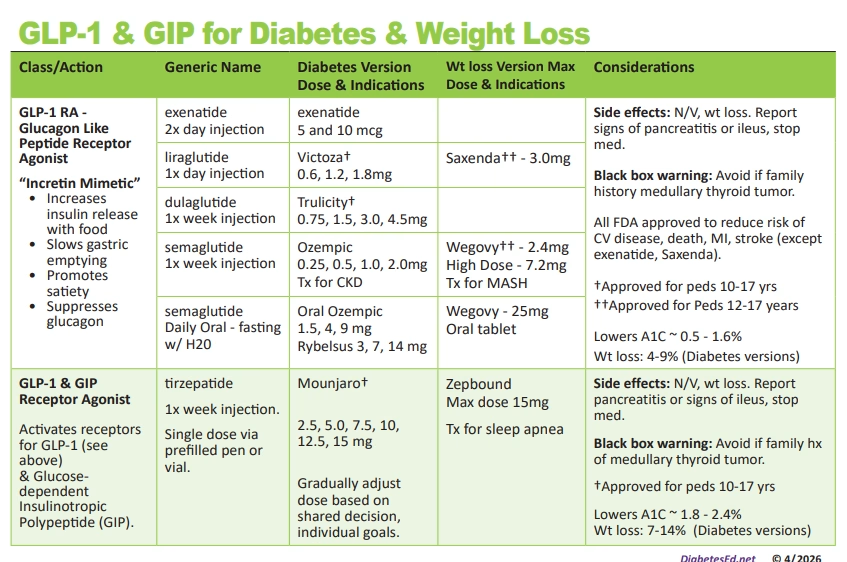
Glucagon-like peptide-1 (GLP-1) receptor agonists and GLP/GIP class of medications have seen significant advancements in the past year and 2026 promises to offer even more advancements.
The FDA granted accelerated approval in March 2026 for a high-dose (HD) injectable version of Wegovy of 7.2 mg once weekly. Until now, the highest approved dose for Wegovy—the weight loss formulation of the GLP-1 receptor agonist semaglutide—was 2.4 mg weekly.
Many individuals on the maximum 2.4 mg dose eventually reach a weight loss plateau, prompting researchers to explore whether higher dosing could extend weight reduction. Clinical trials demonstrate that increasing the dose to 7.2 mg weekly can lead to additional weight loss of up to ~20–21% from baseline, representing a meaningful advancement for those needing further support.
As expected, gastrointestinal side effects increase with higher doses, particularly, nausea, vomiting, diarrhea and early satiety. As with the other incretin medications, encourage smaller, lower fat meals that are high in nutrients. Remind individuals to keep hydrated and if the nausea persists, they may benefit from anti-nausea medications.
A major step forward in pediatric diabetes care is the recent expansion of tirzepatide (Mounjaro) into younger populations. With emerging data and regulatory progress, tirzepatide is being recognized as a potential option for youth with type 2 diabetes and extra weight, offering another powerful new tool to improve metabolic measures for young people with diabetes.
This update reflects a broader shift toward earlier, more effective interventions in youth with diabetes and elevated body weight, aligning with current guidelines that emphasize person-centered, individualized care.
A new advancement in weight management is the availability of Oral Wegovy (oral semaglutide), now with dosing options up to a maximum of 25 mg once daily. This expanded dosing offers a non-injectable alternative for individuals seeking the benefits of GLP-1–based therapy for weight management, while maintaining meaningful efficacy.
As with other oral semaglutide formulations, administration technique is critical—it should be taken on an empty stomach with a small amount of water, with no food, beverages, or other medications for at least 30 minutes to optimize absorption.
Higher-dose oral therapy may help individuals who have reached a weight plateau or who require more intensive pharmacologic support, aligning with evolving treatment strategies that prioritize person-centered care and individualized therapy.
As always, it is important to provide guidance on gradual dose escalation and management of gastrointestinal side effects, ensuring individuals are supported every step of the way.
In an effort to streamline GLP-1 therapy across formulations, Rybelsus (oral semaglutide) 1.5 mg, 4 mg, and 9 mg doses, is being rebranded as Oral Ozempic. The original Rybelsus 3, 7, and 14 doses will eventually be phased out. This naming alignment reflects the same active molecule—semaglutide—used in injectable Ozempic and Wegovy, helping reduce confusion and reinforce class familiarity among individuals and providers.
As with prior oral semaglutide formulations, proper administration remains key: it should be taken on an empty stomach with a small amount of water, with no food, beverages, or other medications for at least 30 minutes to ensure optimal absorption.
This update represents another step toward clarifying and simplifying diabetes treatment options.
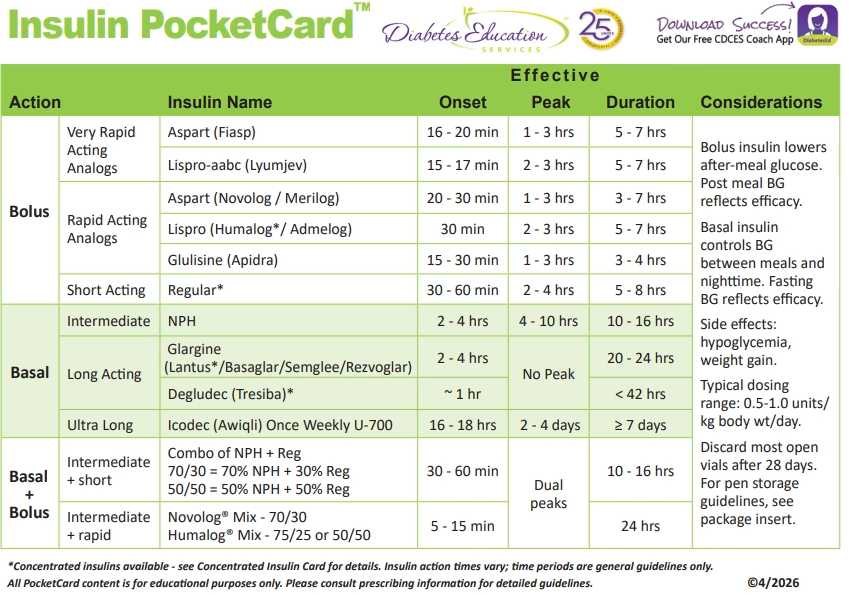
We have also updated our Insulin PocketCard to include the newly approved ultra-long-acting insulin icodec.
This once weekly insulin may be especially valuable for:
This is where your role as a healthcare professional becomes even more powerful—matching the right therapy to the right person.
We have also updated our Insulin PocketCard to include the newly approved ultra-long-acting insulin icodec.
This once weekly insulin may be especially valuable for:
This is where your role as a healthcare professional becomes even more powerful—matching the right therapy to the right person.
As healthcare professionals, staying current with these advancements allows us to:
Join us as we break down the latest in diabetes care, guidelines, and emerging therapies— you can bring confidence, clarity, and compassion to your clinical practice by joining our DiabetesEd Training Conference.

🌟Updated Schedule: ADA Boot Camp, Tech, MNT & More
Live in Beautiful San Diego – Oct 22-23, 2026
Re-Ignite your Passion & Prepare for Diabetes Certification Exams
🎓 Earn 30+ CEs: AMA PRA Category 1 Credits™, ACPE, ANCC, and CDR!
📅
2-Day Conference
Oct 22–23, 2026
⏱️
15.5 Live CEs
+ 17 bonus CEs
🏅
CDCES & BC-ADM
Exam Prep + Renewal
📍
San Diego, CA
1.7 mi from airport
The field of diabetes care is expanding and evolving rapidly. This unique training conference will keep you on the cutting edge plus prepare you for certification exams. It also fulfills the Standards of Care renewal requirement. Join us for two days of intensive education that is fun and inspiring. Add on the optional Day 3 (Engaging the Disengaged), to complete your conference exeperience.
Coach Beverly and Diana Isaacs, PharmD, BC-ADM, CDCES co-lead an exciting day that brings the ADA and AACE Standards to life. Gain fresh insights, practical tools, and a deeper understanding of the latest in person-centered diabetes care. After attending, you will be empowered to share the latest in diabetes care with your colleagues and the people in your care.
Take your knowledge to the next level with this intensive deep-dive into insulin therapy, dosing and pattern management with Dr. Diana Isaacs. Next, stay for the diabetes tech show-and-tell as Diana demonstrates the specs of the latest pumps and sensors. After lunch, nutrition whiz Christine Craig, MS, RDN, CDCES expertly details the latest in MNT and provides real strategies on translating this content to your clinical practice. You will have a chance to put it all together as Coach Beverly leads you through a series of case studies that integrates content from Day 1 and Day 2.
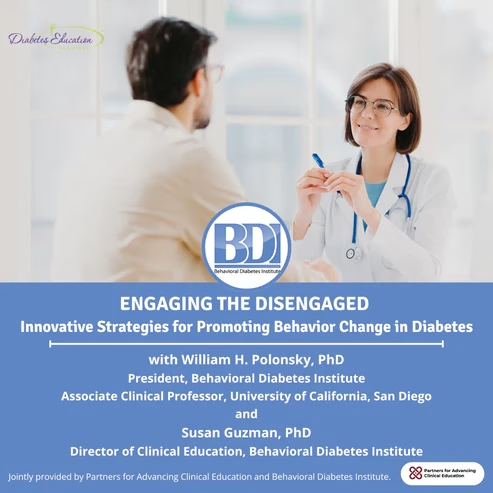
On Saturday, join this exceptional day-long program led by William H. Polonsky, PhD, CDCES & Susan Guzman, PhD (Behavioral Diabetes Institute) that reveals psychosocial forces behind diabetes self-management — tools to break through resistance and inspire change.
Read more below
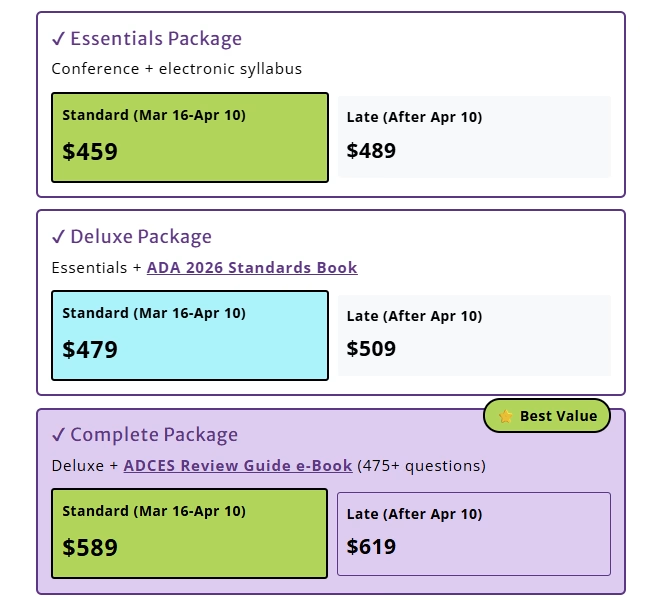
📜 Essentials
Registration
+ Printed Syllabus
$559.00
🌟 Deluxe
Essentials
+ ADA Standards Book
$589.00
🏆 Complete – Best Value!
Deluxe
+ ADCES Review Guide e-Book
$669.00

Transform how you engage patients with diabetes — master behavior change, reduce distress, and overcome medication hesitancy.
Why do so many patients know what they should do — but still struggle to do it?
The answer lies in the psychology of diabetes.
In this transformative full-day course, world-renowned experts William H. Polonsky, PhD, CDCES, and Susan Guzman, PhD, from the Behavioral Diabetes Institute reveal the hidden psychosocial forces that drive — or derail — diabetes self-management.
You’ll walk away with a completely new toolkit for breaking through patient resistance, dissolving medication hesitancy, and creating clinical encounters that actually inspire change!
Question of the Week:
RZ is 47 years old with type 2 diabetes and hypertension. RZ takes metformin 1000 mg BID, plus lisinopril 20mg daily. RZs LDL is 140 mg/dL. Based on the most recent ADA Standards, what is the LDL Cholesterol target for RZ?

What is the BEST response?
A. LDL less than 100 mg/dL.
B. LDL less than 55 mg/dL
C. Determine LDL target based on ASCVD risk
D. LDL less than 70 mg/dL
🌟Updated Schedule: ADA Boot Camp, Tech, MNT & More
Live in Beautiful San Diego – Oct 22-23, 2026
Re-Ignite your Passion & Prepare for Diabetes Certification Exams
🎓 Earn 30+ CEs: AMA PRA Category 1 Credits™, ACPE, ANCC, and CDR!
📅
2-Day Conference
Oct 22–23, 2026
⏱️
15.5 Live CEs
+ 17 bonus CEs
🏅
CDCES & BC-ADM
Exam Prep + Renewal
📍
San Diego, CA
1.7 mi from airport
The field of diabetes care is expanding and evolving rapidly. This unique training conference will keep you on the cutting edge plus prepare you for certification exams. It also fulfills the Standards of Care renewal requirement. Join us for two days of intensive education that is fun and inspiring. Add on the optional Day 3 (Engaging the Disengaged), to complete your conference exeperience.
Coach Beverly and Diana Isaacs, PharmD, BC-ADM, CDCES co-lead an exciting day that brings the ADA and AACE Standards to life. Gain fresh insights, practical tools, and a deeper understanding of the latest in person-centered diabetes care. After attending, you will be empowered to share the latest in diabetes care with your colleagues and the people in your care.
Take your knowledge to the next level with this intensive deep-dive into insulin therapy, dosing and pattern management with Dr. Diana Isaacs. Next, stay for the diabetes tech show-and-tell as Diana demonstrates the specs of the latest pumps and sensors. After lunch, nutrition whiz Christine Craig, MS, RDN, CDCES expertly details the latest in MNT and provides real strategies on translating this content to your clinical practice. You will have a chance to put it all together as Coach Beverly leads you through a series of case studies that integrates content from Day 1 and Day 2.
On Saturday, join this exceptional day-long program led by William H. Polonsky, PhD, CDCES & Susan Guzman, PhD (Behavioral Diabetes Institute) that reveals psychosocial forces behind diabetes self-management — tools to break through resistance and inspire change.
Read more below
📜 Essentials
Registration
+ Printed Syllabus
$559.00
🌟 Deluxe
Essentials
+ ADA Standards Book
$589.00
🏆 Complete – Best Value!
Deluxe
+ ADCES Review Guide e-Book
$669.00
Transform how you engage patients with diabetes — master behavior change, reduce distress, and overcome medication hesitancy.
Why do so many patients know what they should do — but still struggle to do it?
The answer lies in the psychology of diabetes.
In this transformative full-day course, world-renowned experts William H. Polonsky, PhD, CDCES, and Susan Guzman, PhD, from the Behavioral Diabetes Institute reveal the hidden psychosocial forces that drive — or derail — diabetes self-management.
You’ll walk away with a completely new toolkit for breaking through patient resistance, dissolving medication hesitancy, and creating clinical encounters that actually inspire change!
Get exam-ready with confidence.
Course credits through AMA PRA Category 1 Credits™, ACPE, ANCC, and CDR!
Full accreditation details are available on the registration page

Our CDCES Boot Camp Online Prep Bundle is a comprehensive, high-impact program built specifically for healthcare professionals preparing for the Certified Diabetes Care and Education Specialist (CDCES) exam who want to level up their clinical knowledge and skills.

This evidence-based study bundle is a comprehensive BC-ADM Boot Camp designed for advanced-level healthcare professionals preparing for the Board Certified in Advanced Diabetes Management (BC-ADM) exam and will also provide you with state-of-the-art information to level up your clinical practice.
Question of the Week:
A 62-year-old person with type 2 diabetes has an A1C of 9.1% despite metformin, SGLT-2i and a GLP-1 receptor agonist. You are considering once-weekly insulin icodec when it becomes available. Which of the following is the most appropriate rationale for selecting insulin icodec (Awiqli) therapy?
What is the BEST response?
A. Eliminates the risk of hypoglycemia compared to daily basal insulin.
B. Provides superior A1C reduction compared to all daily basal insulins.
C. Does not require dose titration due to its long duration of action.
D. Reduces injection frequency while improving time-in-range.
Walk away with tools you can apply immediately in clinical practice or while preparing for CDCES or BC-ADM exams. From insulin dosing protocols to behavior change strategies that work in the real world—this content bridges theory and practice.
Get exam-ready with confidence.
Course credits through AMA PRA Category 1 Credits™, ACPE, ANCC, and CDR!
Full accreditation details are available on the registration page
Our CDCES Boot Camp Online Prep Bundle is a comprehensive, high-impact program built specifically for healthcare professionals preparing for the Certified Diabetes Care and Education Specialist (CDCES) exam who want to level up their clinical knowledge and skills.
This evidence-based study bundle is a comprehensive BC-ADM Boot Camp designed for advanced-level healthcare professionals preparing for the Board Certified in Advanced Diabetes Management (BC-ADM) exam and will also provide you with state-of-the-art information to level up your clinical practice.
Question of the Week:
KC is a 62-year-old individual with type 2 diabetes who presents for follow-up after initiating a weight loss program 3 months ago. They report consuming approximately 1,000–1,100 kcal/day and have lost 12% of their body weight, with a current rate of weight loss averaging 5% in the last month.
Their diet excludes most grains and fruits, and they report occasional fatigue and constipation. Current medications include metformin, tirzepatide, and atorvastatin.
Based on current standards of care, what is the most appropriate response regarding nutrition and weight changes?
What is the BEST response?
Get exam-ready with confidence.
Course credits through AMA PRA Category 1 Credits™, ACPE, ANCC, and CDR!
Full accreditation details are available on the registration page
Our CDCES Boot Camp Online Prep Bundle is a comprehensive, high-impact program built specifically for healthcare professionals preparing for the Certified Diabetes Care and Education Specialist (CDCES) exam who want to level up their clinical knowledge and skills.
This evidence-based study bundle is a comprehensive BC-ADM Boot Camp designed for advanced-level healthcare professionals preparing for the Board Certified in Advanced Diabetes Management (BC-ADM) exam and will also provide you with state-of-the-art information to level up your clinical practice.
Join national experts including Dr. Diana Isaacs (Cleveland Clinic), Beverly Thomassian (30+ years of experience), and Christine Craig for high-impact, virtual learning—no travel required.
✔ Learn from National Experts — Anywhere
Get the same expert-level instruction you’d receive in person, delivered live to your home or office.
✔ Interactive & Flexible
Walk away with tools you can apply immediately in clinical practice or while preparing for CDCES or BC-ADM exams. From insulin dosing protocols to behavior change strategies that work in the real world—this content bridges theory and practice.
Did you know that in ancient times, diabetes was identified by the sweet taste of a person’s urine?
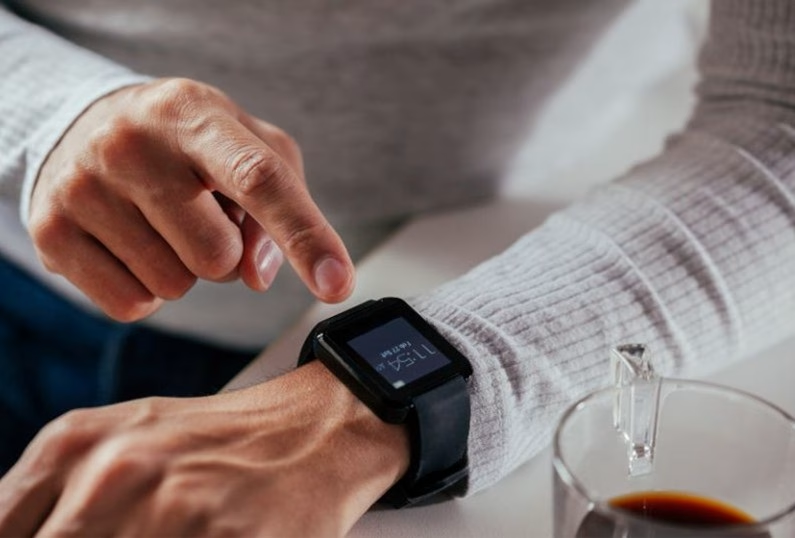
Thankfully, science has come a long way from this ancient practice! The introduction of fingerstick blood glucose meters in the 1970s and continuous glucose monitors (CGMs) in the early 2000’s marked significant advancements in blood glucose monitoring. With more than 800 million people worldwide living with diabetes, interest in pain-free glucose testing is growing.1
Although current CGMs and fingerstick methods still require skin penetration, needle-free alternatives are being promoted, prompting many questions. Let’s discuss how healthcare professionals can address these products using evidence-based information.
Noninvasive (NI) glucose monitoring is a method of measuring blood glucose that does not involve breaking the skin. NI glucose monitoring technology under development includes: 2
FDA approval is granted for glucose monitoring devices used for either medical or lifestyle management. FDA approval for medical management is based on sufficient evidence of safety and accuracy for people living with diabetes. FDA approval ensures adequate evidence to guide treatment decisions, such as insulin dosing. FDA approval for lifestyle use applies to individuals who do not use the device for the medical management of diabetes and who are not on insulin therapy.
Currently, no NI glucose monitoring devices have received FDA approval for medical management of diabetes. In 2024, the FDA issued a safety announcement that NI glucose devices could pose a possible threat to those with diabetes, as the FDA has not approved them.3 Numerous companies are currently in the research process to advance NI glucose monitoring devices toward FDA approval.
When considering noninvasive glucose monitoring, it’s essential to understand how these devices fit into everyday diabetes care. Despite the lack of FDA approval, clients can purchase NI glucose monitoring devices without a prescription. Clients may be using these before the healthcare provider is ever aware.
Individuals living with diabetes should be aware that many factors, including hydration status, skin characteristics, temperature, and movement, can affect NI glucose device readings. These devices may be better suited for detecting general trends but are not approved for making real-time treatment decisions. As diabetes healthcare professionals, we can provide guidance on the use of FDA-approved devices to verify readings and inform treatment decisions. Arming our clients with this information can help avoid frustration and unsafe treatment decisions.
Diabetes healthcare providers often approach noninvasive (NI) glucose monitoring with cautious optimism. While the appeal of “no more pokes” is understandable, clients may be influenced by strong marketing claims. As providers, our role is to meet clients where they are to start the conversation.
As with any other FDA-approved diabetes technology, not every device is the right fit for everyone. Ask clients about their diabetes goals, barriers, and assess their digital literacy. Address what clients are seeing on social media and online ads, and how these NI devices compare to current FDA-approved blood glucose monitoring technology.
Here are some helpful tips that can further the conversation:
As technology advances, we hope to see accurate and safe NI glucose monitoring options for those living with diabetes. Until then, we can partner with our clients to provide education and clinical insights on the latest trends in diabetes technology.
References:
Get exam-ready with confidence.
Course credits through AMA PRA Category 1 Credits™, ACPE, ANCC, and CDR!
Full accreditation details are available on the registration page
Our CDCES Boot Camp Online Prep Bundle is a comprehensive, high-impact program built specifically for healthcare professionals preparing for the Certified Diabetes Care and Education Specialist (CDCES) exam who want to level up their clinical knowledge and skills.
This evidence-based study bundle is a comprehensive BC-ADM Boot Camp designed for advanced-level healthcare professionals preparing for the Board Certified in Advanced Diabetes Management (BC-ADM) exam and will also provide you with state-of-the-art information to level up your clinical practice.
Join national experts including Dr. Diana Isaacs (Cleveland Clinic), Beverly Thomassian (30+ years of experience), and Christine Craig for high-impact, virtual learning—no travel required.
✔ Learn from National Experts — Anywhere
Get the same expert-level instruction you’d receive in person, delivered live to your home or office.
✔ Interactive & Flexible
Walk away with tools you can apply immediately in clinical practice or while preparing for CDCES or BC-ADM exams. From insulin dosing protocols to behavior change strategies that work in the real world—this content bridges theory and practice.
For last week’s practice question, we quizzed participants on who needs to have a bone density evaluation according to the 2026 ADA Standards. 47% of respondents chose the best answer. We want to clarify and share this important information, so you can pass it on to people living with diabetes and your colleagues, plus prepare for exam success!
Before we start though, if you don’t want any spoilers and haven’t tried the question yet, you can answer it below:
According to the 2026 ADA Standards of Care, what individuals should be recommended to have a bone density evaluation using dual-energy X-ray absorptiometry to evaluate for bone loss?
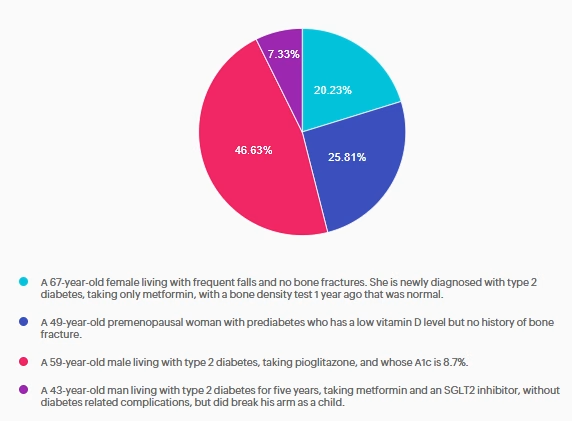
Answer A is incorrect: 20% chose this answer, “A 67-year-old female living with frequent falls and no bone fractures. She is newly diagnosed with type 2 diabetes, taking only metformin, with a bone density test 1 year ago that was normal.” This answer is tempting but incorrect. Per the 2026 ADA Standards of Care, she does meet criteria for assessing bone health due to her diagnosis of type 2 diabetes and risk factor of frequent falls, but she had a bone density test 1 year ago. Currently, the recommendation is to re-evaluate the bone density test in 2-3 years.
Answer B is incorrect: 26% chose this answer, “A 49-year-old premenopausal woman with prediabetes who has a low vitamin D level but no history of bone fracture.” This answer is incorrect. Per the 2026 ADA Standards of Care, it is recommended to assess bone health in postmenopausal women with other diabetes specific risk factors. This risk factor does not include low vitamin D levels.
Answer C is correct: 47% chose the correct answer, GREAT JOB. “A 59-year-old male living with type 2 diabetes, taking pioglitazone, and whose A1c is 8.7%.” Per the 2026 ADA Standards of Care, bone health needs to be assessed in men aged ≥50 years with type 2 diabetes and an A1c >8%. He is also on pioglitazone, a thiazolidinedione, which is another risk factor for low bone density.
Answer D is incorrect: 7% chose this answer, “A 43-year-old man living with type 2 diabetes for five years, taking metformin and an SGLT2 inhibitor, without diabetes related complications, but did break his arm as a child.” This answer is incorrect. Per the 2026 ADA Standards of Care, he has no diabetes-specific risk factors for bone loss. Diabetes duration is less than 10 years, he has no diabetes related complications such as peripheral or autonomic neuropathies, he is not on a high-risk medication for bone loss, and he has not had a bone fracture as an adult.
We hope you appreciate this week’s rationale! Thank you so much for taking the time to answer our Question of the Week and participate in this fun learning activity!
Get exam-ready with confidence.
Course credits through AMA PRA Category 1 Credits™, ACPE, ANCC, and CDR!
Full accreditation details are available on the registration page
Our CDCES Boot Camp Online Prep Bundle is a comprehensive, high-impact program built specifically for healthcare professionals preparing for the Certified Diabetes Care and Education Specialist (CDCES) exam who want to level up their clinical knowledge and skills.
This evidence-based study bundle is a comprehensive BC-ADM Boot Camp designed for advanced-level healthcare professionals preparing for the Board Certified in Advanced Diabetes Management (BC-ADM) exam and will also provide you with state-of-the-art information to level up your clinical practice.
Join national experts including Dr. Diana Isaacs (Cleveland Clinic), Beverly Thomassian (30+ years of experience), and Christine Craig for high-impact, virtual learning—no travel required.
✔ Learn from National Experts — Anywhere
Get the same expert-level instruction you’d receive in person, delivered live to your home or office.
✔ Interactive & Flexible
Walk away with tools you can apply immediately in clinical practice or while preparing for CDCES or BC-ADM exams. From insulin dosing protocols to behavior change strategies that work in the real world—this content bridges theory and practice.
Test your knowledge.
In diabetes care, what is the reported percentage
of patients who have missed or not returned for follow-up care due to feelings of shame, blame, or judgment?
All hours earned count toward your CDCES Accreditation Information