
Subscribe
eNewsletter

Ready to get certified?
Free CDCES Coach App

eNewsletter
Free CDCES Coach App
We are almost there! With 2080 followers and 1976 likes, we are 24 likes away from our Facebook Live with Coach Beverly!

Are there questions about diabetes or the Diabetes Certification Exam that you are dying to ask??
Good News! Coach Beverly adores and appreciates our Facebook followers and community. Our goal is to reach 2000 likes by April 1st (We got this).
Coach Beverly will answer questions on Facebook Live – April 1st, 2019 at 12:00 p.m. (PST). At almost 2000 Facebook likes (only 24 more to go) – we are getting ready to celebrate!
In celebration of reaching this goal, she is going to have a Facebook LIVE Q&A Session for 30 minutes on April 1st (no fooling) from 12:00 p.m. to 12:30 p.m. PST.
We hope you can join us to get your questions answered.
Just type in your question here, and Coach Beverly will do her best to answer your question within the half hour time frame!
But, this can only happen if we reach 2000 likes by April 1st!
We hope to see you there and invite your friends and colleagues join our community.Join Us on Facebook
With affection,
Coach Beverly and Anne

A new screening may be able to detect Type 1 Diabetes risk in infants. T1DRGS2 is a new risk score test that has shown twice the efficiency of all existing tests for Type 1 in babies.
“Type 1 has a strong genetic element that was not measurable in the past.” Richard Oram, a researcher at University of Exeter, said in a press release. “Measurement of the type 1 diabetes genetic risk score could help predict who will develop the condition from early life could help with research into potential early life interventions, and with classifying diabetes correctly at diagnosis.”
The current test for Type 1 is both expensive and hard to do with children. This new test detects development even into adulthood and the difference between Type 1 and 2. The researchers examined genetic interactions in over 65,000 people with Type 1 diabetes.
The test allows for early detection that can help parents look for symptoms. Also those with the greatest risk of developing in the future, can participate in studies to delay or even prevent the diagnosis.
“It’s exciting to see the power of genetics being harnessed to help predict who might develop type 1 diabetes in the future, particularly from a young age. If successful, this approach could help to reduce someone’s risk of being misdiagnosed or developing complications during diagnosis,” said Anna Morris, Assistant Director of Research Strategy and Partnership at Diabetes UK and study author.
This research can also provide insight on what we can do to prevent the disease or at least slow down it’s progress.
To learn more: New screening could accurately predict type 1 diabetes risk in babies – UPI
Sign up for Diabetes Blog Bytes – we post one daily Blog Byte from Monday to Friday. And of course, Tuesday is our Question of the Week. It’s Informative and FREE! Sign up below!
[yikes-mailchimp form=”1″]

According to the National Credentialing Board for Diabetes Educators, (NCBDE) the CDCES® Exam Content Outline will be updated starting July 1st, 2019.
To celebrate this update, we will be basing our 2019 Questions of the Week on this content outline. (See a snippet of the NCBDE content outline to the left or click on it to see the complete outline.)
These targeted questions are designed to help assess your knowledge of the topics critical to diabetes educators.
In addition, if you are preparing to take the exam, we strongly encourage you to go through each of these sub-categories and rate your knowledge on a scale of 1-5. Based on this self-assessment, spend the majority of your study time on the topic areas you are least comfortable with. This approach will help you become familiar with the exam content and to use your limited study time wisely.
Assessment of the Diabetes Continuum – Learning
For this question in this series, we focus on the Assessment Section, under learning. Here is the question that addresses learning goals and needs of the learner. Good luck!
Ask Coach Beverly a Question on

Are there questions about diabetes or the Diabetes Certification Exam that you are dying to ask?
Good News! Coach Beverly adores and appreciates our Facebook followers and community. Our goal is to reach 2000 followers by April 1st (We got this).
Almost 2000 Facebook Friends (only 40 more to go) – We are getting ready to celebrate.
In celebration of reaching this goal, she is going to have a FaceBook LIVE Q&A Session for 30 minutes on April 1st (no fooling) from 12:00 p.m. to 12:30 p.m.
We hope you can join us to get your questions answered.
Just type in your question here, and Coach Beverly will do her best to answer your question within the half hour time frame!
But, this can only happen if we reach 2000 followers by April 1st!
We hope to see you there and invite your friends and colleagues join our community.
With affection,
Coach Beverly and Anne
Some of my favorite people are RDs. I’ve been blessed to team teach with many inspiring, kind, knowledgeable and dynamic dietitians over a span of more than 20 years. They are trailblazers and advocates for improving the health of our communities, in both the inpatient and outpatient settings. They have the best teaching tools (who doesn’t love the rubber chicken, food samples and empty cereal boxes) and a breadth of knowledge that they freely share with patients and colleagues alike.

Dana Armstrong, RD, CDCES (pictured far left) is a leader and an innovator in the field of diabetes, nutrition, and technology. Dana is a nationally recognized speaker, consultant, and the Medical Clinic Director of the Diabetes Center/Salinas Valley Medical Clinic.
I love that Dana pushes boundaries, questions the status quo and is a fierce advocate for people living with diabetes. We love you Dana and appreciate the decades of dedication and service you have contributed to our community.
Meet Dana in person at our Diabetes Educator Course next Month. Dana teaches the Insulin Pump Workshop.
Get the latest information on insulin pumps and continuous glucose monitoring from an expert. This workshop will answer your questions and provide valuable insights.
Learn more about the Diabetes Educator Course – Sacramento, CA
Sign up for Diabetes Blog Bytes – we post one daily Blog Byte from Monday to Friday. And of course, Tuesday is our Question of the Week. It’s Informative and FREE! Sign up below!
[yikes-mailchimp form=”1″]
According to the National Credentialing Board for Diabetes Educators, (NCBDE) the CDCES® Exam Content Outline will be updated starting July 1st, 2019.
To celebrate this update, we will be basing our 2019 Questions of the Week on this content outline. (See a snippet of the NCBDE content outline to the left or click on it to see the complete outline.)
These targeted questions are designed to help assess your knowledge of the topics critical to diabetes educators.
In addition, if you are preparing to take the exam, we strongly encourage you to go through each of these sub-categories and rate your knowledge on a scale of 1-5. Based on this self-assessment, spend the majority of your study time on the topic areas you are least comfortable with. This approach will help you become familiar with the exam content and to use your limited study time wisely.
Assessment of the Diabetes Continuum – Learning
For this question in this series, we focus on the Assessment Section, under learning. Here is the question that addresses learning goals and needs of the learner. Good luck!
Sign up for Diabetes Blog Bytes – we post one daily Blog Byte from Monday to Friday. And of course, Tuesday is our Question of the Week. It’s Informative and FREE! Sign up below!
[yikes-mailchimp form=”1″]
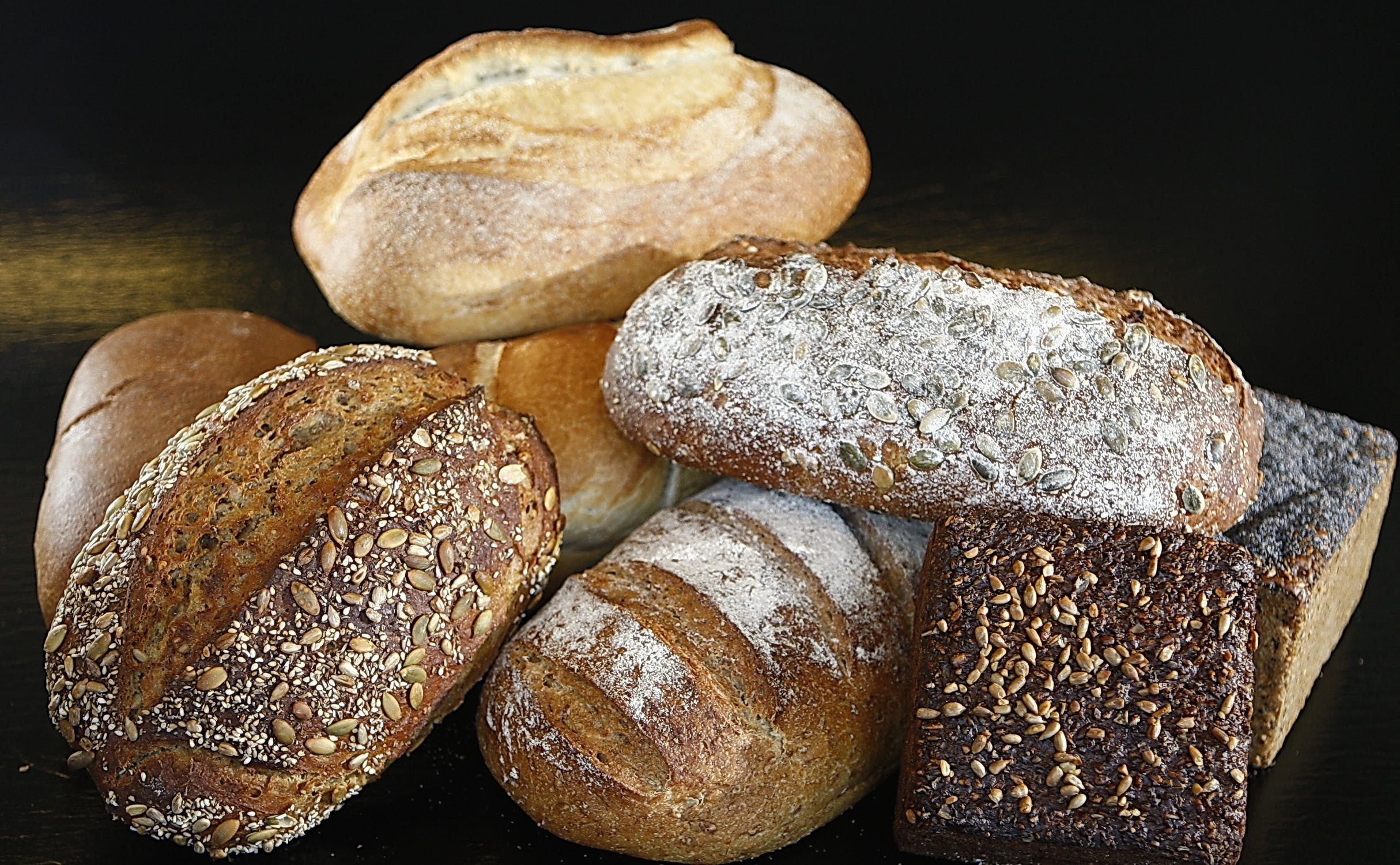 The trend of a low-carb or even no-carb diet has been increasing in popularity over the past decade. But have we been accidentally stereotyping our favorite foods? What if we could enjoy our slices of bread and pasta after all?
Many are enticed by the promise of quick weight loss that seems to come with cutting out carbs. However, this can be tricky to stick to long-term. On average, 50% of calories consumed in the adult American diet are from carbohydrates. And the idea of cutting out carbs completely would include the fundamentals of a healthy diet like fruits, vegetables, legumes, and whole grains.
So why do all carbs seem to get a bad reputation?
Dr. David Ludwig, professor of nutrition at the Harvard School of Public Health and the co-director of the New Balance Foundation Obesity Prevention Center Boston Children’s Hospital, sought to better understand and explain the varying types of carbs and how they can affect your health.
Bread and pasta are often demonized, however, it is much more complex than that! “When you eat a whole-kernel, minimally processed grain … they take a while to digest. Blood sugar rises relatively more gently. You produce less insulin calorie for calorie,” Ludwig explains.
“Slow” carbs like whole grains, fruits, vegetables, and legumes, take a while to digest and are often rich in nutrients like fiber, zinc, magnesium and Vitamin E. However, when you eat white bread or another carbohydrate made from refined starch, it can raise your blood sugars sending a signal to your brain to store fat and leave you hungry.
Currently, Americans are likely to lack whole grain consumption and actually exceed the recommended amount of refined grains. Fiber-rich foods, like whole grain bread, leave you feeling full for longer with their fiber, fat, and protein. You don’t have to cut out all carbs, just the highly processed or refined.
To learn more: You Don’t Have To Go No-Carb: Instead, Think Slow Carb – NPR


| Meet Tracey Brown, MBA, BChE | CEO, American Diabetes AssociationTracey is the new CEO of the American Diabetes Association. Ms. Brown started her career at Procter & Gamble as a chemical engineer in research and development, and in process engineering.Ms. Brown is a Keynote at our Women Leaders Conference. Read more… |
After receiving an MBA from Columbia University, she became a business growth driver and an inspiring leader using, data, digital and technology to grow revenues, increase operating income and drive transformation.
Following a thorough national search for a new CEO, the ADA found Ms. Brown to be a talented business leader with deep strategic and operational expertise, as well as significant experience in consumer engagement. At the same time, as an engineer, she is a careful, analytical thinker who values and makes data-driven decisions.
According to Ms, Brown, “All of the skills and experience that I have gained from the for-profit world have been cultivated for such a time as this. My purpose, passion and this position have aligned, and I am honored to be joining an organization as valuable as the ADA. It changes lives for the better.”
We are honored to have Ms. Brown join us as a speaker at the first annual Women Leaders Conference.
Join us to hear more from luminaries like Tracey Brown
Women Leaders in Diabetes Conference
San Francisco, CA | May 10th, 2019 – Get fired up & Earn 7.5 CEs
Early Bird Registration Fee, Extended until March 15th: $219