
Subscribe
eNewsletter

Ready to get certified?
Free CDCES Coach App

eNewsletter
Free CDCES Coach App
 Many people experience anxiety on the Sunday night before returning to work on Monday. For decades, health professionals believed that unexpected death and cardiac arrest were more common on Monday mornings. This increased risk was thought to be due to increased cortisol, the stress hormone, as people started their work week. Increased cortisol levels can drive up heart rate, blood pressure and glucose levels.
However, Monday mornings are no longer the prime time for cardiac arrest! Due to the increased pace and pressure of our current work world, the risk of cardiac arrest has expanded to anytime of the day or week. A recent study conducted by Heart Rhythm suggests that the change of cardiac arrest frequency is more common due to stress occurring consistently through out each day.
“We now live in a fast-paced, ‘always on’ era that causes increased psycho-social stress and possibly, an increase in the likelihood of sudden cardiac arrest,” the study’s lead investigator Dr. Sumeet Chugh, a professor of medicine and medical director of the Heart Rhythm Center, Smidt Heart Institute at Cedars-Sinai, said in a statement.
Being a diabetes educator can be challenging. It is important for us to heed this warning and remember to manage our stress through out the week. Please enjoy our FREE Mindfulness and Compassion in the Diabetes Encounter webinar. Heather Nielsen, MA, LPC, CHWC will provide diabetes educators with helpful hands-on strategies to incorporate mindfulness and self-compassion into our daily lives and professional practice.
To learn more: “Always Stressed: Cardiac Arrest No Longer Peaks on Monday Morning” by Healthline
Sign up for Diabetes Blog Bytes – we post one daily Blog Byte from Monday to Friday. And of course, Tuesday is our Question of the Week. It’s Informative and FREE! Sign up below!
[yikes-mailchimp form=”1″] This Mindful Monday we are celebrating art! Being mindful includes taking a moment to appreciate beauty, creativity and art.
The San Francisco Museum of Modern Art hold over 34,000 pieces at any given time. However, can only display 2,000 of those pieces. In an effort to share more of their pieces, they have created an sms (text) system that will send a piece of art!
“Send an emoji or describe a mood via text and the museum will shoot back a picture of one of its artworks.”
You simply text 572-51 with the words “send me” followed by a keyword, a color, or even an emoji and you’ll receive a related artwork image and caption via text message from SFMOMA.
For example, today I texted the number “Send me flowers” and received the following message >>
Enjoy something beautiful today wherever you may be!
Learn more: “Tight On Wall Space, SFMOMA Will Text Its Art To You Instead” by NPR
Sign up for Diabetes Blog Bytes – we post one daily Blog Byte from Monday to Friday. And of course, Tuesday is our Question of the Week. It’s Informative and FREE! Sign up below!
[yikes-mailchimp form=”1″]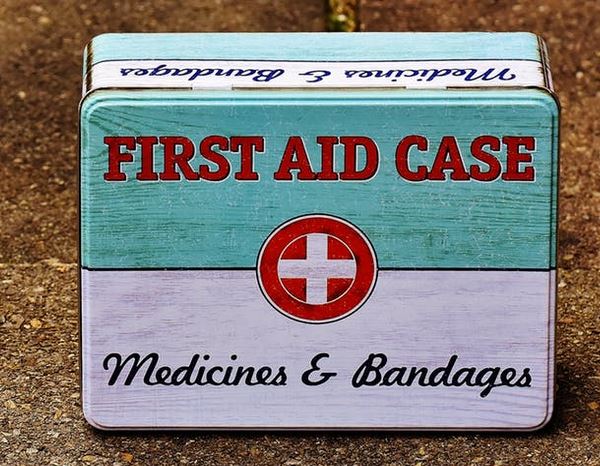 Diabetes and Disaster Preparedness
With an increasing amount of natural and man-made disasters, it is important to help ourselves and our communities to be prepared. In case of sudden evacuations, having the necessary medical and self-care items packed and ready to go is imperative.
Resources for People with Diabetes
Resource For Health Care Providers:
Looking for other ways to contribute? Camp Fire Donations Needed | How you can help
Thank you again for all your kindness and concern!
 A study by the Proceedings of the National Academy of Science has found that short bouts of exercise might not only be linked to decreased risk of chronic diseases, but increased memory as well.
This particular study involved 36 young men and women who all achieved adequate health status. Each subject was asked to participate in ten minutes of relaxed cycling on a stationary bike. All participants were then asked to undergo memory testing directly following physical activity.
Sixteen of the participants’ brain scans demonstrated a trigger of communication between the hippocampus and cortical brain regions directly following exercise. This particular piece of information is interesting considering both of these regions play a key role in processing memories.
The length of the time that this trigger occurs is not yet known though the lead scientist on the study has reason to believe that it may last at least 15 minutes.
For more information on exercise and improved memory, visit short bout of exercise might boost your memory.
Contributed By: Sofia Sepulveda
Sign up for Diabetes Blog Bytes – we post one daily Blog Byte from Monday to Friday. And of course, Tuesday is our Question of the Week. It’s Informative and FREE! Sign up below!
[yikes-mailchimp form=”1″]
Last month, the Camp Fire consumed our sister town of Paradise and the surrounding communities. We dedicate this newsletter to all those who have witnessed and survived tragedy.
From how you can prepare for a disaster to finding peace and gratitude in recovery!

Newsletter Topics include:
 As you have heard on the news, the town of Paradise and surrounding areas have been completely devastated.
Most of the homes and businesses are gone, leaving thousands of people and families searching for shelter.
What is needed now is donations to emergency relief funds so people can start rebuilding their lives.
So many have reached out to check in on us and we appreciate your outpouring of love and support.
Coach Beverly and Anne are determined to keep moving our company forward while supporting the evacuees of Paradise and surrounding communities
SALVATION ARMY Camp Fire Response Center opened a distribution center at 1100 Marauder Street in Chico to serve the needs of individuals affected by the Camp Fire and we are still serving at 8 shelter locations. The warehouse will be a site to collect in-kind donations and to distribute items to fire survivors. Click this link to view needed items and contact info.
Salvation army volunteer sign up here The Salvation Army needs volunteers to help fire survivors get needed supplies and restock the warehouse. Lots of volunteer opportunities available.
Here are a few reputable organizations that you can feel good contributing to knowing that the funds will get to the people who need it most.
Thank you again for all your kindness and concern!
If disaster hits, people with diabetes may need emergency supplies and help fast.
THE DIABETES DISASTER RESPONSE COALITION (DDRC) FORMED IN 2017 IN RESPONSE TO A SUCCESSION OF DEVASTATING ATLANTIC HURRICANES THAT IMPACTED THE MAINLAND US AND TERRITORIES. THE DDRC (FORMERLY KNOWN AS DERC) IS A NATIONAL COALITION OF NONPROFIT AND FOR-PROFIT STAKEHOLDER ORGANIZATIONS DEDICATED TO SERVING THE NEEDS OF THE DIABETES COMMUNITY AND/OR WHO HAVE A ROLE IN PLANNING AND EXECUTING SUPPLY CHAINS, PUBLIC AWARENESS AND HEALTH CARE SERVICES DURING TIMES OF DISASTERS.
Please check out their website at https://www.diabetesdisasterresponse.org/contact/ if you are a diabetes healthcare provider and are requesting information about diabetes supplies during disasters.
Hello Wonderful Community Members,
Many of us want to help, but we are not sure how.
I have put together of volunteer and donation opportunities. If you have more to add let me know and I will keep growing the list.
Thanks – Beverly
SALVATION ARMY Camp Fire Response Center opened a distribution center at 1100 Marauder Street in Chico to serve the needs of individuals affected by the Camp Fire and we are still serving at 8 shelter locations. The warehouse will be a site to collect in-kind donations and to distribute items to fire survivors. Click this link to view needed items and contact info.
Salvation army volunteer sign up here The Salvation Army needs volunteers to help fire survivors get needed supplies and restock the warehouse. Lots of volunteer opportunities available.
Here are a few reputable organizations that you can feel good contributing to knowing that the funds will get to the people who need it most.
Thank you again for all your kindness and concern!
 The American Academy of Pediatrics (AAP) has recently issued a new set of guidelines regarding the health and safety of chemicals present in the food supply. The AAP, in combination with other medical advocates, have begun to express concern with the effects of these chemicals on the body’s natural hormones “that may affect long-term growth and development.”
These chemicals are commonly present in processed meats, canned foods, and plastic food containers. The chemicals of most concern are nitrites and nitrates, which are primarily present in processed meats and are used as preservatives. Phthalates are another chemical that is commonly used to make plastic products for packaging and bisphenols are used to line metal cans for canned food items.
The American Chemistry Council is currently attempting to fight these new guidelines with the argument that these chemicals are safe “in typical uses at typical exposure levels.” However, no concrete evidence is present to back this claim.
Separately, scientists at UCSF have found that many pregnant women have environmental organic acids or E.O.A.s present in the blood. These environmental organic acids contain bisphenol and “have chemical structures similar to hormones, which may disrupt the endocrine system of the fetus and interfere with development.” The Environmental Journal of Health Perspectives have shown this disruption to cause genetic defects, fetal damage, and even cancer.
For children, the exposure to these chemicals are particularly detrimental. The metabolic systems and organs are still developing which can cause long lasting issues. The hormone-like structure of these chemicals can mimic or even block the action of hormones that are responsible for the development of the brain and sex organs. They can also disrupt metabolic processes that may lead to an increased risk of obesity.
In summary, the AAP suggests:
To learn more about the detrimental effects of food chemicals on fetal development, check out the article by The New York Times Chemicals in Food May Harm Children.
Contributed by: Sofia Sepulveda
Sign up for Diabetes Blog Bytes – we post one daily Blog Byte from Monday to Friday. And of course, Tuesday is our Question of the Week. It’s Informative and FREE! Sign up below!
[yikes-mailchimp form=”1″]