
Subscribe
eNewsletter

Ready to get certified?
Free CDCES Coach App

eNewsletter
Free CDCES Coach App
Over 50% of people living with diabetes have fatty liver disease.
Over the next 20 years, non-alcoholic steatohepatitis (NASH) and type 2 diabetes will account for 65,000 transplants, 1.37 million cardiovascular-related deaths, and 812,000 liver-related deaths.
These statistics are from a 2020 article in Diabetes Care, Economic and Clinical Burden of Non-alcoholic Steatohepatitis in Patients With Type 2 Diabetes in the U.S.
Fatty liver disease is increasingly recognized as the hepatic manifestation of metabolic syndrome. Currently, there is no effective approved medical therapy to fix the fatty liver disease, management depends on lifestyle changes, such as weight loss and increased exercise.
About 34 million people in the U.S. have type 2 diabetes. Of those, over half are also living with liver disease.
In the U.S. in 2019:
Given the high rate of liver disease in people with diabetes, I have been paying more attention to our client’s liver enzymes levels, including alanine aminotransferase (ALT) or aspartate aminotransferase (AST). Elevated levels of these liver enzymes indicate inflammation and a potential pathway to liver disease progression.
After discovering elevated enzymes, we send them for further diagnostic testing to evaluate the extent of liver disease. The question is, should we make liver health screening a part of our usual diabetes practice?

According to a recent article in Gastroenterology, screening for non-alcoholic fatty liver disease (NAFLD) followed by lifestyle modification among people with type 2 diabetes can be cost effective.
In a recent study, a team of researchers used a hypothetical cohort of people age 55 years with type 2 diabetes and developed a model that compared screening and treatment with no such protocol.
For the virtual intervention group, they measured ALT or AST and provided an ultrasound scan. If these tests came back positive for NAFLD, the participants underwent further screening with liver biopsies and transient elastography.
People found to have NASH with Stage 2 entered a year-long behavior program to help them with weight loss and lifestyle changes. They found the for participants with stage 2 fibrosis or higher, the screening and lifestyle intervention was just as cost-effective compared to the group with no screening.
“Our results indicate the potential value and cost-effectiveness of NAFLD screening” in people with type 2 diabetes, wrote the study authors. “Given the increasing burden of NAFLD/NASH and the expected rapid increase in approved medications, we recommend screening patients with type 2 diabetes for NAFLD.”
Click this link to read more about Screening People with Type 2 for Liver Disease.
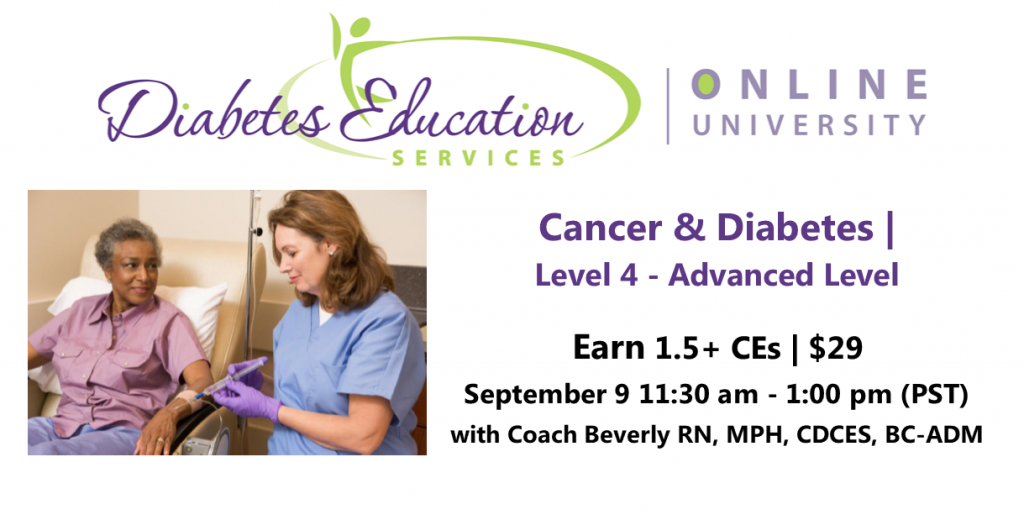
People with cancer often experience hyperglycemia secondary to treatment, which can increase risk of infection and compromise their nutritional status. In addition, recent research has identified the link between diabetes and cancer. Join us to learn more about this unexpected link and treatment strategies for steroid-induced hyperglycemia using a case study approach.
Topics Include:
Sign up for Diabetes Blog Bytes – we post one daily Blog Byte from Monday to Friday. And of course, Tuesday is our Question of the Week. It’s Informative and FREE! Sign up below!
[yikes-mailchimp form=”1″]
Accreditation: Diabetes Education Services is an approved provider by the California Board of Registered Nursing, Provider 12640, and Commission on Dietetic Registration (CDR), Provider DI002. Since these programs are approved by the CDR it satisfies the CE requirements for the CDCES regardless of your profession.*
The use of DES products does not guarantee the successful passage of the CDCES exam. CBDCE does not endorse any preparatory or review materials for the CDCES exam, except for those published by CBDCE.
[yikes-mailchimp form=”1″]
Food insecurity in the United States has doubled over the past 20 years.

Food insecurity “exists whenever the availability of nutritionally adequate and safe foods or the ability to acquire acceptable foods in socially acceptable ways is limited or uncertain” as defined by S. A. Anderson.
According to a recent study published by JAMA Network:
Food deserts, socioeconomic status, ability, and other factors impact one’s access to nutritionally healthy foods.
“Food insecurity in North America is consistently more prevalent among households with a person living with diabetes, and similarly, diabetes is also more prevalent in food-insecure households,” states Enza Gucciardi in “The Intersection between Food Insecurity and Diabetes.”
For people living with diabetes who experience food insecurity, adhering to diabetes self-management (DSM) regimens can be more challenging.
Often this can put a person living with diabetes in a situation in which they have to decide between healthy foods, prescriptions, or other expenses.
As Diabetes Specialists, we can create person-centered, realistic plans that are coupled with accessible resources to better support those living with diabetes.
The USDA has created a list of Food Assistance programs that may be able to help those experiencing food insecurity.
Written by Bryanna, our Director of Operations & Customer Happiness
For more information on the JAMA published study click here. Additionally, read more from “The Intersection between Food Insecurity and Diabetes” by clicking here.
Sign up for Diabetes Blog Bytes – we post one daily Blog Byte from Monday to Friday. And of course, Tuesday is our Question of the Week. It’s Informative and FREE! Sign up below!
[yikes-mailchimp form=”1″]
Accreditation: Diabetes Education Services is an approved provider by the California Board of Registered Nursing, Provider 12640, and Commission on Dietetic Registration (CDR), Provider DI002. Since these programs are approved by the CDR it satisfies the CE requirements for the CDCES regardless of your profession.*
The use of DES products does not guarantee the successful passage of the CDCES exam. CBDCE does not endorse any preparatory or review materials for the CDCES exam, except for those published by CBDCE.
Can cinnamon help maintain glucose in those with prediabetes?

There have been several studies over the past decade to determine the efficacy of using cinnamon supplements to regulate blood sugars. Most of the studies found either no significant change or slight changes.
For example, a 2013 study of 70 different participants found that those who took 1 gram of cinnamon daily showed no significant changes over 30 or 60 days.
However, a recent study found that cinnamon supplements may be beneficial over time for improving glucose homeostasis in prediabetes.
This study, conducted by Giulio R. Romeo, MD, from the Joslin Diabetes Center in Boston, and Dr. Romeo’s colleagues spanned over 12 weeks across 45 participants who met the criteria for prediabetes. These participants, who were not taking a placebo, took 500mg of cinnamon supplements a day to see the impact on glucose control.
From a similar baseline, FPG rose after 12 weeks with placebo but remained stable with cinnamon, leading to a mean between-group difference of 5 mg/dL (P<0.05). When compared to the respective baseline, cinnamon, but not placebo, resulted in a significant decrease of the AUC PG (P<0.001) and of the 2-hr PG of the OGTT (P<0.05). There were no serious adverse events in either study group.
Their study found that fasting plasma glucose (FPG) rose for those who took the placebo. For those who took cinnamon supplements, their area over the curve (AUC) plasma glucose (PG) decreased along with their 2 hour PG by oral glucose tolerance test (OGTT).
The results suggest that over time, a cinnamon supplement of 500mg a day may help blood glucose levels for those with prediabetes.
Sign up for Diabetes Blog Bytes – we post one daily Blog Byte from Monday to Friday. And of course, Tuesday is our Question of the Week. It’s Informative and FREE! Sign up below!
[yikes-mailchimp form=”1″]
Accreditation: Diabetes Education Services is an approved provider by the California Board of Registered Nursing, Provider 12640, and Commission on Dietetic Registration (CDR), Provider DI002. Since these programs are approved by the CDR it satisfies the CE requirements for the CDCES regardless of your profession.*
The use of DES products does not guarantee the successful passage of the CDCES exam. CBDCE does not endorse any preparatory or review materials for the CDCES exam, except for those published by CBDCE.

A committee of experts provides recommendations for healthy eating twice every decade. These final recommendations are sent to the US Department of Health and Human Services and the US Department of Agriculture, which use them to create the final 2020 dietary guidelines for Americans.
For the first time ever, the panel is including nutrition guidelines for infants 2 years and younger, with a pointed focus on reducing sugar consumption.
On average, infants consume a teaspoon of added sugar a day while toddlers consume about 6 teaspoons a day.
“Nutritional exposures during the first 1,000 days of life not only contribute to long-term health but also help shape taste preferences and food choices.”
2020 Dietary Guidelines Report
The committee also recommended further reductions in sugar intake for those age 2 and beyond. They also suggested less alcohol for men.
Read more about the 2020 Dietary Recommendations

Visit our Joy of Six Resource Page which has handouts and other helpful info on strategies to decrease sugar intake.
Some brands of long acting Metformin are being recalled since they contain higher than acceptable levels of NDMA (see list below).
The U.S. Food and Drug Administration has recommended recalls of certain metformin products that may contain the impurity N-nitrosodimethylamine (NDMA) above the acceptable intake limit.
Patients taking recalled metformin should continue taking it until a doctor or pharmacist gives them a replacement or a different treatment option. It could be dangerous for patients with type 2 diabetes to stop taking their metformin without first talking to their health care professional.
Remind patients not to stop medication until they check with their provider.
Find more info on the FDA Website here
For a complete listing of diabetes medications and insulin, download our DiabetesEd Medication PocketCards
Figuring out what foods are “super” healthy is challenging for people with diabetes and health care professionals alike. An article from Outside Magazine has attempted to sort fact from fiction. They have ranked the top superfoods based on scientific evidence.
It is worth noting that not one superfood going to make people healthy. We have to consider the entirety of the daily food intake. But, here are some foods that do deliver a research-backed benefit.
We encourage you to read the entire article for some insights on the other 14 foods that often have the status of superfoods, that aren’t always backed by research.

Green tea contains compounds called catechins, that may contribute to increased metabolic rates and contain anticancer properties.
Based on longevity studies, the populations who have the longest lifespans have one food in common, legumes. Beans are high in fiber, iron and B vitamins. While all legumes are beneficial, black beans contain polyphenols, giving them an extra nutrient boost.
Super dark or 70 percent cocoa or higher is best. This food delivers flavonols that contribute to lower LDL cholesterol, improve blood flow, and improve mood.
Red wine contains resveratrol, which has anti-inflammatory and blood pressure-lowering benefits. Consumption, in moderate amounts, has also been associated with a decreased risk of diabetes. Keep in mind, that red grapes may offer similar benefits.
Salmon can help boost brain and heart health. The omega-3 fatty acids in salmon contain docosahexaenoic acid (DHA) and eicosapentaenoic acid (EPA). These are effective at not only improving brain health but also seem to decrease the risk of heart attacks and strokes. Plus, since salmon contains DHA, it can protect brain neurons and reduce the risk of Alzheimer’s.
This bright golden spice, derived from the rhizomes of the Curcuma longa plant, has been used in ancient medicine and Southeast Asian cuisine for centuries.
It has anti-inflammatory properties due to curcumin, a natural polyphenol that gives turmeric its bright yellow hue. Based on recent research, it may help fight cancer.
Suggested dosing is one-fourth teaspoon three times a day along with fiber for best absorption.
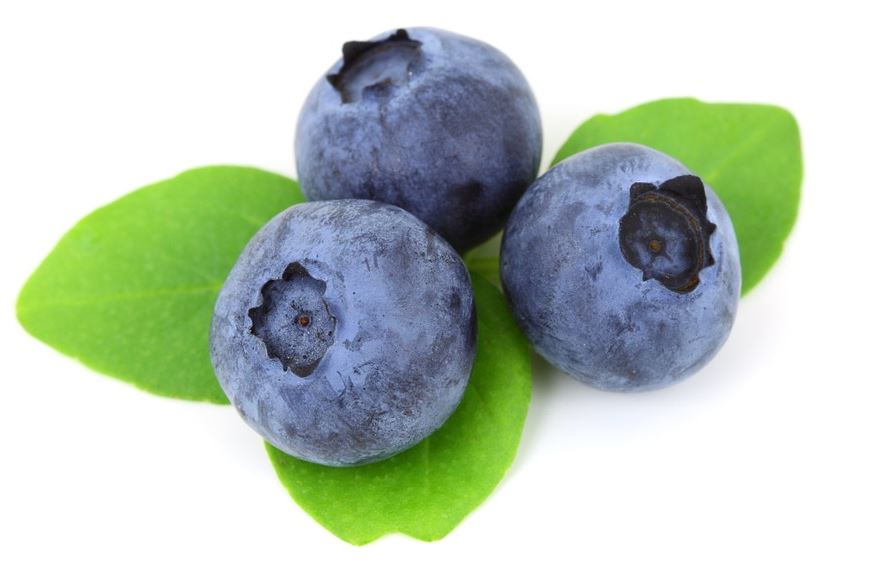
Blueberry’s power comes from the compound oligomeric proanthocyanidins, which lower the risk for heart disease and reduce joint and muscle pain by decreasing oxidative stress.
Choose organic berries and enjoy a half-cup of frozen blueberries daily.
To read the complete article, click here.
Interested in learning more about the power of nutrition?
Please join us on May 27th for our Virtual Course with Dana Armstrong, RD, CDCES, Medical Clinic Director of The Diabetes Center/Salinas Valley Medical Clinic.
Join Dana Armstrong, RD, CDCES, a trailblazer and thought leader, for a lively and intensive review of the latest in Medical Nutrition Therapy with immediate application to your clinical practice.
Dana combines the newest findings, her clinical experiences, plus the ADA Standards of Care into an action-packed presentation that will inform your practice while preparing for the certification exam.
Webinar Dates
Session 1 – Medical Nutrition Therapy Overview | May 27 from 8:30 AM – 10:30 AM PDT
Session 2 – Meal Planning – How to Eat by the Numbers | May 27 from 11:30 AM – 1:30 PM PDT
All presentations are recorded and available for on-demand viewing.
These sessions are also included in our Virtual Conference.
Click here to enroll in the entire program.
Sign up for Diabetes Blog Bytes – we post one daily Blog Byte from Monday to Friday. And of course, Tuesday is our Question of the Week. It’s Informative and FREE! Sign up below!
[yikes-mailchimp form=”1″]
Accreditation: Diabetes Education Services is an approved provider by the California Board of Registered Nursing, Provider 12640, and Commission on Dietetic Registration (CDR), Provider DI002. Since these programs are approved by the CDR it satisfies the CE requirements for the CDCES regardless of your profession.*
The use of DES products does not guarantee the successful passage of the CDCES exam. CBDCE does not endorse any preparatory or review materials for the CDCES exam, except for those published by CBDCE.
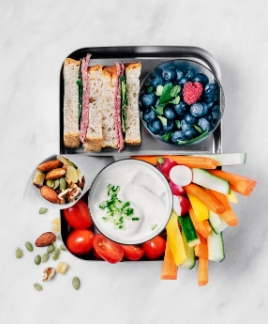
We receive so many great questions from our community about carb counting, so we’ve gathered all of our favorite, most trusted carb counting resources in one place for you.
Our goal is to make counting carbs simpler, clearer, and less overwhelming. We hope this collection answers your questions and gives you the confidence to manage carb counting with ease!
Exam note: If there is a question about carb counts using the exchange list, know that milk contains 12gms of carb. Thanks, Coach Bev
Diabetes Exchange List – a brief summary of serving size and carbohydrate counts for common foods. Excellent study tool for the exam.
Carb Counting Quick Reference English – We created this Carb Counting Quick Reference sheet based on the ADA handbook.
Carb Counting Quick Reference – Spanish – We created this Carb Counting Quick Reference sheet based on the ADA handbook.
CalorieKing – includes curated food database with nutrition information, including many fast-food chains and restaurants.
Diabetes Tracker – The American Journal of Preventive Medicine ranked this app, which has no free version, No. 1. It boasts an intensive and easy-to-follow educational component in addition to features for monitoring blood glucose, carbs, net carbs and more. Easy to see the big picture with daily and weekly reports. For some, it may be worth the extra expense.
Undermyfork – Undermyfork automatically combines glucose data from CGM, FGM, or BGM with the meal pictures and calculates postprandial Time in Range for each meal. Tag meal photos with keywords to compare your glycemic response to the same meals and situations.
Glucose Buddy(diabetes logbook manager) Simple to navigate, Glucose Buddy helps users manage their blood sugar, insulin dosages, and carb intake. Other features track exercise, blood pressure, and weight. Sync data to print it out or view online.
Hedia – digital diabetes personal assistant, developed with insulin using people with diabetes in mind, to increase time-in-range. Allows tracking data in a personal logbook and gives suggestions on carb amounts and insulin doses with a food database designed by nutrition experts.
Apps that Help Improve Time in Range – see our latest cheat sheet on helpful apps for diabetes self-management.
Weight stigma is pervasive in most health care settings. As Diabetes Specialists, we have an opportunity to recognize our own biases and take a leadership role in decreasing weight stigma in our work settings.
Last month, Healio Endocrine Today interviewed clinical nutrition manager, Lisa Hodgson, RD, CDN, CDCES, to get her perspective on how health care professionals can address weight stigma within their practice and support long-term healthy behavioral modifications for people living with diabetes. For many, staying motivated to maintain long-term changes can be difficult.
As Hodgson explains, “Weight stigma projected onto people with diabetes by clinicians may lead them to avoid seeking medical care. It may also perpetuate binge eating and overeating, limit physical activity, encourage disordered eating and foster physiological stress.”
These stigmatizing attitudes among providers are often reflected in their interactions with the individuals they treat, which can have negative impacts. That is why it is so important for each of us to address and unlearn our own biases around weight.
7 Steps to Reduce Weight Stigma Within Your Practice
Helpful Resources
Written by Bryanna, our Director of Operations & Customer Happiness
To read the full interview and to get more tips from Lisa Hodgson, click here.
Sign up for Diabetes Blog Bytes – we post one daily Blog Byte from Monday to Friday. And of course, Tuesday is our Question of the Week. It’s Informative and FREE! Sign up below!
[yikes-mailchimp form=”1″]