
Subscribe
eNewsletter

Ready to get certified?
Free CDCES Coach App

eNewsletter
Free CDCES Coach App

Our March 31st Question of the week was a question about COVID-19, sick days and diabetes. Although 40% of respondents chose the correct answer, 60% did not. We thought that this was an important topic to discuss further, so we can pass on correct info to people living with diabetes.
Before we start though, if you don’t want any spoilers and haven’t tried the question yet, you can answer below: Answer Question
JR is 27 with Type 1 diabetes and is very worried about getting COVID-19 since they work in a local grocery store. They ask you what they should do if they get COVID-19?
Which of the following statements is accurate regarding sick day management with COVID-19?
Answer Choices:
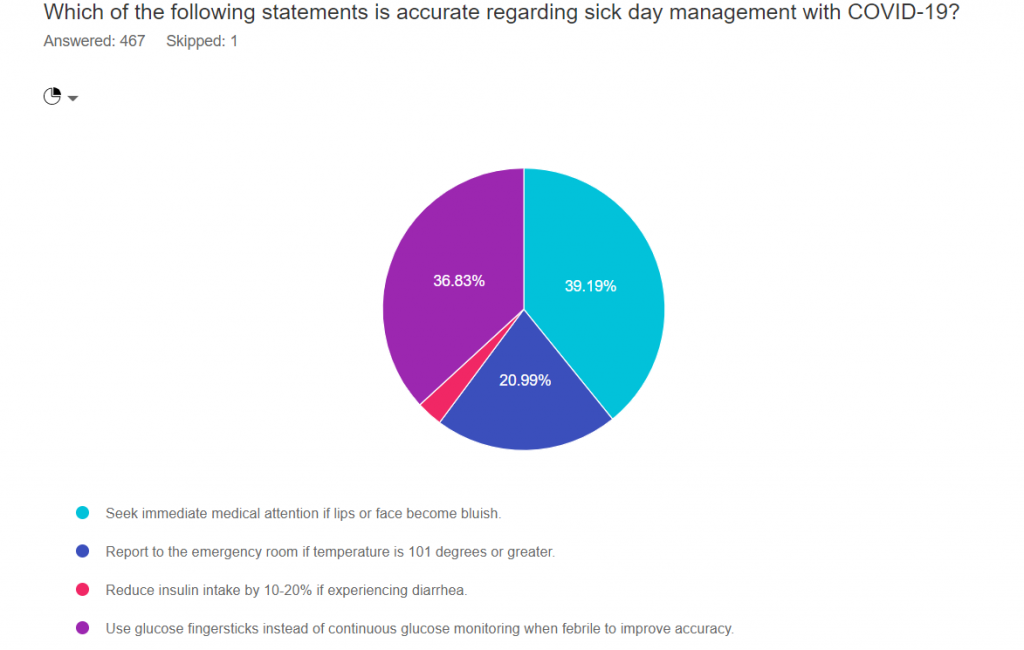
As shown above, the most common choice was option 1, the second most common answer was option 4, then option 2, and finally option 3.
Only 39% of participants chose the correct answer number 3, which means there is a learning opportunity!
Answer 1 is Correct! Seek immediate medical attention if lips or face become bluish. Bluish lips or face indicates hypoxia and signals urgent medical care is needed.
From ADA Sick Day Information. If develop emergency warning signs for COVID-19 get medical attention immediately.
In adults, emergency warning signs include:
Option 2 is incorrect. One-fifth of respondents chose ” Report to the emergency room if the temperature is 101 degrees or greater.” In the case of fever, the next step would to be to contact your provider to evaluate presence of cough, shortness of breath and other symptoms to determine if urgent care is required.
Option 3 is also incorrect. “Reduce insulin intake by 10-20% if experiencing diarrhea.” During periods of illness, inflammation leads to insulin resistance and hyperglycemia. Most people will need to increase insulin dose during illness, including GI distress.
Finally, Option 4 is incorrect. “Use glucose fingersticks instead of continuous glucose monitoring when febrile to improve accuracy.”
Fever by itself does not interfere with CGM accuracy. If a person is taking Tylenol, it can interfere with the accuracy certain CGMs. And, CGM use is not recommended in the Intensive Care setting. But, having a temperature by itself, does not interfere with CGM accuracy.
Here is a COVID and Sick Day Handout that you can share with your community. Thank you for helping us get the word out.
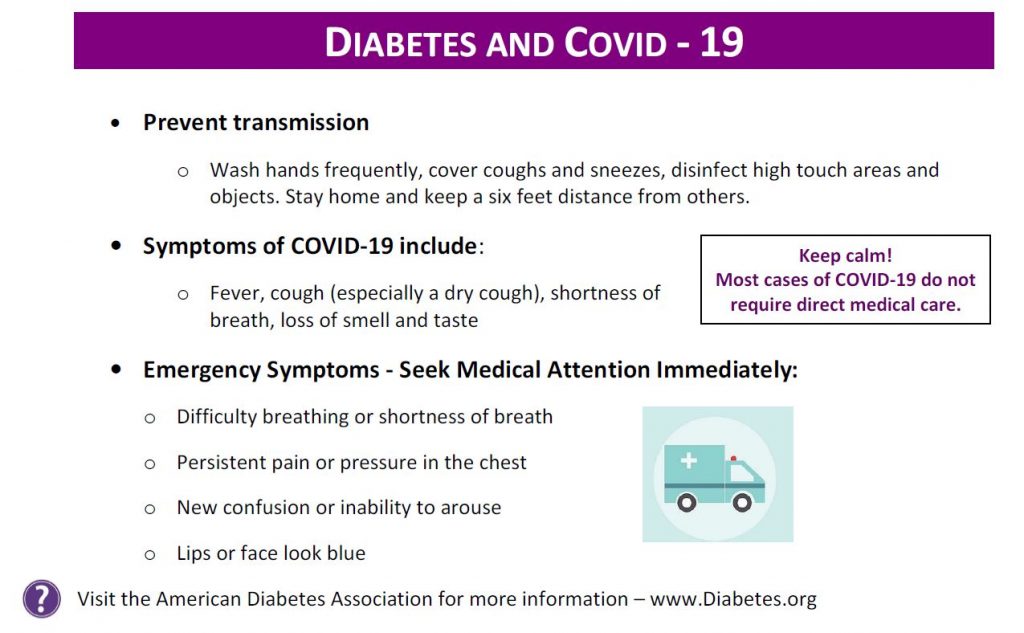
For more information on sick day management and when to seek medical care, please see this ADA Sick Day Information.
We hope you appreciate this week’s rationale and keep studying hard! Thank you so much for taking the time to answer our Question of the Week and participate in this fun learning activity!
Sign up for Diabetes Blog Bytes – we post one daily Blog Byte from Monday to Friday. And of course, Tuesday is our Question of the Week. It’s Informative and FREE! Sign up below!
[yikes-mailchimp form=”1″]

Our March 3rd Question of the week was a question about type 1 and alcohol. Although 66% of respondents chose the correct answer, one third did not. We thought that this was an important topic to discuss further, so we can pass on correct info to people living with diabetes.
Before we start though, if you don’t want any spoilers and haven’t tried the question yet, you can answer below: Answer Question
March 3 Question of the week: SZ has type 1 diabetes and uses an insulin pump. SZ wants to celebrate her 21st birthday with friends and asks about drinking alcohol. Which of the following is a correct statement?
Answer Choices:
As shown above, the most common choice was option 3, the second most common answer was option 2, then option 1, and finally option 4.
The majority of participants chose answer 3, the correct answer. However, if you chose a different answer, read more to learn about the relationship between alcohol and glucose.
Option 1 is incorrect – Since the liver is busy breaking down alcohol, it is not able to release glycogen stores after alcohol consumption, which can lead to hypoglycemia (not hyperglycemia). The sugary carb content of mixed drinks can cause a temporary rise in glucose levels and the alcohol can cause delayed hypoglycemia.
Option 2 is also incorrect. While it is a good idea to check glucose 1-2 hours post drink to see evaluate blood glucose levels, giving extra insulin post alcohol consumption can contribute to hypoglycemia.
Option 3 is correct. One serving of alcohol is 5 ounces of wine, 12 ounces of beer or 1 ounce of spirits.
Finally, Option 4 is incorrect because one serving of white wine affects blood glucose the same as one serving of red wine. Although alcohol lowers blood glucose, it’s good to remember that it is not calorie-free. A glass of wine can provide about 120 k/cals and beer can provide more than 150 k/cals. Plus, alcohol can raise triglycerides and worsen neuropathy. Moderation is key.
We hope you appreciate this week’s rationale and keep studying hard! Thank you so much for taking the time to answer our Question of the Week and participate in this fun learning activity!
Sign up for Diabetes Blog Bytes – we post one daily Blog Byte from Monday to Friday. And of course, Tuesday is our Question of the Week. It’s Informative and FREE! Sign up below!
[yikes-mailchimp form=”1″]
For Question of the week, QoW, test takers usually choose the correct answer 70-80% of the time. However, for one question of the week, about 55% of respondents chose the correct answer.
So, we thought this would be a perfect opportunity for another answer rationale. We’ll explore this question and the best answer in more detail and throw in some test-taking tips along the way. Before we start though, if you don’t want any spoilers and haven’t tried the question yet, you can answer below:
Question of the week:
JR has noticed that over the past few weeks blood glucose levels have been steadily climbing, even though his eating and medication dose have been stable. Which of the following issues is most likely contributing to hyperglycemia?
Answer Choices:
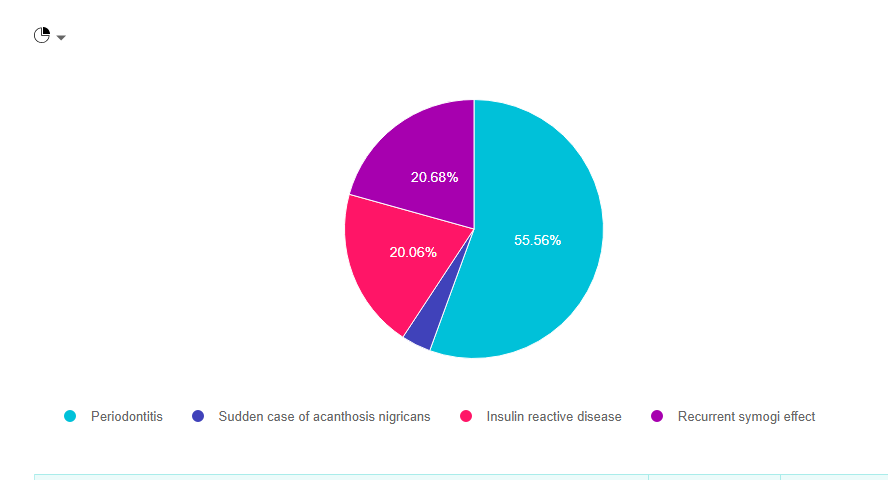
As shown above, the most common choice was option 1, the second most common answer was option 4, then option 3, and finally option 2.
Congratulations! The majority of participants got this question right!
Option 1 is the correct answer. We know that periodontitis (inflammation of the gums and supporting structures of the teeth) and hyperglycemia are co-associated. When blood glucose levels rise, risk of periodontitis increases. When there is periodontitis, blood glucose levels rise. As a matter of fact, periodontitis is often called the 6th complication of diabetes. (see SciElo for more details).
Option 2 is incorrect because acanthosis nigricans is a skin condition where skin typically thickens and darkens due to insulin resistance, but the scenario in this question doesn’t mention anything about the skin of JR. We also know acanthosis nigricans isn’t associated with sudden hyperglycemia. It develops over time, so a “sudden case of” helps us to remove it as a possible answer by process of elimination.
Option 3 is incorrect because “insulin reactive disease” is not a recognized diagnosis or condition. This answer was included because “reactive” can look a lot like “resistance”. It is considered a juicy answer because it sounds right.
Finally, Option 4 is incorrect because the recurrent symogi effect indicates hypoglycemia which leads to hyperglycemia on specific occasions, not contributing to overall hyperglycemia. So, this was another option included to encourage careful reading of the question.
We hope you appreciate this week’s rationale and keep studying hard! Thank you so much for taking the time to answer our Question of the Week and participate in this fun learning activity!
Sign up for Diabetes Blog Bytes – we post one daily Blog Byte from Monday to Friday. And of course, Tuesday is our Question of the Week. It’s Informative and FREE! Sign up below!
[yikes-mailchimp form=”1″]For Question of the Week, QoW, test takers usually choose the correct answer 70-80% of the time. However, for this question of the week, about 56% of respondents chose the correct answer.
This presents a perfect opportunity for another answer rationale. We’ll explore this question and the best answer in more detail and throw in some test-taking tips along the way. Before we start though, if you don’t want any spoilers and haven’t tried the question yet, you can answer below:
Question of the week:
Which of the following is an accurate recommendation according to the nutrition principles as outlined by the American Diabetes Association Standards of Care?
Answer Choices:
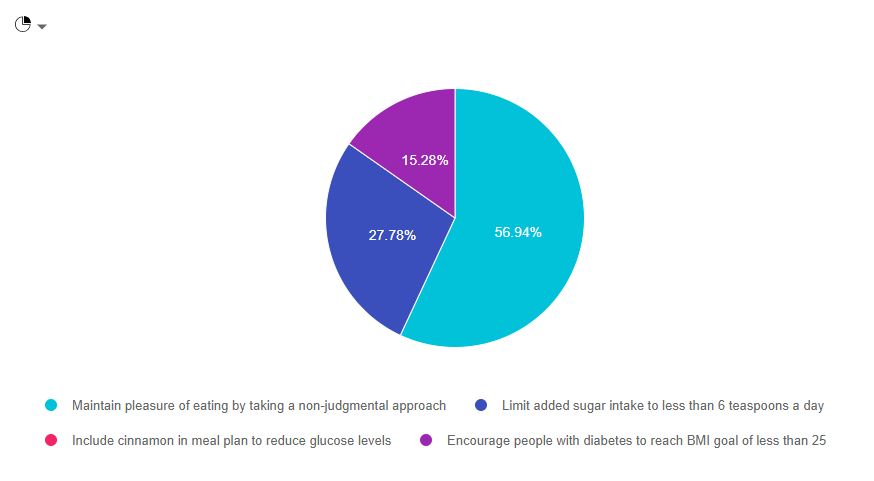
As shown above, the most common choice was option 1, the second most common answer was option 2, then option 4. No one chose option 3.
Option 1 is the correct answer. “Maintain pleasure of eating by taking a non-judgmental approach” has been a mainstay of the ADA’s Medical Nutrition Therapy principles for years. This statement beautifully speaks to the importance of taking a person-centered approach with a clear vision of promoting a healthy relationship with food.
Option 2 is incorrect because although the ADA and AHA both recommend that added sugar intake should be limited to about 6 teaspoons a day, the American Diabetes Association has not taken a specific stance on sugar intake per day.
The most recent comprehensive document, the 2019 ADA Nutrition Therapy Consensus Report states on page 3 to “minimize sugar and refined grains” and on page 10 they state “replace sugar sweetened beverages with water as often as possible”.
Option 3 was not chosen. Good job! Based on the lack of scientific evidence, the ADA does not endorse any nutraceuticals or supplements to reduce glucose levels.
Option 4 is incorrect because it is not individualized or based on the standards. The ADA goal for people with diabetes is to strive for a long term goal of 5% weight loss to improve outcomes. To achieve this structured programs and ongoing support are critical.,
BMI of 25: Based on population studies, the risk of getting diabetes increases with a BMI of 25 or greater (for Asians a BMI of 23 or greater). See our Diabetes Risk and Diagnosis Cheat Sheet. As a community, this means we want to help our children move into adulthood with a sound knowledge of healthy eating and active lifestyles to empower them to prevent prediabetes and diabetes.
We hope you appreciate this week’s rationale and keep studying hard! Thank you so much for taking the time to answer our Question of the Week and participate in this fun learning activity!
Sign up for Diabetes Blog Bytes – we post one daily Blog Byte from Monday to Friday. And of course, Tuesday is our Question of the Week. It’s Informative and FREE! Sign up below!
[yikes-mailchimp form=”1″]For Question of the week, test takers usually choose the correct answer 70-80% of the time. However, for the question of the week on November 19, about 37% of respondents chose the correct answer.
So, we thought this would be a perfect opportunity for another answer rationale. We’ll explore this question and the best answer in more detail and throw in some test-taking tips along the way. Before we start though, if you don’t want any spoilers and haven’t tried the question yet, you can answer below:
Question of the week on November 19:
LS is a 21-year-old college student with new diabetes. LS arrives for an office visit and is very agitated explaining that they are checking their blood glucose at the same time on two different meters, but the results are always different. LS states, “How can I trust these readings?”. What is the educator’s best response?
Answer Choices:
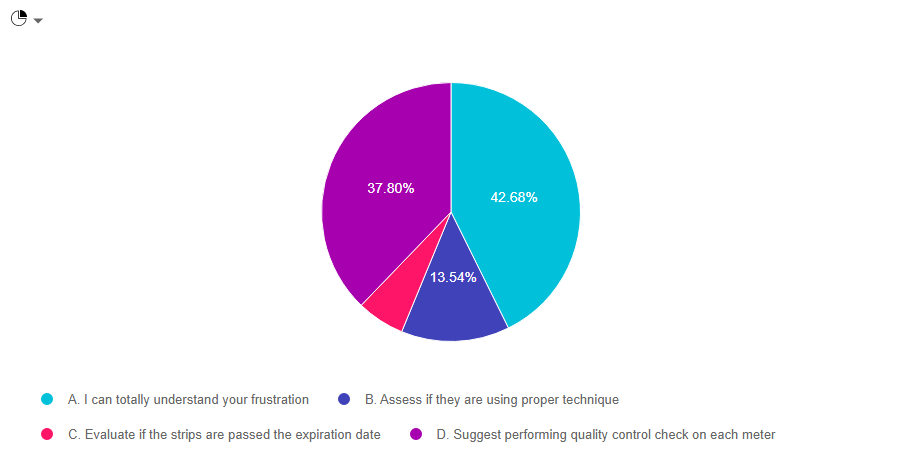
As shown above, the most common choice was option 1, the second most common answer was option 4, then option 2, and finally option 3.
Option 1 was the juicy answer: “I can totally understand your frustration” is a valid empathetic response, but not the best response in the scenario. If you follow our questions of the week closely, you’ll see a pattern of an empathetic response being the correct one, and if the scenario above ended with “LS arrives for an office visit and is very agitated” it may have been the right answer. However, LS goes on to ask how they can trust the readings. This question is calling for a practical response, which eliminates Option 1, since it acknowledges feelings but does not make steps forward beyond that to fix the situation.
Option 2 and Option 3 are both good answers, because they are steps someone could take to see if their glucose meter is giving accurate readings.
Option 4 is the best answer. This is because to perform quality control on each meter you would likely go through the steps mentioned in Option 2 and Option 3 as well as other assessments of the device (such as using control solution and comparing the meter result to the lab results).
Also, we discourage people from comparing meters, since one might read on the low end (while still being within the required accuracy range) and the other meter might read on the high end. Plus, it usually requires 2 different blood samples, which due to timing, can lead to different results.
The best way to evaluate meter accuracy is to compare the device to a lab draw and also review the MARD report. (See our blog on meter accuracy).
November 19’s question of the week was meant to test on best rather than correct answers.
We hope you appreciate this week’s rationale and keep studying hard! Thank you so much for taking the time to answer our Question of the Week and participate in this fun learning activity!
Sign up for Diabetes Blog Bytes – we post one daily Blog Byte from Monday to Friday. And of course, Tuesday is our Question of the Week. It’s Informative and FREE! Sign up below!
[yikes-mailchimp form=”1″]
For last Tuesday’s Question of the week, about 55% of respondents chose the correct answer. Although the majority of people chose the correct answer, we wanted to write a rationale to this particular question since it highlights an important issue that people with diabetes may be facing.
Before you read any spoilers, if you haven’t tried the question of the week from October 29, you can take your best guess here:
Question of the week on October 29:
JR is 15 and has had type 1 diabetes for the past 2 years. JR started insulin pump therapy a few months ago and noticed that their weight increased by over 5 pounds. JR is very worried about weight gain. JR’s mom called the diabetes educator to share her concerns and added that JRs daily insulin usage significantly decreased over the past few weeks. What is the most likely reason for this insulin usage decrease?
Answer Options:
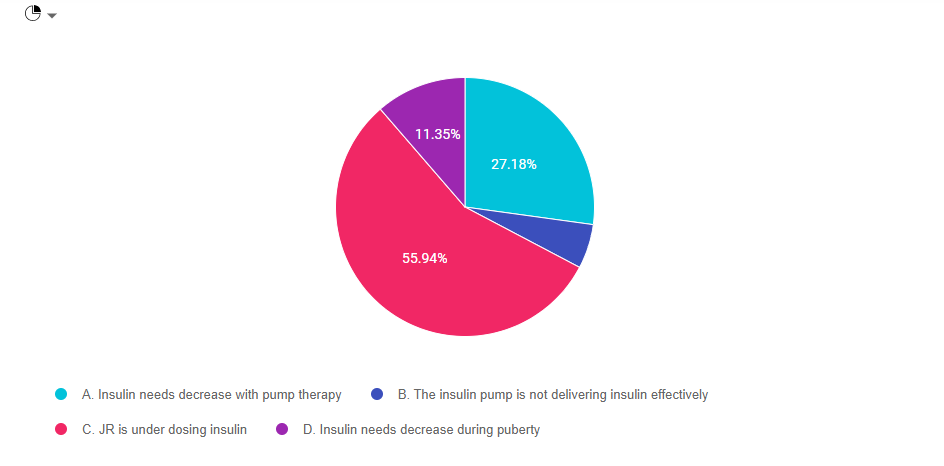
As shown above, the most common choice was option 3, the second most common answer was option 1, then option 4, and finally option 2.
Congratulations! Most of you chose the right answer. Let’s explore the options in a little more detail.
Option 3 (C) is the correct answer: JR is under dosing insulin. In the scenario, JR has gained weight. This is coupled with the fact the JR’s insulin usage has decreased. These two items of information are red flags that JR is purposely decreasing insulin usage to let blood sugars run above target to lose weight. Sometimes this is termed “diabulimia”. It is important to recognize and address this issue right away to prevent potential complications secondary to acute and chronic hyperglycemia.
Option 1 is incorrect. Although insulin needs do decrease when transitioning from Multiple Daily Injections to insulin pump therapy, they don’t decrease significantly after pump therapy is established as characterized in this scenario.
Option 2 is incorrect since this vignette gives two key pieces of information: “JR is worried about weight gain” and “JR’s mom called the diabetes educator to share her concerns.” Although option 2 may be considered, by re-reading the question you can identify option 3 as the better answer between the two because of the details in the vignette. A great test taking strategy is to use the process of elimination to get down to two options, then apply careful, critical reading techniques to find the best answer.
Option 4 is incorrect because insulin needs do not decrease during puberty. In fact, puberty causes significant insulin resistance, which leads to increased insulin needs.
Want to learn more about insulin pump therapy and dosing? Check out our Technology Toolkit:
Sign up for Diabetes Blog Bytes – we post one daily Blog Byte from Monday to Friday. And of course, Tuesday is our Question of the Week. It’s Informative and FREE! Sign up below!
[yikes-mailchimp form=”1″]For Question of the week, test takers usually choose the correct answer 70-80% of the time. However, for this Tuesday’s question of the week, only about 23% of respondents chose the correct answer.
So, we thought this would be a perfect opportunity for another answer rationale. We’ll explore this question and the best answer in more detail and throw in some test-taking tips along the way.
Question of the week on October 8:
The American Diabetes Association recommends which of the following interventions to decrease risk of cardiovascular disease?
Answer Options:
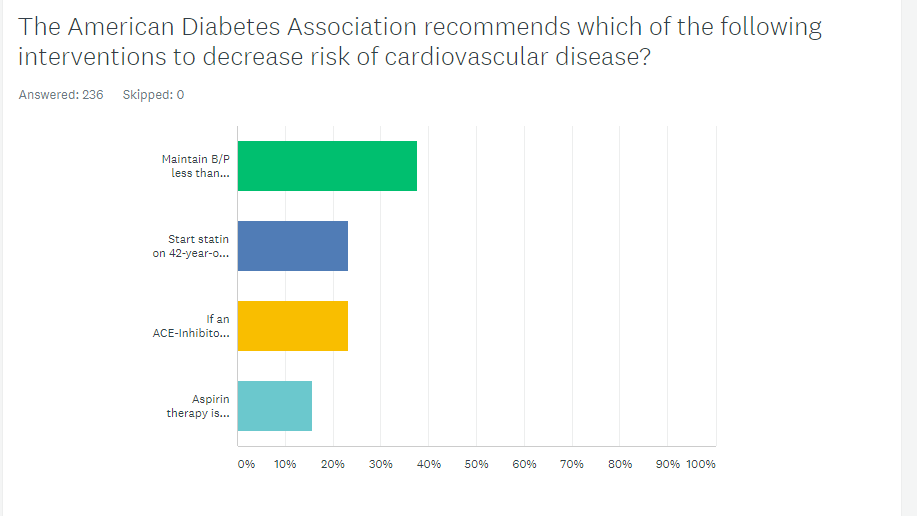
As shown above, the most common choice was option 1, the second most common answer was option 3, then option 2, and finally option 4.
For this question, a key consideration is what “The American Diabetes Association recommends.” This focus helps test takers hone in on ADA Standards.
Option 1 is juicy but incorrect. The ADA standard for individuals without cardiovascular disease risk or history is to maintain a B/P of less than 140/90. The blood pressure target in Option 1 of 130/80, is the B/P target for individuals with cardiovascular disease or a 10 year CVD risk of 15% or greater. The general goal for people with diabetes is to keep B/P less than 140/80. However, for those with a higher risk of CV events, the target is 130/80. Blood pressure targets are based on the individual assessment of risk.
Option 3 is incorrect because ACE-Inhibitor and Angiotensin Receptor Blockers should not be paired together. Option 3 says “add a Angiotensin Receptor Blocker” not switch to. Giving an ACE and and ARB together is not recommended due to potential renal issues.
Option 4 is incorrect because aspirin therapy is recommended for individuals over the age of 50 with CV risk factors.
Option 2 is the best answer. The standard for people with diabetes who are over the age of 40 is to start a statin to reduce the risk of cardiovascular disease. No CVD history is required to initiate statin therapy in this standard for people over the age of 40 with either type 1 or type 2.
For more info, here is a link to ADA’s Standard Ten. 10. Cardiovascular Disease and Risk Management: Standards of Medical Care in Diabetes—2019
Our DiabetesEd Online University also offers courses on Standards of Care and Cardiovascular Disease. Check it out here!
We hope you appreciate this week’s rationale and keep studying hard! Thank you so much for taking the time to answer our Question of the Week and participate in this fun learning activity!
Sign up for Diabetes Blog Bytes – we post one daily Blog Byte from Monday to Friday. And of course, Tuesday is our Question of the Week. It’s Informative and FREE! Sign up below!
[yikes-mailchimp form=”1″]For Question of the week, test takers usually choose the correct answer 70-80% of the time. However, for this Tuesday’s question of the week, only 25% of respondents chose the correct answer.
We thought this presented a perfect opportunity to explore this question and the best answer in more detail and throw in some test-taking tips along the way.
Question of week on October 1:
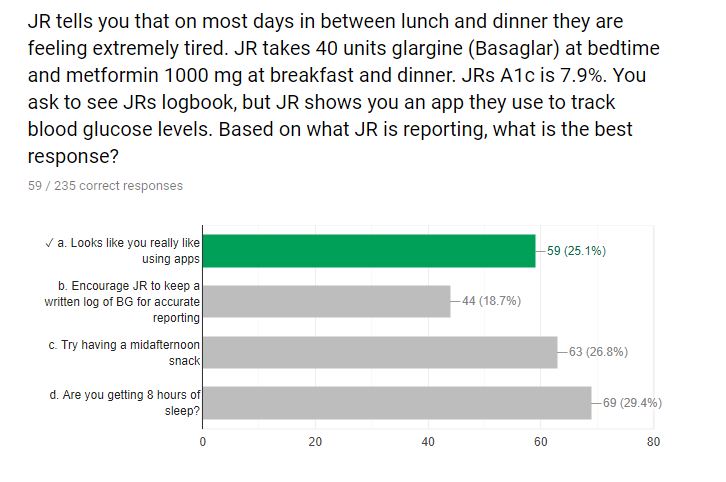
As shown above, the most common choice was option 4, the second most common answer was option 3, then option 1, and finally option 2.
Test taking strategies:
A good strategy for the exam for questions that give multiple distracting facts at once, is to read through each answer carefully and use process of elimination. First, get rid of one to two false answers that are either wrong or don’t address the main intent of the question. This leaves two answers and a 50% chance of choosing the BEST answer.
The key sentence here is “You ask to see JRs logbook, but JR shows you an app they use to track blood glucose levels.” Then there is a prompt to give a response.
Option 4 is a “juicy” answer because the first sentence shows JR admitting they’re tired. But the answer does not address the main intent of the question. Another distraction in the question includes that that they’re specifically feeling tired between lunch and dinner.
Option 4 also ignores the fact the educator asked to see their logbook and they respond by showing an app. Option 4 gets the test taker off-topic from the core question.
Also off-topic is Option 3. The test question vignette includes another distraction when it highlights that JR is specifically feeling tired between lunch and dinner. It would be easy to assume they are tired because of low blood sugar, which a midafternoon snack could fix, but there is no data to support that JR is having hypoglycemia. When reading the entire question, the core issue is that the educator asked to see a logbook but are shown an app instead.
Option 2 nods to the key intent of the question, but the educator fails to acknowledge that JR is trying to use an app to track blood glucose levels and other self-care behaviors. Instead, the educator ignores the app usage and instructs JR to keep a written log. This does not convey a person-centered approach, but instead asks JR to track blood glucose in a way that is familiar to the educator.
Option 1 is the person-centered option that acknowledges the individual and their preference for tracking their diabetes data using technology. “Looks like you really like using apps.” At that point in an appointment, the educator can use a curiosity based approach, “Can I please see the data you are collecting on your app? Have you noticed any trends or incidence of hypoglycemia in the afternoon?”
Together, JR and the educator might even explore other apps that might be useful and support JR in living with diabetes).
Language & Diabetes is a great, free resource to gain more insight into why Option 1 is the best answer to this question. Thank you so much for taking the time to answer our Question of the Week and participate in this fun learning activity!
Sign up for Diabetes Blog Bytes – we post one daily Blog Byte from Monday to Friday. And of course, Tuesday is our Question of the Week. It’s Informative and FREE! Sign up below!
[yikes-mailchimp form=”1″]