
Subscribe
eNewsletter

Ready to get certified?
Free CDCES Coach App

eNewsletter
Free CDCES Coach App
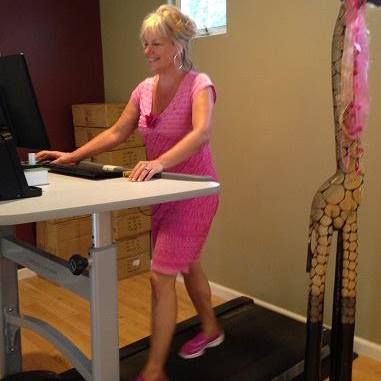
New studies show that sitting for too long can impair health and even shorten life expectancy. It’s difficult to keep active in a world of screens, movie theaters, and desk jobs. However, studies are showing that body awareness and movement is necessary. The goal is to get up at least every hour of sedentary time, to improve posture and metabolic rate.
Medical News Today published an article on proper posture while sitting, showing just how difficult it is to maintain good postural health, with over ten variables to consider. Sitting and staying in one position for more than an hour increases the likelihood of poor posture, decreased metabolism, and inhibits blood flow, which can worsen circulation problems for people with diabetes.
Here are several strategies to lessen their sedentary time and get healthier:
Office Fitness Industry News encourages employers to spend their wellness funds on standing desks or treadmill desks, rather than spending money on a wellness program that offers employees under-utilized gym memberships.
Standing desks help improve posture by allowing people to stand, stretch, and interrupt their sitting time. Simply standing more can help tone muscle, increase metabolism, and prevent diabetes complications. However, some may have difficulty standing for long periods of time. A treadmill desk may feel more natural and compounds the benefits of standing desk: burning extra calories, increasing creativity in the workplace, and potentially even increasing mental acuity for kinesthetic learners or those with ADD.
Even if an employer won’t provide a standing or treadmill desk, just standing up every hour helps counteract a lot of the issues associated with sitting too much.
Taking brief exercise breaks during the day can help tremendously. It doesn’t require going to the gym, or even using your full 10 – 15 minutes in the morning or afternoon. HIIT, or High Intensity Interval Training, only needs to be done in 30 second bursts to be effective. This can include 30 seconds of sprinting in place or doing quick push-ups against a counter (such as in a break room or bathroom). You can find more HIIT exercises that can be done in just 30 seconds, here.
Many people may only get two 10-15 minute breaks per day plus lunch, but that doesn’t mean they have to be chained to a desk at all other times. Refilling water bottles or glasses every hour can help interrupt sitting and also offer a refreshing mental break from staring at a screen or papers. If the job requires reviewing or reading documents, try doing this while standing or pacing to interrupt the monotony of sitting.
Suddenly switching from sitting to standing can be tough on lower extremities, and for those already standing most of the day because of their job, proper foot care is important to lessen fatigue and prevent ending the day on the couch until bed.
Wearing thicker socks and cushioned sole inserts can help during the day. Ending the day with an Epsom salt foot bath and lotion can help ease soreness, increase circulation, and help you get back on feet the next day.
NEAT means non-exercise activity thermogenesis. All it requires is simple stretches, twists, and bends to break up your sitting every hour. Practicing NEAT helps increase circulation, ease back pain and muscle aches, and increase daily range of motion, which will eventually make getting nore active easier too.
Staying mindful about sitting duration and taking any of these steps to move more can help lead to a longer and better quality of life. To see more on how to counteract or avoid sitting disease, see Just Stand’s Office, School, and Home resources.
While most know there are great benefits to getting out in nature, Medical News Today has released a study showing that simply viewing nature can reduce cravings such as smoking, excessive drinking, and unhealthy eating.

Walking in nature has been shown to reduce cortisol and improve mood. Now though, research suggests even simply seeing green spaces through your window can reduce unhealthy cravings!
As health care professionals, we can recommend nature viewing as a stress-relieving intervention that can be incorporated daily for extra health benefits. Whether using public green spaces, looking through your bedroom or office window, or visiting a neighborhood garden, all of these have been associated with lessening the frequency and intensity of cravings.
This is great new for people trying to quit habits such as smoking, excessive drinking, and unhealthy eating. Read more from Medical News Today for full details.
Sign up for Diabetes Blog Bytes – we post one daily Blog Byte from Monday to Friday. And of course, Tuesday is our Question of the Week. It’s Informative and FREE! Sign up below!
[yikes-mailchimp form=”1″]
Based on a study published in Diabetes Care in April 2019, it appears that there is a positive association between use of topical corticosteroids and new incident diabetes.

A Danish case-control study collected health care data from people who were diagnosed with new onset Type 2 diabetes in Denmark and the United Kingdom.
A total of 115,218 in Denmark and 54,944 in the UK were identified with new diabetes.
The researchers found that topical corticosteroid use was significantly associated with new onset diabetes of diabetes in both groups. In the Danish group (adjusted odds ratio was 1.35) and U.K. group (adjusted odds ratio was 1.23).
They also found that there was a significant dose response relationship. The more potent the steroid the higher the incident risk of diabetes.
The next question to be addressed is if topical steroid cream increases blood glucose in those with existing diabetes.
Read the “Association Between Topical Corticosteroid Use and Type 2 Diabetes in Two European Population-Based Adult Cohorts” Diabetes Care Abstract here.
Sign up for Diabetes Blog Bytes – we post one daily Blog Byte from Monday to Friday. And of course, Tuesday is our Question of the Week. It’s Informative and FREE! Sign up below!
[yikes-mailchimp form=”1″]
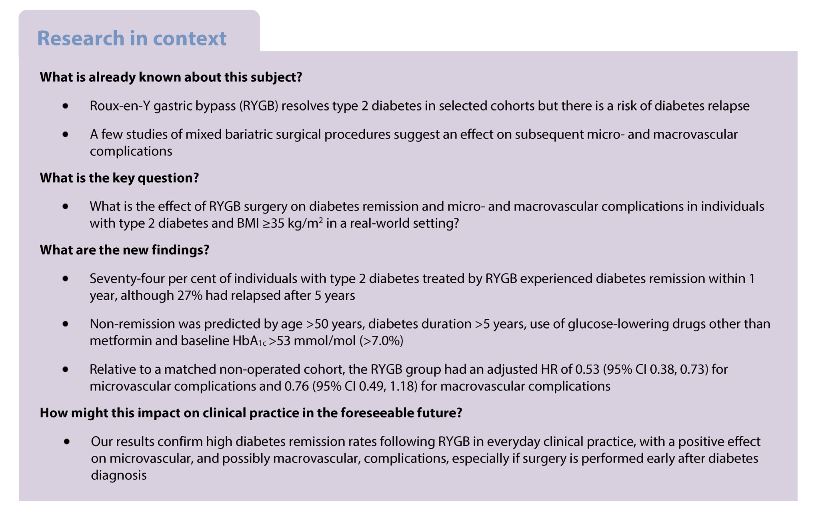
A recent study conducted by the Aarhus University Hospital in Denmark found that three out of every four persons living with obesity and type 2 diabetes who receive a RYGB ( Roux-en-Y Gastric Bypass) experience remission within one year. Remission is defined as blood glucose levels at non-diabetes range without using diabetes medications.
This study followed 1,111 individuals who had an elevated BMI and type 2

The results of this study for people with type 2 and a BMI of 35 or greater who had RYGB:
In addition, those who had RYGB surgery had a significantly reduced risk of microvascular and possibly macrovascular complications compared to those who did not have surgery.
According to the authors of the study, RYGB is associated with a high remission rate and a decreased rate of vascular complications, especially if surgery in performed early after diabetes diagnosis.
For more information on this topic, read the full study in Diabetologia- Effect of Roux-en-Y gastric bypass surgery on diabetes remission and complications in individuals with type 2 diabetes: a Danish population-based matched cohort study.
Sign up for Diabetes Blog Bytes – we post one daily Blog Byte from Monday to Friday. And of course, Tuesday is our Question of the Week. It’s Informative and FREE! Sign up below!
[yikes-mailchimp form=”1″]
According to a study presented during the 2019 annual Endocrine Society Meeting, metabolic syndrome in teens may be directly correlated with screen time and eating snacks.

“Metabolic syndrome includes high blood pressure, high blood sugar, excess visceral adiposity and abnormal cholesterol levels. The syndrome increases a person’s risk for heart attack and stroke.”
Screen time is often associated with other negative behaviors such as snacking, eating excessively, and lack of movement.
Researchers found the teens spending 6 or more hours of screen time were more likely to develop metabolic syndrome. The odds were even higher for teens who reported snacking during those hours.
“Eating unhealthy snacks in front of screens is a habit that is probably harmful, but the relationship between this and obesity is well-known, but not with metabolic syndrome.” This research demonstrates that there is a relationship between snacking and metabolic syndrome.
A study of Cardiovascular Risks in Adolescents in Brazil analyzed the data from over 34,000 teens between the ages of 12 and 17. The teens were to write down their screen time habits daily and whether or not they were snacking.
“Snacking while watching TV was reported by 85.1% of the study population, and snacking while playing video games or using the computer was reported by 64%.”
“Strategies to assess and address metabolic syndrome in the pediatric population should aim at limiting unhealthy snacks while in front of screens,” Lead researcher Schaan said.

Shift in community and screen culture needed
Researchers recommend making an intervention on unhealthy habits that form during childhood. However, they believe that there may need to be a bigger shift in community culture.
As healthcare professionals we want to prompt a healthy lifestyle particularly at a young age. The habits we set as adolescents often transfer into adulthood.
To learn more: Metabolic Syndrome more likely in teens who snack while watching TV – Endocrine Today
Sign up for Diabetes Blog Bytes – we post one daily Blog Byte from Monday to Friday. And of course, Tuesday is our Question of the Week. It’s Informative and FREE! Sign up below!
[yikes-mailchimp form=”1″]

Join us live with your questions on August 2, 2019 @ 11:30 a.m. PST!
Coach Beverly offers this FREE webinar to help get you prepare for the CDCES Exam. All her tips and tricks are meant to ease your mind and reflect the updates to the CDCES content outline. Register below with a name and email and you can join us live next Friday!
Topics covered include:
We will review sample test questions and the reasoning behind choosing the right answers.
After registering, you will receive a confirmation email containing information about joining the webinar.
Intended Audience: This FREE webinar is designed for individual or groups of diabetes educators, including RNs, RDs, Pharmacists, Nurse Practitioners, Clinical Nurse Specialists, Physician Assistants and other health care providers interested in achieving excellence in diabetes care and becoming Certified Diabetes Care and Education Specialists®.
Instructor: Beverly Thomassian RN, MPH, CDCES, BC-ADM is a working educator who has passed her CDCES Exam 6 times. She is a nationally recognized diabetes expert for over 25 years.
See our Preparing for CDCES Resource Page >>
Sign up for Diabetes Blog Bytes – we post one daily Blog Byte from Monday to Friday. And of course, Tuesday is our Question of the Week. It’s Informative and FREE! Sign up below!
[yikes-mailchimp form=”1″]
An Australian study was published linking morning exercise and short walking breaks throughout the day to blood pressure control.
Society today calls for an increase in sitting for longer periods of time. Prolonged sitting can lead to higher blood pressure and increased blood pressure can lead to cardiovascular disease.
Australian scientists believe adding three-minute walking breaks throughout the day can help regulate blood pressure. Although it is known that exercise and short breaks can help lower blood pressure, scientists studied the benefits of combining the two.

“They recruited 67 men and women who were between 60 and 74 years old and overweight or obese. About 4 in 10 participants also had high blood pressure. Every participant completed three different day-long tests in random order, each separated by a minimum of six days. Researchers measured heart rate, blood pressure, blood sugar, and other blood markers during each test condition. “
During one test, participants sat for 8 hours straight and another they sat for an hour then walked for 30 minutes then went back to sitting for 6.5 hours. However, the last test participants sat for an hour then walked for 30 minutes, then sat back down but got up every 30 minutes for a 3-minute walking break.
The participants showed lower blood pressure throughout the day if any exercise was involved. “The biggest reduction was seen when people did the 30-minute treadmill exercise in the morning and took 3-minute walking breaks throughout the day – although the additional benefit of the walking breaks was seen only among women.”

Scientists were surprised that only women showed the benefits of lower blood pressure through the short 3 minute walking breaks. This finding leads researchers to believe there is a difference in blood pressure response and it could be affected by gender and epinephrine levels.
“We recognize that exercise is good, and we now have the awareness that prolonged sitting can increase blood pressure,” Bhammar told Reuters Health in a phone interview. “Now we need to build breaks into our routines as a default so we’re not sitting for four hours at a time.”
To learn more – Morning exercise, short breaks from sitting lower high blood pressure – Reuters
Sign up for Diabetes Blog Bytes – we post one daily Blog Byte from Monday to Friday. And of course, Tuesday is our Question of the Week. It’s Informative and FREE! Sign up below!
[yikes-mailchimp form=”1″]
Join Heather Nielsen, MA, LPC, CHWC in this free webinar, as she walks you through hands-on strategies to incorporate mindfulness and compassion into our daily lives and professional practice.
This insightful webinar helps show how mindfulness and compassion can positively affect personal and professional relationships.
You can find additional resources and further reading on her webinar here.
Sign up for Diabetes Blog Bytes – we post one daily Blog Byte from Monday to Friday. And of course, Tuesday is our Question of the Week. It’s Informative and FREE! Sign up below!
[yikes-mailchimp form=”1″]