Subscribe
eNewsletter

Ready to get certified?
Free CDCES Coach App

eNewsletter
Free CDCES Coach App
|
|
|
|
|
|
|
|

 Everyone is invited to hear the stories of women luminaries, who have taken risks, challenged the status-quo and were able to turn their ideas into action against the odds.
Learn from national diabetes health care leaders and mentors as they share their efforts to improve care.
Get ready to be inspired! You will hear the steps they took to overcome barriers, envision delivery of care from a new perspective and shift the diabetes landscape for the better.
Invite your colleagues to join this conference, designed to create new possibilities to improve diabetes across the care continuum.
Keynote presenters include: | See detailed bio information here >>
Agenda | Women Leaders in Diabetes
Brochure | Women Leaders in Diabetes Conference
Objectives: By the conclusion of this conference, participants will:
Since we are not accepting industry grants for this event, will you help us get the word out? (Here is a link you can post on social media or to send to your contacts.)

Registration Fee:
Before Feb 15th, 2019: $219
After Feb 15, 2019: $249

Accreditation: Diabetes Education Services is an approved provider by the California Board of Registered Nursing, Provider 12640, and Commission on Dietetic Registration (CDR), Provider DI002
Location: AC Hotel San Francisco Airport / Oyster Point Waterfront
1333 Veterans Blvd, South San Francisco, CA 94080
Agenda | Women Leaders in Diabetes
Brochure | Women Leaders in Diabetes Conference
Team of Experts: This program is a labor of love and passion. It is a dream co-opted by two Diabetes Nurse Specialists and Certified Diabetes Care and Education Specialists (CDCESs) who believe that women leaders make a powerful difference in the lives of people living with diabetes.
 Diabetes Education Services wants to wish our entire community a wonderful holiday season full of love, laughter and joy. As our gift of thanks, please enjoy some of our FREE Resources below!
To celebrate the season with our family and friends, we will be closed 12/24 – 12/28.
We look forward to another fantastic year in 2019!
Love,
Coach Beverly and Anne
 Many people experience anxiety on the Sunday night before returning to work on Monday. For decades, health professionals believed that unexpected death and cardiac arrest were more common on Monday mornings. This increased risk was thought to be due to increased cortisol, the stress hormone, as people started their work week. Increased cortisol levels can drive up heart rate, blood pressure and glucose levels.
However, Monday mornings are no longer the prime time for cardiac arrest! Due to the increased pace and pressure of our current work world, the risk of cardiac arrest has expanded to anytime of the day or week. A recent study conducted by Heart Rhythm suggests that the change of cardiac arrest frequency is more common due to stress occurring consistently through out each day.
“We now live in a fast-paced, ‘always on’ era that causes increased psycho-social stress and possibly, an increase in the likelihood of sudden cardiac arrest,” the study’s lead investigator Dr. Sumeet Chugh, a professor of medicine and medical director of the Heart Rhythm Center, Smidt Heart Institute at Cedars-Sinai, said in a statement.
Being a diabetes educator can be challenging. It is important for us to heed this warning and remember to manage our stress through out the week. Please enjoy our FREE Mindfulness and Compassion in the Diabetes Encounter webinar. Heather Nielsen, MA, LPC, CHWC will provide diabetes educators with helpful hands-on strategies to incorporate mindfulness and self-compassion into our daily lives and professional practice.
To learn more: “Always Stressed: Cardiac Arrest No Longer Peaks on Monday Morning” by Healthline
Sign up for Diabetes Blog Bytes – we post one daily Blog Byte from Monday to Friday. And of course, Tuesday is our Question of the Week. It’s Informative and FREE! Sign up below!
[yikes-mailchimp form=”1″]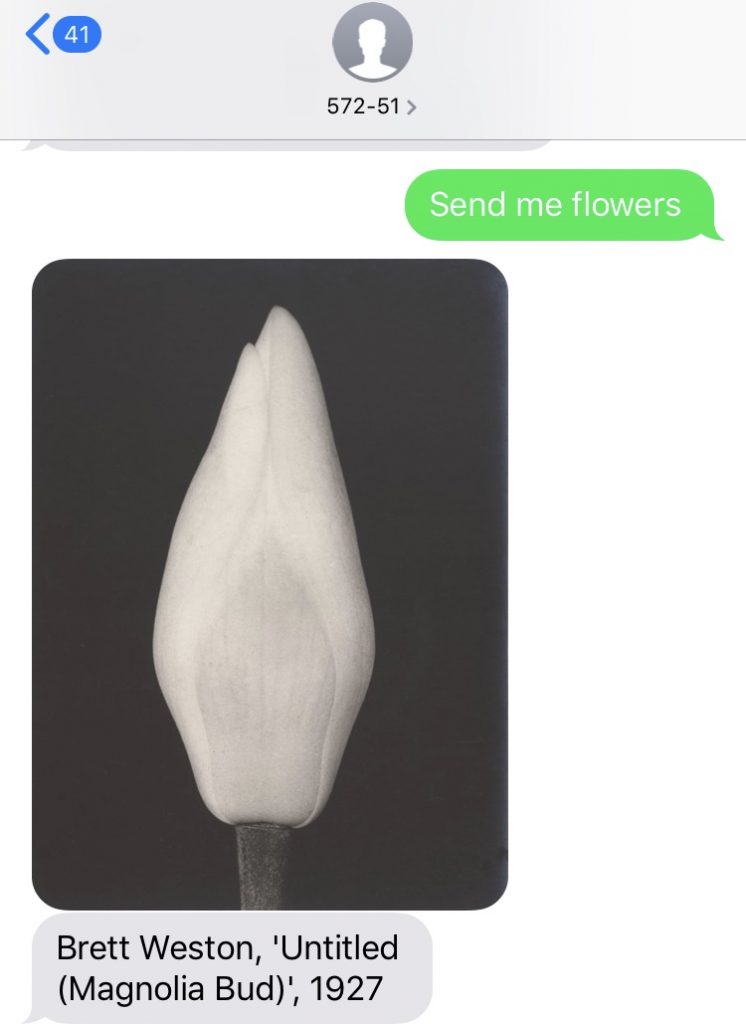 This Mindful Monday we are celebrating art! Being mindful includes taking a moment to appreciate beauty, creativity and art.
The San Francisco Museum of Modern Art hold over 34,000 pieces at any given time. However, can only display 2,000 of those pieces. In an effort to share more of their pieces, they have created an sms (text) system that will send a piece of art!
“Send an emoji or describe a mood via text and the museum will shoot back a picture of one of its artworks.”
You simply text 572-51 with the words “send me” followed by a keyword, a color, or even an emoji and you’ll receive a related artwork image and caption via text message from SFMOMA.
For example, today I texted the number “Send me flowers” and received the following message >>
Enjoy something beautiful today wherever you may be!
Learn more: “Tight On Wall Space, SFMOMA Will Text Its Art To You Instead” by NPR
Sign up for Diabetes Blog Bytes – we post one daily Blog Byte from Monday to Friday. And of course, Tuesday is our Question of the Week. It’s Informative and FREE! Sign up below!
[yikes-mailchimp form=”1″]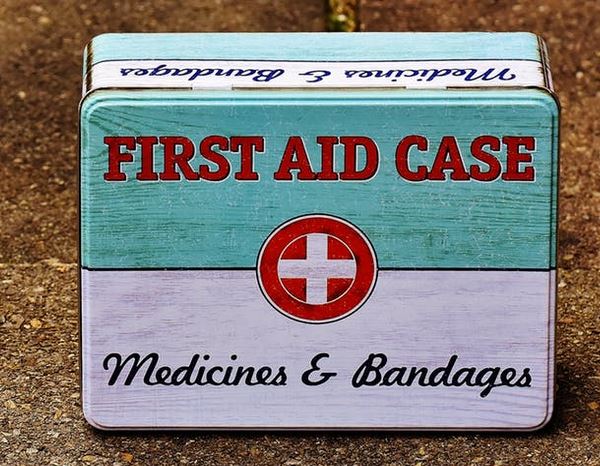 Diabetes and Disaster Preparedness
With an increasing amount of natural and man-made disasters, it is important to help ourselves and our communities to be prepared. In case of sudden evacuations, having the necessary medical and self-care items packed and ready to go is imperative.
Resources for People with Diabetes
Resource For Health Care Providers:
Looking for other ways to contribute? Camp Fire Donations Needed | How you can help
Thank you again for all your kindness and concern!

Last month, the Camp Fire consumed our sister town of Paradise and the surrounding communities. We dedicate this newsletter to all those who have witnessed and survived tragedy.
From how you can prepare for a disaster to finding peace and gratitude in recovery!
Newsletter Topics include:
 As you have heard on the news, the town of Paradise and surrounding areas have been completely devastated.
Most of the homes and businesses are gone, leaving thousands of people and families searching for shelter.
What is needed now is donations to emergency relief funds so people can start rebuilding their lives.
So many have reached out to check in on us and we appreciate your outpouring of love and support.
Coach Beverly and Anne are determined to keep moving our company forward while supporting the evacuees of Paradise and surrounding communities
SALVATION ARMY Camp Fire Response Center opened a distribution center at 1100 Marauder Street in Chico to serve the needs of individuals affected by the Camp Fire and we are still serving at 8 shelter locations. The warehouse will be a site to collect in-kind donations and to distribute items to fire survivors. Click this link to view needed items and contact info.
Salvation army volunteer sign up here The Salvation Army needs volunteers to help fire survivors get needed supplies and restock the warehouse. Lots of volunteer opportunities available.
Here are a few reputable organizations that you can feel good contributing to knowing that the funds will get to the people who need it most.
Thank you again for all your kindness and concern!
If disaster hits, people with diabetes may need emergency supplies and help fast.
THE DIABETES DISASTER RESPONSE COALITION (DDRC) FORMED IN 2017 IN RESPONSE TO A SUCCESSION OF DEVASTATING ATLANTIC HURRICANES THAT IMPACTED THE MAINLAND US AND TERRITORIES. THE DDRC (FORMERLY KNOWN AS DERC) IS A NATIONAL COALITION OF NONPROFIT AND FOR-PROFIT STAKEHOLDER ORGANIZATIONS DEDICATED TO SERVING THE NEEDS OF THE DIABETES COMMUNITY AND/OR WHO HAVE A ROLE IN PLANNING AND EXECUTING SUPPLY CHAINS, PUBLIC AWARENESS AND HEALTH CARE SERVICES DURING TIMES OF DISASTERS.
Please check out their website at https://www.diabetesdisasterresponse.org/contact/ if you are a diabetes healthcare provider and are requesting information about diabetes supplies during disasters.