Subscribe
eNewsletter

Ready to get certified?
Free CDCES Coach App

eNewsletter
Free CDCES Coach App
Free Med Pocket Cards
A 58-year-old man without a history of diabetes is receiving treatment with an immune checkpoint inhibitor for metastatic melanoma. Four months after beginning therapy, he presents with polyuria, weight loss, nausea, and fatigue.
Laboratory findings include:
Which mechanism most likely explains this sudden hyperglycemia?

🌟Updated Schedule: ADA Boot Camp, Tech, MNT & More
Live in Beautiful San Diego – Oct 22-23, 2026
Re-Ignite your Passion & Prepare for Diabetes Certification Exams
🎓 Earn 30+ CEs: AMA PRA Category 1 Credits™, ACPE, ANCC, and CDR!
📅
2-Day Conference
Oct 22–23, 2026
⏱️
15.5 Live CEs
+ 17 bonus CEs
🏅
CDCES & BC-ADM
Exam Prep + Renewal
📍
San Diego, CA
1.7 mi from airport
The field of diabetes care is expanding and evolving rapidly. This unique training conference will keep you on the cutting edge plus prepare you for certification exams. It also fulfills the Standards of Care renewal requirement. Join us for two days of intensive education that is fun and inspiring. Add on the optional Day 3 (Engaging the Disengaged), to complete your conference exeperience.
Coach Beverly and Diana Isaacs, PharmD, BC-ADM, CDCES co-lead an exciting day that brings the ADA and AACE Standards to life. Gain fresh insights, practical tools, and a deeper understanding of the latest in person-centered diabetes care. After attending, you will be empowered to share the latest in diabetes care with your colleagues and the people in your care.
Take your knowledge to the next level with this intensive deep-dive into insulin therapy, dosing and pattern management with Dr. Diana Isaacs. Next, stay for the diabetes tech show-and-tell as Diana demonstrates the specs of the latest pumps and sensors. After lunch, nutrition whiz Christine Craig, MS, RDN, CDCES expertly details the latest in MNT and provides real strategies on translating this content to your clinical practice. You will have a chance to put it all together as Coach Beverly leads you through a series of case studies that integrates content from Day 1 and Day 2.
On Saturday, join this exceptional day-long program led by William H. Polonsky, PhD, CDCES & Susan Guzman, PhD (Behavioral Diabetes Institute) that reveals psychosocial forces behind diabetes self-management — tools to break through resistance and inspire change.
Read more below
📜 Essentials
Registration
+ Printed Syllabus
$559.00
🌟 Deluxe
Essentials
+ ADA Standards Book
$589.00
🏆 Complete – Best Value!
Deluxe
+ ADCES Review Guide e-Book
$669.00

Transform how you engage patients with diabetes — master behavior change, reduce distress, and overcome medication hesitancy.
Why do so many patients know what they should do — but still struggle to do it?
The answer lies in the psychology of diabetes.
In this transformative full-day course, world-renowned experts William H. Polonsky, PhD, CDCES, and Susan Guzman, PhD, from the Behavioral Diabetes Institute reveal the hidden psychosocial forces that drive — or derail — diabetes self-management.
You’ll walk away with a completely new toolkit for breaking through patient resistance, dissolving medication hesitancy, and creating clinical encounters that actually inspire change!
For last week’s practice question, we quizzed participants on self-efficacy and DSMES. 56% of respondents chose the best answer. We want to clarify and share this important information, so you can pass it on to people living with diabetes and your colleagues, plus prepare for exam success!
Before we start though, if you don’t want any spoilers and haven’t tried the question yet, you can answer it by clicking here.
A person with diabetes comes to your clinic and states she lost her spouse 18 months ago. She continues to have prolonged grief, shame, and guilt. She expresses how this is negatively impacting her having diabetes.
What is the best way to respond to increase her self-efficacy within DSMES?

Answer A is incorrect. 19.35% chose this answer, “Use motivation interviewing to help increase her self-management behaviors.” This answer is incorrect. Motivational interviewing is used as one component within a broader, structured psychotherapy called prolonged-grief therapy.
Answer B is incorrect. 8.06% of you chose this answer, “Help facilitate a support group to assist in problem solving.” This answer is incorrect. Individual psychotherapy has the strongest evidence verses for prolonged grief disorder.
Answer is incorrect. About 16.94% of respondents chose this: “Assist her with goal setting to address areas of her life she wants to improve.” This answer is incorrect. Goal setting alone is not the preferred treatment for someone with persistent grief 18 months after spousal loss. CBT or prolonged grief therapy 1st line of treatment.
Finally, Answer D is correct. 55.65% chose this answer, “Refer her to a counselor to help and address other areas of DSMES.” This answer is correct. The preferred first line treatment for a patient with persistent, impairing grief 18 months after spousal loss is grief-focused psychotherapy, specifically prolonged-grief therapy.
We hope you appreciate this week’s rationale! Thank you so much for taking the time to answer our Question of the Week and participate in this fun learning activity!
Diabetes self-management education and support (DSMES) is essential for helping people with diabetes build knowledge and become empowered to manage their condition. Delivering the right content matters, and so does HOW that education is delivered. This course explores the behavioral strategies that support person-centered DSMES, helping you connect more effectively with the people you serve.
Course Objectives:
Upon completion of this activity, participants will be able to:
SW is a 52-year-old living with type 2 diabetes. Over the past year, A1C increased from 7.1% to 8.2%, and blood pressure during their visit was 146/88 mmHg. They report increased fatigue, daytime sleepiness, difficulty concentrating, and waking up several times during the night. SW works rotating night shifts at a manufacturing plant.
Which of the following responses would best align with the 2026 ADA Standards of Care?

Solve common glucose mysteries and optimize time-in-range for people with type 2 diabetes.
Why are glucose levels elevated in the morning? When should insulin be started? What is the next step to get A1c to target? During this course Coach Beverly addresses each of these glucose mysteries and more, using a person-centered approach. She describes a stepwise approach to evaluate glucose patterns and correct common issues encountered by people living with type 2 diabetes.
Course Topics:
Course Objectives
Upon completion of this activity, participants will be able to:
A person with diabetes comes to your clinic and states she lost her spouse 18 months ago. She continues to have prolonged grief, shame, and guilt. She expresses how this is negatively impacting her having diabetes.
What is the best way to respond to increase her self-efficacy within DSMES?
🌟Updated Schedule: ADA Boot Camp, Tech, MNT & More
Live in Beautiful San Diego – Oct 22-23, 2026
Re-Ignite your Passion & Prepare for Diabetes Certification Exams
🎓 Earn 30+ CEs: AMA PRA Category 1 Credits™, ACPE, ANCC, and CDR!
📅
2-Day Conference
Oct 22–23, 2026
⏱️
15.5 Live CEs
+ 17 bonus CEs
🏅
CDCES & BC-ADM
Exam Prep + Renewal
📍
San Diego, CA
1.7 mi from airport
The field of diabetes care is expanding and evolving rapidly. This unique training conference will keep you on the cutting edge plus prepare you for certification exams. It also fulfills the Standards of Care renewal requirement. Join us for two days of intensive education that is fun and inspiring. Add on the optional Day 3 (Engaging the Disengaged), to complete your conference exeperience.
Coach Beverly and Diana Isaacs, PharmD, BC-ADM, CDCES co-lead an exciting day that brings the ADA and AACE Standards to life. Gain fresh insights, practical tools, and a deeper understanding of the latest in person-centered diabetes care. After attending, you will be empowered to share the latest in diabetes care with your colleagues and the people in your care.
Take your knowledge to the next level with this intensive deep-dive into insulin therapy, dosing and pattern management with Dr. Diana Isaacs. Next, stay for the diabetes tech show-and-tell as Diana demonstrates the specs of the latest pumps and sensors. After lunch, nutrition whiz Christine Craig, MS, RDN, CDCES expertly details the latest in MNT and provides real strategies on translating this content to your clinical practice. You will have a chance to put it all together as Coach Beverly leads you through a series of case studies that integrates content from Day 1 and Day 2.
On Saturday, join this exceptional day-long program led by William H. Polonsky, PhD, CDCES & Susan Guzman, PhD (Behavioral Diabetes Institute) that reveals psychosocial forces behind diabetes self-management — tools to break through resistance and inspire change.
Read more below
📜 Essentials
Registration
+ Printed Syllabus
$559.00
🌟 Deluxe
Essentials
+ ADA Standards Book
$589.00
🏆 Complete – Best Value!
Deluxe
+ ADCES Review Guide e-Book
$669.00
Transform how you engage patients with diabetes — master behavior change, reduce distress, and overcome medication hesitancy.
Why do so many patients know what they should do — but still struggle to do it?
The answer lies in the psychology of diabetes.
In this transformative full-day course, world-renowned experts William H. Polonsky, PhD, CDCES, and Susan Guzman, PhD, from the Behavioral Diabetes Institute reveal the hidden psychosocial forces that drive — or derail — diabetes self-management.
You’ll walk away with a completely new toolkit for breaking through patient resistance, dissolving medication hesitancy, and creating clinical encounters that actually inspire change!

Author: Beverly Thomassian, RN, MPH, CDCES, BC-ADM
CEO & President, DiabetesEd Services
For decades, healthcare professionals have cared for individuals diagnosed with Polycystic Ovary Syndrome (PCOS), a condition that affects approximately 1 in 8 women worldwide. Yet many clinicians, researchers, and people living with the condition have long felt that the name never fully captured the complexity of what was happening beneath the surface.
In May 2026, a landmark international consensus published in the Lancet, officially renamed PCOS to Polyendocrine Metabolic Ovarian Syndrome (PMOS). This change emerged from more than a decade of collaboration among global experts, patient advocates, and professional organizations seeking a name that better reflects the condition’s true nature and broad health implications.
The term “polycystic ovary syndrome” has created confusion for years. Many people diagnosed with PCOS do not actually have ovarian cysts, while others with ovarian cysts do not have the syndrome. The previous name often led healthcare providers to focus primarily on reproductive concerns while overlooking significant metabolic and endocrine dysfunction.
The new name—Polyendocrine Metabolic Ovarian Syndrome—highlights what many clinicians have recognized for years: this is a complex, whole-body condition involving hormonal regulation, metabolism, reproductive health, cardiovascular risk, and mental well-being.
As healthcare professionals, we know that language shapes understanding. A diagnosis is often the first framework through which a person interprets their health condition.
When the name focuses narrowly on ovaries and cysts, important aspects of care can be missed. The new terminology helps communicate that PMOS is not simply a reproductive disorder—it is a lifelong endocrine and metabolic condition requiring multidisciplinary care. Experts hope the renaming will reduce stigma, improve diagnostic accuracy, and stimulate greater research investment in prevention and treatment strategies.
This shift is reminiscent of the transition from NAFLD to MASLD, where updated terminology was designed to better reflect underlying pathophysiology and reduce misunderstanding. In both cases, language serves as a tool to improve clinical care and patient outcomes.
As a healthcare professional providing care to people with diabetes, you are likely to encounter individuals with undiagnosed and undertreated PMOS. Since insulin resistance is an underlying disorder in both conditions, there is a bidirectional relationship between diabetes and PMOS.
You can be on the lookout for individuals with PMOS and advocate for diagnosis and evidence-based treatments. These individuals may be struggling to cope with the complex metabolic and social consequences associated with PMOS.
PMOS, is a complex condition that can present differently from person to person. While some individuals experience reproductive symptoms, others may first notice metabolic changes or signs of excess androgen activity.
Not everyone with PMOS has overweight or obesity. Up to 20–30% of individuals may have a normal BMI yet still experience insulin resistance, androgen excess, ovulatory dysfunction, or cardiometabolic risk. This is one reason why relying solely on weight can lead to delayed diagnosis.
When working with individuals who have PMOS, consider:
Many people living with PMOS have spent years feeling dismissed or misunderstood. A whole-person approach that validates their experiences can be just as important as the pharmacologic interventions we recommend.
The central focus is on improving metabolic health, managing symptoms, and supporting individual goals such as fertility or diabetes prevention.
Lifestyle interventions – including regular physical activity, nutritious foods, adequate sleep, and stress management, remain the foundation of care.
Medications– the following medications are used to improve glucose levels, decrease insulin resistance and support a healthy weight.
Combined hormonal contraceptives can help regulate menstrual cycles and reduce symptoms of androgen excess, while spironolactone may be prescribed for acne or excess hair growth.
Assessing for Co-Conditions – Given the increased risk of prediabetes, type 2 diabetes, hypertension, dyslipidemia, sleep apnea, and mental health concerns, comprehensive screening and a person-centered, multidisciplinary approach are essential components of long-term PMOS care.
Many people with PMOS spend years seeking answers before receiving a diagnosis. Symptoms such as weight changes, irregular periods, acne, or excess hair growth can carry significant emotional burdens. Approaching these conversations with curiosity, empathy, and non-stigmatizing language can help foster trust and improve engagement in care.
PMOS is far more than a reproductive condition. It is a lifelong endocrine and metabolic disorder that may affect reproductive health, glucose metabolism, cardiovascular risk, sleep, and emotional well-being. Recognizing the early signs can lead to earlier intervention and better long-term outcomes.
The renaming to PMOS offers an opportunity for diabetes health care professionals to strengthen interdisciplinary collaboration and advocate for best care.
Beverly Thomassian, RN, MPH, CDCES, BC-ADM
CEO & President, DiabetesEd Services

Are you a healthcare professional providing diabetes care in an under-resourced community? Are you working toward earning your certification in diabetes education (CDCES or BC-ADM?)
If yes, please consider applying for our Bridge Scholarship, which covers the registration cost for the DiabetesEd Training Conference in San Diego, Oct 22-23, 2026 (value of $559). This program will provide you with the content needed to prepare for mastery-level diabetes certification and beyond!
Recipients will be awarded the Training Conference reg fee, including the live program, printed syllabus, 30+ CE’s, plus access to the online bonus courses for one year! Applications Due on July 20th, 2026
🌟Updated Schedule: ADA Boot Camp, Tech, MNT & More
Live in Beautiful San Diego – Oct 22-23, 2026
Re-Ignite your Passion & Prepare for Diabetes Certification Exams
🎓 Earn 30+ CEs: AMA PRA Category 1 Credits™, ACPE, ANCC, and CDR!
📅
2-Day Conference
Oct 22–23, 2026
⏱️
15.5 Live CEs
+ 17 bonus CEs
🏅
CDCES & BC-ADM
Exam Prep + Renewal
📍
San Diego, CA
1.7 mi from airport
The field of diabetes care is expanding and evolving rapidly. This unique training conference will keep you on the cutting edge plus prepare you for certification exams. It also fulfills the Standards of Care renewal requirement. Join us for two days of intensive education that is fun and inspiring. Add on the optional Day 3 (Engaging the Disengaged), to complete your conference exeperience.
Coach Beverly and Diana Isaacs, PharmD, BC-ADM, CDCES co-lead an exciting day that brings the ADA and AACE Standards to life. Gain fresh insights, practical tools, and a deeper understanding of the latest in person-centered diabetes care. After attending, you will be empowered to share the latest in diabetes care with your colleagues and the people in your care.
Take your knowledge to the next level with this intensive deep-dive into insulin therapy, dosing and pattern management with Dr. Diana Isaacs. Next, stay for the diabetes tech show-and-tell as Diana demonstrates the specs of the latest pumps and sensors. After lunch, nutrition whiz Christine Craig, MS, RDN, CDCES expertly details the latest in MNT and provides real strategies on translating this content to your clinical practice. You will have a chance to put it all together as Coach Beverly leads you through a series of case studies that integrates content from Day 1 and Day 2.
On Saturday, join this exceptional day-long program led by William H. Polonsky, PhD, CDCES & Susan Guzman, PhD (Behavioral Diabetes Institute) that reveals psychosocial forces behind diabetes self-management — tools to break through resistance and inspire change.
Read more below
📜 Essentials
Registration
+ Printed Syllabus
$559.00
🌟 Deluxe
Essentials
+ ADA Standards Book
$589.00
🏆 Complete – Best Value!
Deluxe
+ ADCES Review Guide e-Book
$669.00
Transform how you engage patients with diabetes — master behavior change, reduce distress, and overcome medication hesitancy.
Why do so many patients know what they should do — but still struggle to do it?
The answer lies in the psychology of diabetes.
In this transformative full-day course, world-renowned experts William H. Polonsky, PhD, CDCES, and Susan Guzman, PhD, from the Behavioral Diabetes Institute reveal the hidden psychosocial forces that drive — or derail — diabetes self-management.
You’ll walk away with a completely new toolkit for breaking through patient resistance, dissolving medication hesitancy, and creating clinical encounters that actually inspire change!

Celebrations are in order!
June is Pride Month – a time to honor diversity, inclusion, and the freedom to be authentically ourselves. It’s also a special month for another reason – today is my birthday! 🎂
This month, we have lots of exciting updates to share with you!
First, the term PCOS has been updated to PMOS (Polyendocrine Metabolic Ovarian Syndrome), recognizing that this common condition is far more complex than the presence of ovarian cysts. Coach Beverly explores the significance of this name change along with key risk factors and treatment considerations.
Continued below…
How many times has a worried patient asked you, “Is it okay to eat fruit?” Our nutrition expert, Christine Craig, provides a timely refresher on the glycemic impact of summer fruits and shares practical strategies for people with diabetes to enjoy them while supporting glucose management.
Did you know that the CBDCE is exploring a new certification pathway for healthcare support staff—the team members who are often the first point of contact for people seeking diabetes care? Diabetes expert Sarah Hormachea takes a closer look at this exciting development in her article, “Beyond the CDCES.”
Diabetes pharmacotherapy continues to evolve at lightning speed. Fortunately, we’re keeping track of the latest medication approvals, indication changes, and updates so you don’t have to. Be sure to check out the newest additions and revisions to our Medication PocketCards highlighted below.
Test your knowledge with our Question and Rationale of the Week too!
As I write this, I’m on a plane headed to the ADA Scientific Sessions in New Orleans. I can’t wait to learn, connect, and bring back the latest clinical pearls and practice-changing updates to share with you. If you’ll be attending, please stop and say hello—I would love to meet you!
Thank you for being part of a community that embraces compassion, curiosity, and connection.
With hearts full of gratitude,
Coach Beverly, Bryanna, Ashlie, and Katarina
🌟Updated Schedule: ADA Boot Camp, Tech, MNT & More
Live in Beautiful San Diego – Oct 22-23, 2026
Re-Ignite your Passion & Prepare for Diabetes Certification Exams
🎓 Earn 30+ CEs: AMA PRA Category 1 Credits™, ACPE, ANCC, and CDR!
📅
2-Day Conference
Oct 22–23, 2026
⏱️
15.5 Live CEs
+ 17 bonus CEs
🏅
CDCES & BC-ADM
Exam Prep + Renewal
📍
San Diego, CA
1.7 mi from airport
The field of diabetes care is expanding and evolving rapidly. This unique training conference will keep you on the cutting edge plus prepare you for certification exams. It also fulfills the Standards of Care renewal requirement. Join us for two days of intensive education that is fun and inspiring. Add on the optional Day 3 (Engaging the Disengaged), to complete your conference exeperience.
Coach Beverly and Diana Isaacs, PharmD, BC-ADM, CDCES co-lead an exciting day that brings the ADA and AACE Standards to life. Gain fresh insights, practical tools, and a deeper understanding of the latest in person-centered diabetes care. After attending, you will be empowered to share the latest in diabetes care with your colleagues and the people in your care.
Take your knowledge to the next level with this intensive deep-dive into insulin therapy, dosing and pattern management with Dr. Diana Isaacs. Next, stay for the diabetes tech show-and-tell as Diana demonstrates the specs of the latest pumps and sensors. After lunch, nutrition whiz Christine Craig, MS, RDN, CDCES expertly details the latest in MNT and provides real strategies on translating this content to your clinical practice. You will have a chance to put it all together as Coach Beverly leads you through a series of case studies that integrates content from Day 1 and Day 2.
On Saturday, join this exceptional day-long program led by William H. Polonsky, PhD, CDCES & Susan Guzman, PhD (Behavioral Diabetes Institute) that reveals psychosocial forces behind diabetes self-management — tools to break through resistance and inspire change.
Read more below
📜 Essentials
Registration
+ Printed Syllabus
$559.00
🌟 Deluxe
Essentials
+ ADA Standards Book
$589.00
🏆 Complete – Best Value!
Deluxe
+ ADCES Review Guide e-Book
$669.00
Transform how you engage patients with diabetes — master behavior change, reduce distress, and overcome medication hesitancy.
Why do so many patients know what they should do — but still struggle to do it?
The answer lies in the psychology of diabetes.
In this transformative full-day course, world-renowned experts William H. Polonsky, PhD, CDCES, and Susan Guzman, PhD, from the Behavioral Diabetes Institute reveal the hidden psychosocial forces that drive — or derail — diabetes self-management.
You’ll walk away with a completely new toolkit for breaking through patient resistance, dissolving medication hesitancy, and creating clinical encounters that actually inspire change!
JL has T2DM, and heart failure with preserved ejection fraction (HFpEF). Is currently on Metformin 1000mg BID and empagliflozin 25mg daily. Their A1C is 8.1%.
FREE Webinar June 11, 2026

Join us on June 11, 2026, at 11:30 am PST, for the 2026 webinar update
Beverly Thomassian, RN, MPH, CDCES, BC-ADM, brings extensive expertise in diabetes foot care, amputation prevention, and comprehensive health assessment.
What’s included:
Are you a healthcare professional providing diabetes care in an under-resourced community? Are you working toward earning your certification in diabetes education (CDCES or BC-ADM?)
If yes, please consider applying for our Bridge Scholarship, which covers the registration cost for the DiabetesEd Training Conference in San Diego, Oct 22-23, 2026 (value of $559). This program will provide you with the content needed to prepare for mastery-level diabetes certification and beyond!
Recipients will be awarded the Training Conference reg fee, including the live program, printed syllabus, 30+ CE’s, plus access to the online bonus courses for one year! Applications Due on July 20th, 2026
🌟Updated Schedule: ADA Boot Camp, Tech, MNT & More
Live in Beautiful San Diego – Oct 22-23, 2026
Re-Ignite your Passion & Prepare for Diabetes Certification Exams
🎓 Earn 30+ CEs: AMA PRA Category 1 Credits™, ACPE, ANCC, and CDR!
📅
2-Day Conference
Oct 22–23, 2026
⏱️
15.5 Live CEs
+ 17 bonus CEs
🏅
CDCES & BC-ADM
Exam Prep + Renewal
📍
San Diego, CA
1.7 mi from airport
The field of diabetes care is expanding and evolving rapidly. This unique training conference will keep you on the cutting edge plus prepare you for certification exams. It also fulfills the Standards of Care renewal requirement. Join us for two days of intensive education that is fun and inspiring. Add on the optional Day 3 (Engaging the Disengaged), to complete your conference exeperience.
Coach Beverly and Diana Isaacs, PharmD, BC-ADM, CDCES co-lead an exciting day that brings the ADA and AACE Standards to life. Gain fresh insights, practical tools, and a deeper understanding of the latest in person-centered diabetes care. After attending, you will be empowered to share the latest in diabetes care with your colleagues and the people in your care.
Take your knowledge to the next level with this intensive deep-dive into insulin therapy, dosing and pattern management with Dr. Diana Isaacs. Next, stay for the diabetes tech show-and-tell as Diana demonstrates the specs of the latest pumps and sensors. After lunch, nutrition whiz Christine Craig, MS, RDN, CDCES expertly details the latest in MNT and provides real strategies on translating this content to your clinical practice. You will have a chance to put it all together as Coach Beverly leads you through a series of case studies that integrates content from Day 1 and Day 2.
On Saturday, join this exceptional day-long program led by William H. Polonsky, PhD, CDCES & Susan Guzman, PhD (Behavioral Diabetes Institute) that reveals psychosocial forces behind diabetes self-management — tools to break through resistance and inspire change.
Read more below
📜 Essentials
Registration
+ Printed Syllabus
$559.00
🌟 Deluxe
Essentials
+ ADA Standards Book
$589.00
🏆 Complete – Best Value!
Deluxe
+ ADCES Review Guide e-Book
$669.00
Transform how you engage patients with diabetes — master behavior change, reduce distress, and overcome medication hesitancy.
Why do so many patients know what they should do — but still struggle to do it?
The answer lies in the psychology of diabetes.
In this transformative full-day course, world-renowned experts William H. Polonsky, PhD, CDCES, and Susan Guzman, PhD, from the Behavioral Diabetes Institute reveal the hidden psychosocial forces that drive — or derail — diabetes self-management.
You’ll walk away with a completely new toolkit for breaking through patient resistance, dissolving medication hesitancy, and creating clinical encounters that actually inspire change!
Congratulations to August CDCES & BC-ADM Graduates!
Celebrate our August graduates and the dedication they’ve shown on their journey toward diabetes certification!


Get exam-ready with confidence.
Enroll in our FREE Certification Exam Prep Webinars for the CDCES & BC-ADM Certification Exams
Get exam-ready with confidence.
Course credits through AMA PRA Category 1 Credits™, ACPE, ANCC, and CDR!
Full accreditation details are available on the registration page

Our CDCES Boot Camp Online Prep Bundle is a comprehensive, high-impact program built specifically for healthcare professionals preparing for the Certified Diabetes Care and Education Specialist (CDCES) exam who want to level up their clinical knowledge and skills.

This evidence-based study bundle is a comprehensive BC-ADM Boot Camp designed for advanced-level healthcare professionals preparing for the Board Certified in Advanced Diabetes Management (BC-ADM) exam and will also provide you with state-of-the-art information to level up your clinical practice.
We Want to Celebrate YOU!
Share your story of success with us so the entire DiabetesEd Community can celebrate!
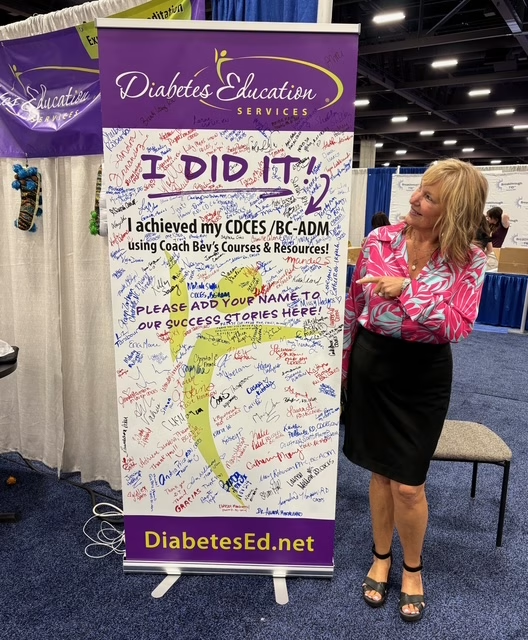
We are proud to share that hundreds of students have successfully passed their certification exams using our courses and resources to get over the finish line!
This page is a celebration of YOUR success, recognizing the effort and sacrifices required to attain that passing score.
Congratulations to all of you! Your perseverance and commitment to providing best diabetes care shines through.
If you have passed the CDCES or BC-ADM Exam, please submit your photo and note here! By celebrating this achievement, you serve as an encouragement to others!
Thank you,
Coach Beverly and our DiabetesEd Team