For last week’s practice question, we quizzed participants on HAES®‑aligned philosophy. 96% of respondents chose the best answer. We want to clarify and share this important information, so you can pass it on to people living with diabetes and your colleagues, plus prepare for exam success!
Before we start though, if you don’t want any spoilers and haven’t tried the question yet, you can answer it by clicking here.

MS is a 27-year-old with type 1 diabetes, hypertension, and dyslipidemia, a body mass index (BMI) of 38, and A1C of 8.1%. During today’s visit they say, “Every appointment seems to focus on my weight. I’m tired of feeling judged, and I’m starting to avoid coming to clinic.”
Which response by the diabetes health care professional is most consistent with the philosophy of Health at Every Size® (HAES®)?
- A. “Stepping on the scale can be scary, but losing even a few pounds will improve all of your health conditions.”
- B. “Let’s put the scale aside for today and focus on what matters most to you.”
- C. “Weight loss is essential for diabetes management, so let’s review a meal plan that will bring you success.”
- D. “Since weight discussions are upsetting, let’s avoid talking about nutrition and physical activity during future visits.”

Getting to the Best Answer
Answer A is incorrect. 2.05% chose this answer, “Stepping on the scale can be scary, but losing even a few pounds will improve all of your health conditions.” This response reinforces a weight-centered approach and does not acknowledge the patient’s feelings of stigma or avoidance of care. While weight loss may improve metabolic health for some individuals, HAES emphasizes that healthcare should not be contingent on achieving a specific body weight and that behavior change can improve health regardless of weight change.
Answer B is correct. 95.89% of you chose this answer, “Let’s put the scale aside for today and focus on what matters most to you.” Great job, this is the BEST answer. The Health at Every Size® (HAES®) approach promotes weight-inclusive, person-centered care that emphasizes health-promoting behaviors rather than weight as the primary measure of success. Core principles include respecting body diversity, reducing weight stigma, supporting intuitive eating and enjoyable physical activity, and partnering with individuals to identify meaningful, achievable health goals. This approach demonstrates these principles by acknowledging the person’s experience, reducing judgment, engaging in shared decision-making, and focusing on sustainable behaviors that support overall health and well-being.
Answer C is incorrect. 0% of respondents chose this: “Weight loss is essential for diabetes management, so let’s review a meal plan that will bring you success.” This answer is incorrect. This response continues to prioritize weight over the patient’s concerns and may increase feelings of shame or disengagement. Current diabetes care emphasizes individualized, person-centered treatment that addresses the patient’s priorities, readiness for change, and quality of life.
Finally, Answer D is incorrect. 2.05% chose this answer, “Since weight discussions are upsetting, let’s avoid talking about nutrition and physical activity during future visits.” HAES does not discourage discussions about healthy eating or physical activity. Instead, it encourages conversations that are free of judgment, focus on health-enhancing behaviors, and support autonomy rather than emphasizing weight loss.
We hope you appreciate this week’s rationale! Thank you so much for taking the time to answer our Question of the Week and participate in this fun learning activity!
Want to Learn More about this Question?
Watch our On-Demand Webinar with Jessica Jones for
Level 5 | Weight-Inclusive Diabetes Care
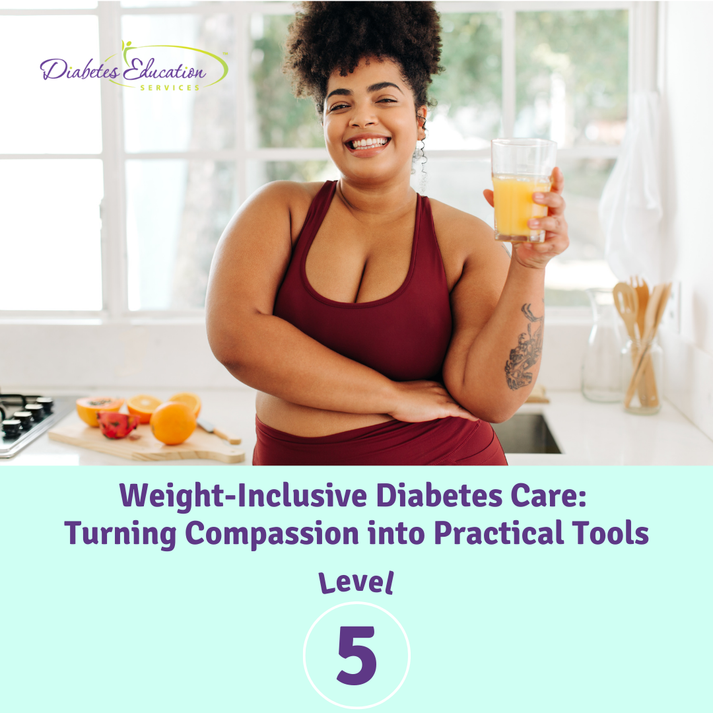
Weight stigma is a well-documented barrier to effective diabetes care — contributing to poorer glycemic control, disordered eating, and care avoidance. This course provides healthcare providers with actionable strategies to integrate weight-inclusive care into diabetes management, focusing on improving outcomes through respect for body diversity and individual autonomy. By shifting from a weight-focused approach to one aligned with Health at Every Size (HAES®), providers can foster trust, enhance engagement, and support sustainable health behaviors.
Jessica Jones, MS, RDN, CDCES, shares evidence-based insights on mitigating weight stigma and applying HAES®-aligned strategies in practice. You’ll learn how to build rapport, set realistic nutrition goals, and implement interventions that prioritize blood glucose management, joyful movement, and intuitive eating.
Course Topics:
- Foundations of weight-inclusive diabetes care: overview and evidence
- Shifting perspectives: building trust and redefining success
- Practical tools for sustainable blood glucose management
Watch our On-Demand Webinar with Coach Bev for
Level 5 | Cancer & Diabetes

Explore the unexpected link between cancer and diabetes — and master glucose management strategies for people with diabetes undergoing treatment.
Individuals with cancer often experience hyperglycemia secondary to treatment, which can increase the risk of infection and other complications. Recent research has also identified a significant link between diabetes and cancer. This course uses a case study approach to explore this connection and provide practical strategies for managing steroid-induced hyperglycemia and improving quality of life for people navigating both conditions.
Course Topics:
- Discuss the relationship between cancer, hyperglycemia, and insulin resistance
- State 3 benefits of normalizing glucose levels during chemotherapy
- Using a case study approach, discuss strategies to improve glucose levels and quality of life