Subscribe
eNewsletter

Ready to get certified?
Free CDCES Coach App

eNewsletter
Free CDCES Coach App
Free Med Pocket Cards

Making a connection is healing for the person in our care and for us too.
This is why I developed what I call the ABC Worksheet — a simple framework rooted in forging genuine connections rather than focusing on corrections:
This simple ABC approach shifts the tone of care. Instead of asking, “Why aren’t you doing this?” we ask, “I’m curious, what’s the hardest thing about managing your diabetes right now?”
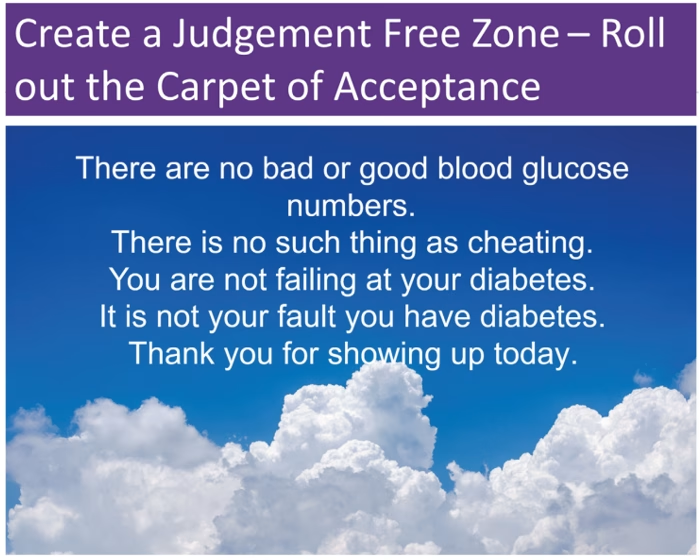
Diabetes is just one aspect of their complete humanity. Diabetes is a common chronic condition that disrupts the usual orchestration of glucose management. No one can give themselves diabetes. And, the individual with diabetes is not to blame for this glucose dysregulation. It’s due to a combination of genetics, early childhood experiences, and social factors that shape health.
I give all of us permission to free ourselves from being responsible for patients’ choices. Our job is to listen and help the individual discover their own internal wisdom. The best way to tap into their self-knowledge is to allow space for reflection and to ask permission before offering our well-intentioned insights.
As I write in my book, “Engaging in active listening is considered a therapeutic intervention on its own. When we focus on listening with curiosity first, something powerful happens. A bridge is built – a connection is made.”
This bridge of active listening provides the perfect segue to dive into diabetes distress and the emotional weightiness of life with diabetes.
Diabetes distress acts like a brake. If we don’t first address fear, shame, or diabetes overwhelm, not even the best diabetes education plan will stick. But when we assess emotional well-being early, we release that brake — and forward movement becomes possible. (Here is a link to Diabetes Distress Screening Tools)
And here is the beautiful part: this approach doesn’t just help the person with diabetes. It sustains us.
“In the end, a person-centered approach doesn’t only support the person with diabetes—it also supports the healthcare professional by fostering authentic connection, shared responsibility, and a greater sense of purpose in your work.”
Investing in connection reduces burnout and increases the likelihood of success. It frees us from being responsible for their choices. We are simply the coach, helping them discover the wisdom they already possess. This partnership can restore our purpose and allow us to be present in this healing journey. Compassion is re-energizing for us and for the person in our care.
So instead of saying, “I know you don’t want to get diabetes complications, so you need to really work on your weight loss goals,” we greet the person and ask them, how are you feeling?
Instead of focusing on their weight at the scale, we ask them, how are you feeling in your body?
Instead of focusing on the weight they have gained, we focus on the behavior changes they have made (meeting with the RDN, eating more veggies, and decreasing their soda intake).
How good does that feel for both the health care provider and the person in their care? It feels great.
Download the ABC’s of Teaching Through Connection Worksheet and begin integrating Awareness, Belonging, and Collaboration into your daily practice.
And if this message resonates with you, I invite you to explore Healing through Connection for Healthcare Professionals. Coach Beverly wrote this book to help you care for others while finding yourself in the process.
👉 Download the Worksheet
👉 Order the Book Here
Let’s move from judgment to partnership.
Let’s lead with connection and curiosity.
Coach Bev 💜
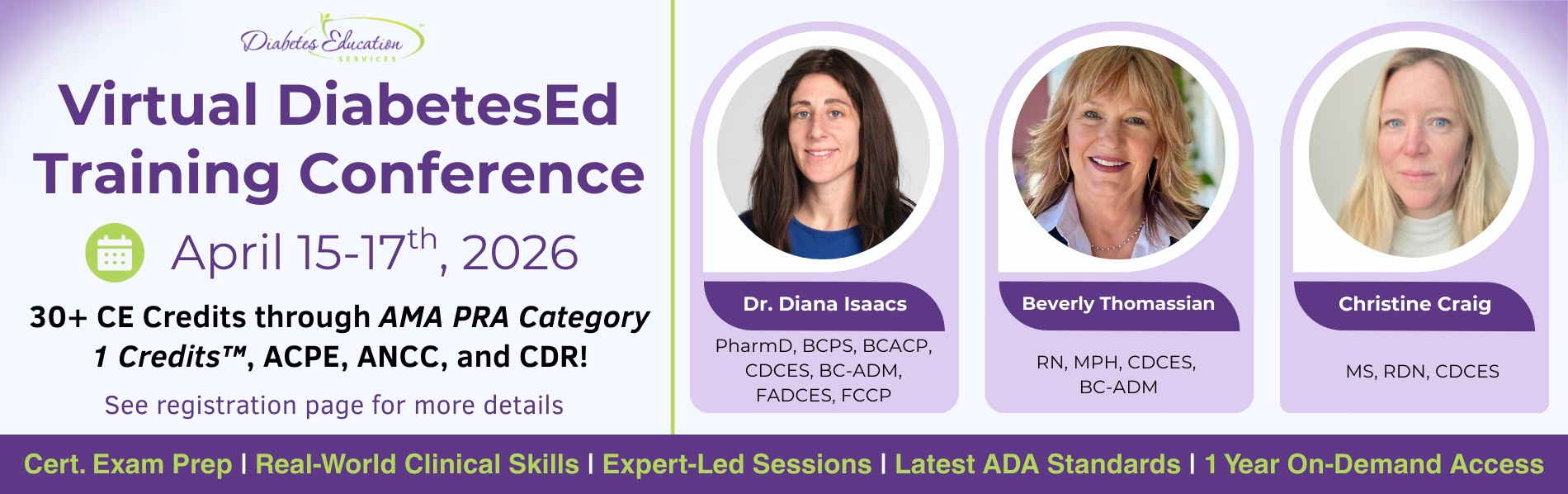
Join national experts including Dr. Diana Isaacs (Cleveland Clinic), Beverly Thomassian (30+ years of experience), and Christine Craig for high-impact, virtual learning—no travel required.
✔ Learn from National Experts — Anywhere
Get the same expert-level instruction you’d receive in person, delivered live to your home or office.
✔ Interactive & Flexible
Walk away with tools you can apply immediately in clinical practice or while preparing for CDCES or BC-ADM exams. From insulin dosing protocols to behavior change strategies that work in the real world—this content bridges theory & practice.
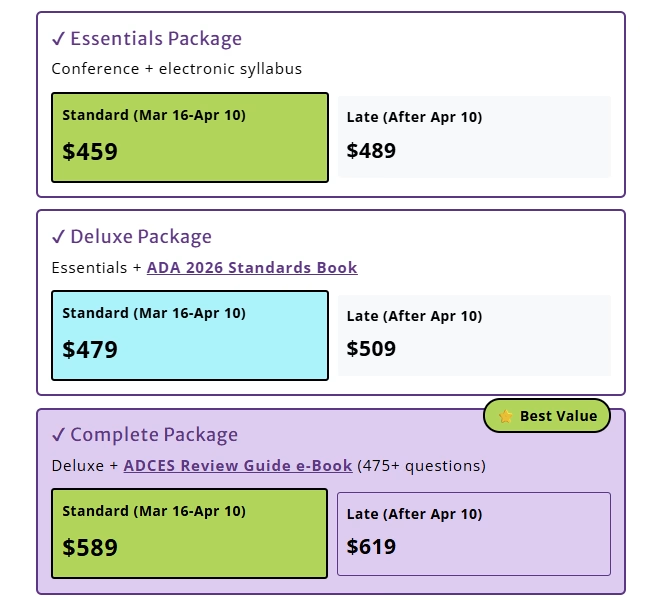
Get exam-ready with confidence.
Course credits through AMA PRA Category 1 Credits™, ACPE, ANCC, and CDR!
Full accreditation details are available on the registration page
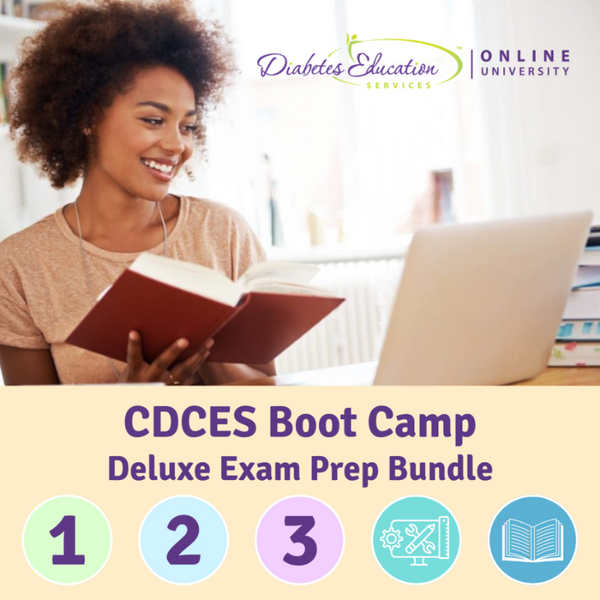
Our CDCES Boot Camp Online Prep Bundle is a comprehensive, high-impact program built specifically for healthcare professionals preparing for the Certified Diabetes Care and Education Specialist (CDCES) exam who want to level up their clinical knowledge and skills.

This evidence-based study bundle is a comprehensive BC-ADM Boot Camp designed for advanced-level healthcare professionals preparing for the Board Certified in Advanced Diabetes Management (BC-ADM) exam and will also provide you with state-of-the-art information to level up your clinical practice.