For last week’s practice question, we quizzed participants on the sudden onset of hyperglycemia. 84% of respondents chose the best answer. We want to clarify and share this important information, so you can pass it on to people living with diabetes and your colleagues, plus prepare for exam success!
Before we start though, if you don’t want any spoilers and haven’t tried the question yet, you can answer it by clicking here.
A 67-year-old woman with type 2 diabetes (A1C 7.2%) is receiving chemotherapy for metastatic breast cancer. As part of her treatment, she receives high-dose dexamethasone every morning for 3 days following each chemotherapy cycle. She takes metformin and insulin glargine daily. Her fasting glucose values remain between 95–120 mg/dL, but glucose levels increase to 260–320 mg/dL after lunch and dinner on steroid treatment days.
Which intervention is the most appropriate?
- A. Increase the basal insulin dose by 50% along with metformin dose on chemotherapy days.
- B. Hold basal insulin and add SGLT2 inhibitor along with the metformin.
- C. Recommend limiting carbohydrates until chemotherapy is completed.
- D. Use a combination of intermediate-acting and rapid-acting insulin on chemotherapy days.

Getting to the Best Answer
Answer A is incorrect. 8.50% chose this answer, “Increase the basal insulin dose by 50% along with metformin dose on chemotherapy days.” Basal insulin primarily targets fasting glucose, which is already within target. An increase in basal insulin may lead to nocturnal or fasting hypoglycemia and will not adequately address post-meal hyperglycemia.
Answer B is incorrect. 2.77% of you chose this answer, “Hold basal insulin and add SGLT2 inhibitor along with the metformin.” This answer is not correct. SGLT2 inhibitors do not provide rapid glucose lowering needed for acute steroid-induced hyperglycemia. Also, stopping the insulin could lead to dangerous blood glucose elevations due to the side effects of chemotherapy including, dehydration, infection, poor oral intake, leading to increased risk of hyperglycemic crisis during treatment periods.
Answer C is incorrect. 4.74% of respondents chose this: “Recommend limiting carbohydrates until chemotherapy is completed.” This answer is incorrect. Restricting carbohydrates excessively during cancer treatment may worsen nutritional status and doesn’t address steroid-induced hyperglycemia. Medication adjustments—not severe dietary restriction—are the treatment of choice.
Finally, Answer D is correct. 83.99% chose this answer, “Use a combination of intermediate-acting and rapid-acting insulin on chemotherapy days.” Great job! You chose the best answer. Glucocorticoids commonly produce postprandial hyperglycemia, particularly in the afternoon and evening after morning dosing. Matching insulin therapy to the steroid’s glycemic effect by using NPH insulin along with bolus mealtime insulin, is generally more effective than simply increasing basal insulin. Continuous glucose monitoring (CGM), when available, can help identify steroid-related glucose patterns.
For More Info on Cancer and Diabetes, we have 2 great resources for you.
- Decoding the Cancer and Diabetes Connection Article by Beverly Thomassian
- Cancer and Diabetes Webinar (1.5 CEs) Airing July 21, at 11:30am. .
We hope you appreciate this week’s rationale! Thank you so much for taking the time to answer our Question of the Week and participate in this fun learning activity!
Want to Learn More about this Question?
Join us July 21st for our
Level 5 | Cancer & Diabetes Webinar
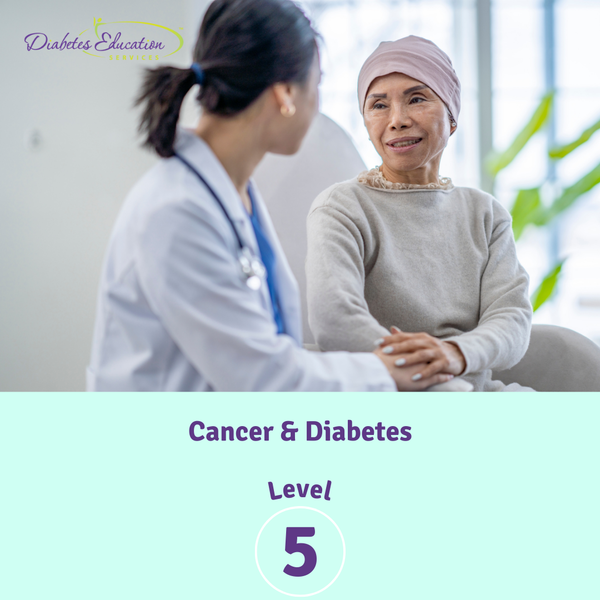
Explore the unexpected link between cancer and diabetes — and master glucose management strategies for people with diabetes undergoing treatment.
Individuals with cancer often experience hyperglycemia secondary to treatment, which can increase the risk of infection and other complications. Recent research has also identified a significant link between diabetes and cancer. This course uses a case study approach to explore this connection and provide practical strategies for managing steroid-induced hyperglycemia and improving quality of life for people navigating both conditions.
Course Topics:
- Discuss the relationship between cancer, hyperglycemia, and insulin resistance
- State 3 benefits of normalizing glucose levels during chemotherapy
- Using a case study approach, discuss strategies to improve glucose levels and quality of life