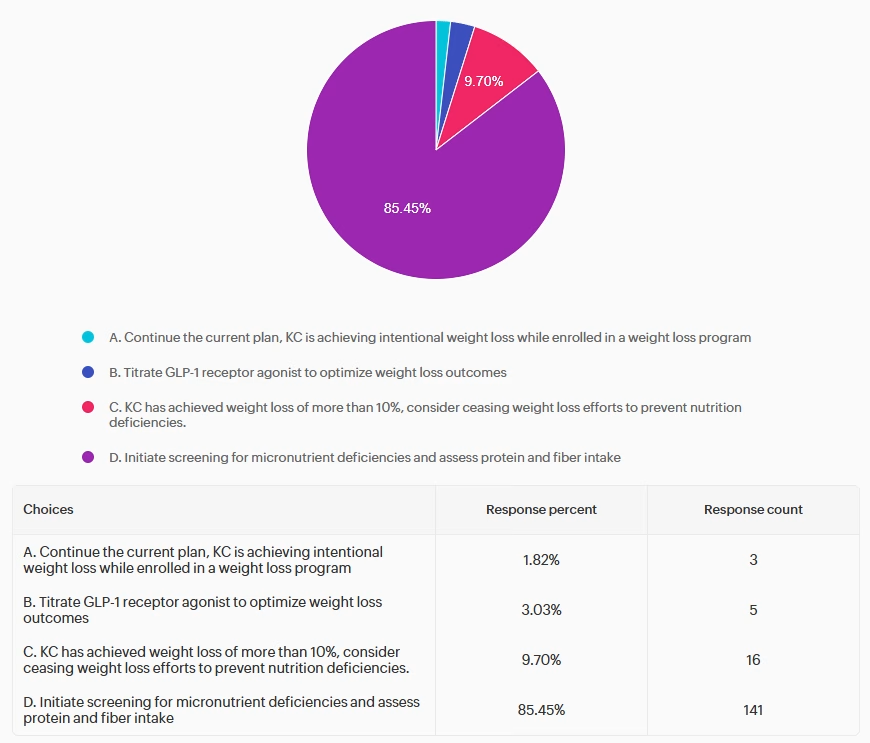
For last week’s practice question, we quizzed participants on the next steps after 12% weight loss. Over 85% of respondents chose the best answer. We want to clarify and share this important information, so you can pass it on to people living with diabetes and your colleagues, plus prepare for exam success!
Before we start though, if you don’t want any spoilers and haven’t tried the question yet, you can answer it by clicking here.
Question of the Week:
KC is a 62-year-old individual with type 2 diabetes who presents for follow-up after initiating a weight loss program 3 months ago. They report consuming approximately 1,000–1,100 kcal/day and have lost 12% of their body weight, with a current rate of weight loss averaging 5% in the last month.
Their diet excludes most grains and fruits, and they report occasional fatigue and constipation. Current medications include metformin, tirzepatide, and atorvastatin.
Based on current standards of care, what is the most appropriate response regarding nutrition and weight changes?
- Continue the current plan, KC is achieving intentional weight loss while enrolled in a weight loss program
- Titrate GLP-1 receptor agonist to optimize weight loss outcomes
- KC has achieved weight loss of more than 10%, consider ceasing weight loss efforts to prevent nutrition deficiencies.
- Initiate screening for micronutrient deficiencies and assess protein and fiber intake
Getting to the Best Answer
Answer 1 is incorrect. 1.82% chose this answer, “Continue the current plan, KC is achieving intentional weight loss while enrolled in a weight loss program.” Although KC is achieving clinically significant weight loss, they have multiple risk factors for nutrition deficiencies, including intake <1,200 kcal/day, rapid weight loss (>4% per month), age >50, and restriction of nutrient-dense food groups.1 These risk factors warrant further evaluation before continuation without modification.
Answer 2 is incorrect. 3.03% of you chose this answer, “Titrate GLP-1 receptor agonist to optimize weight loss outcomes.” While GLP-1 receptor agonists are effective for weight management, further intensification may not be appropriate in the setting of already rapid weight loss and inadequate intake. Additional assessment and individualization of outcome goals is recommended before intensification is initiated.
Answer 3 is incorrect. 9.7% chose this answer, “KC has achieved weight loss of more than 10%, consider ceasing weight loss efforts to prevent nutrition deficiencies.” While monitoring weight change is necessary, automatically discontinuing weight loss efforts may not be recommended. Instead, care should focus on optimizing nutritional adequacy, potentially incorporating supplementation, and adjusting the treatment plan to support safe, sustainable weight-loss goals while minimizing nutrition and medical risk.
Finally, Answer 4 is correct. 85.5% of respondents chose this: “Initiate screening for micronutrient deficiencies and assess protein and fiber intake” GREAT JOB! KC meets several high-risk criteria for nutrient deficiencies, including low caloric intake (<1200 calories per day), rapid weight loss (>4% per month), older age, and limited dietary variety. The current standards of care recommend screening for micronutrient deficiencies within these high risk groups. Screening is guided by clinical judgement but nutrients of concern include iron, calcium, magnesium, zinc, B1, B12, Vitamin C, and fat-soluble vitamins A, D, E, and K.1 It is also recommended to ensure adequate protein intake to preserve lean mass and ensure adequate fiber and fluid intake to address constipation in individuals consuming very low-calorie intake.
We hope you appreciate this week’s rationale! Thank you so much for taking the time to answer our Question of the Week and participate in this fun learning activity!
Want to Learn More about this Question?
Join us live in San Diego for our
DiabetesEd Training Program
Brand new agenda for 2026!

🌟Updated Schedule: ADA Boot Camp, Tech, MNT & More
Live in Beautiful San Diego – Oct 22-23, 2026
Re-Ignite your Passion & Prepare for Diabetes Certification Exams
🎓 Earn 30+ CEs: AMA PRA Category 1 Credits™, ACPE, ANCC, and CDR!
📅
2-Day Conference
Oct 22–23, 2026
⏱️
15.5 Live CEs
+ 17 bonus CEs
🏅
CDCES & BC-ADM
Exam Prep + Renewal
📍
San Diego, CA
1.7 mi from airport
Advance Your Expertise and Prepare for Your Future
The field of diabetes care is expanding and evolving rapidly. This unique training conference will keep you on the cutting edge plus prepare you for certification exams. It also fulfills the Standards of Care renewal requirement. Join us for two days of intensive education that is fun and inspiring. Add on the optional Day 3 (Engaging the Disengaged), to complete your conference exeperience.
Day 1 – ADA/AACE Standards of Care Boot Camp
Coach Beverly and Diana Isaacs, PharmD, BC-ADM, CDCES co-lead an exciting day that brings the ADA and AACE Standards to life. Gain fresh insights, practical tools, and a deeper understanding of the latest in person-centered diabetes care. After attending, you will be empowered to share the latest in diabetes care with your colleagues and the people in your care.
Day 2 – Insulin, Tech, MNT and Case Studies
Take your knowledge to the next level with this intensive deep-dive into insulin therapy, dosing and pattern management with Dr. Diana Isaacs. Next, stay for the diabetes tech show-and-tell as Diana demonstrates the specs of the latest pumps and sensors. After lunch, nutrition whiz Christine Craig, MS, RDN, CDCES expertly details the latest in MNT and provides real strategies on translating this content to your clinical practice. You will have a chance to put it all together as Coach Beverly leads you through a series of case studies that integrates content from Day 1 and Day 2.
Add-On Day 3 – Engaging the Disengaged
On Saturday, join this exceptional day-long program led by William H. Polonsky, PhD, CDCES & Susan Guzman, PhD (Behavioral Diabetes Institute) that reveals psychosocial forces behind diabetes self-management — tools to break through resistance and inspire change.
Read more below
🌟Registration Options at a Glance
📜 Essentials
Registration
+ Printed Syllabus
$559.00
🌟 Deluxe
Essentials
+ ADA Standards Book
$589.00
🏆 Complete – Best Value!
Deluxe
+ ADCES Review Guide e-Book
$669.00
5 Reasons to Attend
- Led by national experts 👩⚕️Dr. Diana Isaacs (Cleveland Clinic), Coach Beverly 🧢 (30+ years of experience), and Christine Craig (nutrition whiz).
- 🌴 Location makes for a great vacation
- Networking, walking paths, connection
- Ready yourself for the diabetes future🚀
- Have fun, win prizes, play DiaBingo 😄
What's Included?
- 🍽️ Healthy breakfasts, lunch, refreshments and coffee ☕
- 📘 100-page printed syllabus
- 🎤 2 days of engaging, expert-led education with case studies.
- 🎓 12 FREE online courses ($375 value)
- Free MedPocketCard & Coach Bev’s Book 📗 Healing through Connection.
Add on a 3rd Day!
Enroll in
ENGAGING THE DISENGAGED
Strategies for Promoting Behavior Change in Diabetes
October 24, 2026

Transform how you engage patients with diabetes — master behavior change, reduce distress, and overcome medication hesitancy.
Why do so many patients know what they should do — but still struggle to do it?
The answer lies in the psychology of diabetes.
In this transformative full-day course, world-renowned experts William H. Polonsky, PhD, CDCES, and Susan Guzman, PhD, from the Behavioral Diabetes Institute reveal the hidden psychosocial forces that drive — or derail — diabetes self-management.
You’ll walk away with a completely new toolkit for breaking through patient resistance, dissolving medication hesitancy, and creating clinical encounters that actually inspire change!