Subscribe
eNewsletter

Ready to get certified?
Free CDCES Coach App

eNewsletter
Free CDCES Coach App
Free Med Pocket Cards
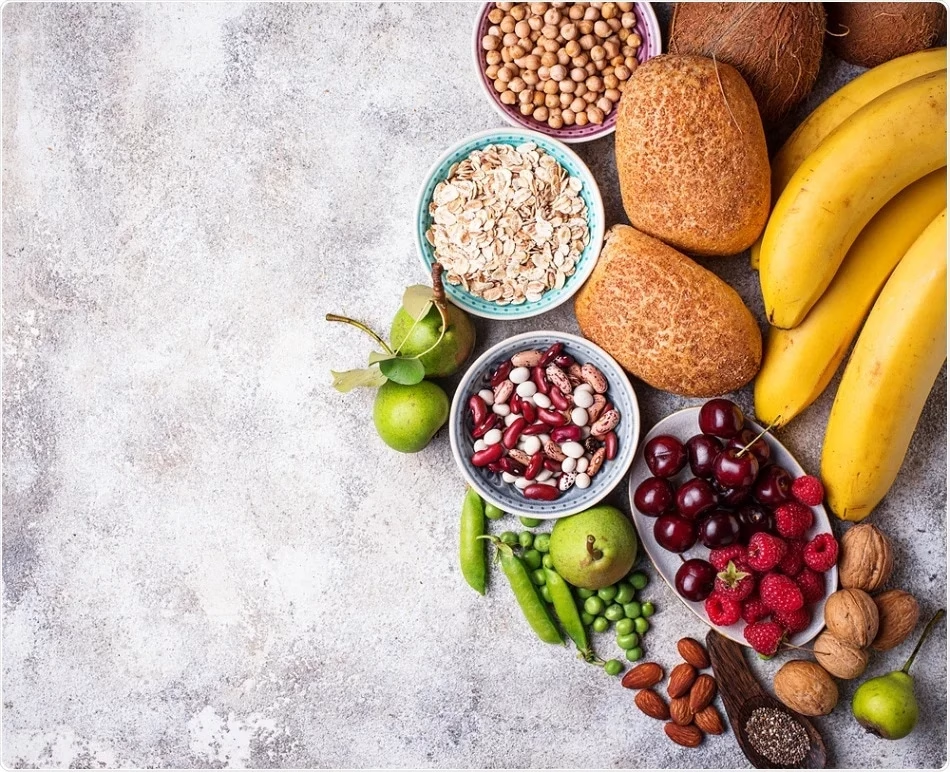
Dietary fiber is a complex carbohydrate and bioactive food compound that has an important role in diabetes management and cardiometabolic health. High-fiber dietary patterns are associated with a lower risk of type 2 diabetes, cardiovascular disease, obesity, gastrointestinal disorders, and certain cancers. ¹,²
In individuals with diabetes, fiber-rich eating patterns have been shown to improve glycemia, reduce postprandial glucose excursions, and improve lipid profiles. ¹ A recent meta-analysis found that for individuals with type 1 diabetes, a high- fiber diet not only supports A1c reduction but is also associated with reduced hypoglycemia risk due to its role in slowing digestion and absorption. ³ Despite this evidence most adults fail to meet recommended fiber intake guidelines, presenting an opportunity for nutrition interventions.
The Dietary Reference Intake (DRI) for fiber, established by the Institute of Medicine, along with the 2026 ADA Standards of Care ¹ , recommends 14 grams of fiber per 1,000 Calories, corresponding to an Adequate Intake of approximately 25–38 grams per day depending on age, gender, and energy needs. 4 Higher-fiber dietary patterns greater than 35 grams per day ³ and up to 50 grams per day 1 may provide additional glycemic benefits for individuals with diabetes.
Both the 2020–2025 and 2025–2030 Dietary Guidelines for Americans 5 emphasize fruits, vegetables, whole grains, and legumes as primary fiber sources; however, the recommended portions of these food groups differ between guidelines. The newly released 2025–2030 guidelines place greater emphasis on overall dietary patterns and whole-food sources, with reduced total grain servings, increased emphasis on legumes, and a prioritization of reduced processed foods rather than focusing on fiber as an isolated nutrient.
However, the Scientific Report of the guidelines does reference an optimal fiber intake range of 25–29 grams per day. ² Aligning with ADA Standards of Care, the focus shifts from individual nutrients to overall eating patterns, supporting health professionals to encourage food choices that help individuals meet evidence-based guidelines for fiber recommendations.
Despite serving-size guidance and scientific evidence on the benefits of fiber, average intake in the United States remains far below recommendations. Fewer than 5-7% of adults meet daily fiber requirements. 5 Disparities in intakes among groups have grown over time, with data from the 2017–2018 USDA Economic Research Service showing that, within Hispanic populations, fiber consumption was highest at about 9 grams per 1,000 Calories, compared with
7.7 grams per 1,000 Calories among non-Hispanic White individuals, and 7.0 grams per 1,000 Calories among Black individuals 6 .
Although the amount varies across groups, most individuals reach only 58% of the daily fiber recommendations. Inadequate intake stems from not only food preferences but tolerance, food cost and access, time constraints, nutrition literacy, as well as, other social determinants of health. To help the U.S. population meet fiber goals, practical strategies consider not only culturally relevant nutrition interventions but food assistance programs, systems planning, and community resources that improve access to fiber-rich foods.
Therapeutically, the type of fiber matters, with insoluble or soluble providing different health benefits. Insoluble fiber creates bulk within the stool and can promote bowel regularity and reduces risk of certain cancers. Whereas, soluble fiber forms a viscous gel in the gastrointestinal tract and provides metabolic benefits, including reduced postprandial glucose responses and lower cholesterol levels. 7
While not specific to type, understanding fiber claims on food labels is a practical entry point for guiding individuals toward higher-fiber food choices. According to FDA labeling regulations, foods may be labeled a “good source” of fiber if they provide 10–19% of the Daily Value per serving (≥3 grams), while an “excellent source” of fiber provides greater than or equal to 20% of the Daily Value per serving (≥5 grams). 8
Additionally, the FDA has approved the use of “will reduce the risk of coronary heart disease” health claims
on food packaging due the cardioprotective effects of high soluble fibers β-glucan (found in oats and barley) and psyllium. 9 Emphasizing dietary patterns, food quality assessment, label literacy, and considerations for additional functional fiber supplementation can support individuals with diabetes to make informed food choices and shifts in their intake.
Practical strategies to promote higher fiber intake are outlined in the 2026 ADA Standards of Care¹ (Check out Nutrition Behaviors to Encourage ¹ within section 5: Facilitating Positive Health Behaviors and Well-being to Improve Health Outcomes) and can be reinforced through simple, actionable “High-Five for Fiber” tips.
These tips are a catchy way to encourage health behaviors that may help individuals gradually add fiber (slow addition improves gut tolerance) to meet daily recommendations. Ideas can include having individuals choose at least one “high- fiber, excellent source” daily (which has more than 5 g fiber per serving), discover high soluble fiber foods, strive for five, or more, servings from vegetables and/or fruits each day, and/or “take five” to plan meals that include whole grains, fruits, vegetables, legumes, and/or nuts and seeds each week. These tips encourage choice, helping individuals find foods that fit their personal preferences, affordability, cultural traditions, and lifestyles ¹ while supporting sustainable, health-promoting dietary patterns.
Christine Craig, MS, RDN, CDCES
Founder: Nutrition for Daily Living
References:

Focused. Flexible. Proven.
Basic & e-Deluxe CDCES Boot Camp Bundle Includes:
Course credits through AMA PRA Category 1 Credits™, ACPE, ANCC, and CDR!
Get exam-ready with confidence.
Our CDCES Boot Camp Online Prep Bundle is a comprehensive, high-impact program built specifically for healthcare professionals preparing for the Certified Diabetes Care and Education Specialist (CDCES) exam who want to level-up their clinical knowledge and skills.
✔ Learn at your pace with expert-led, exam-focused content
✔ Everything you need—organized, practical, and in one place
✔ Perfect for self-directed learners who want complete, person-centered content for clinical practice and exam prep.
✔ Build knowledge, sharpen test-taking skills, and prepare with confidence—on your schedule.

If you’ve considered not renewing your professional practice group membership this year, you’re not alone. Membership in professional organizations has declined as many turn to social media and AI-driven platforms for information and connection. Still, I encourage you not to abandon professional membership in favor of options that may seem cheaper or more convenient.
In a noisy, chaotic landscape of information overload, professional practice groups remain a refuge from the storm. They offer a trusted alternative to clickbait, providing vetted expertise, meaningful connection, and true professional community.
No amount of viral TikTok videos or LinkedIn commentary can replace the depth of connection and sense of purpose that come from active engagement in a professional practice organization. And, here’s why.
Professional practice groups, also known as professional practice organizations, are designed to advance a specific field by providing members with networking opportunities, professional development, and practice resources. In healthcare, these organizations may be tailored to the needs of a single discipline, such as the American Nurses Association, or span interdisciplinary areas of practice, like the Association of Diabetes Care and Education Specialists or the American Diabetes Association.
Some organizations focus primarily on education and credentialing, while others emphasize leadership development and community building. Still others center their work on advocacy related to patient care, access, and insurance coverage.
At its core, most professional practice groups are founded and driven by their members, with membership dues supporting the administrative needs required to operate. As groups grow, they often engage professional management or organizational leadership teams to oversee day-to-day operations such as membership services, programming, finances, legal compliance, and other administrative functions.
Strategic direction and oversight typically remain the responsibility of an elected or appointed governing body. In some cases, professional organizations may choose to hire members, transitioning them from volunteer roles into paid staff positions.
As operating costs rise, often without corresponding increases in salaries or reimbursement, many professional practice groups partner with industry or government organizations for additional financial support. These partnerships can help keep membership dues, educational programming, and events accessible and affordable for members.
It would be easy to blame declining professional membership on COVID, but the reality is this trend started long before the pandemic. Across healthcare, fewer clinicians are joining or renewing professional organizations. Cost is often the biggest factor. When budgets are tight, many people feel forced to choose one membership instead of several. Others question whether the return on investment is still there, especially when education, networking, and professional content are now easy to find online for free.
In my own field of dietetics, I also hear concerns about transparency and alignment with the future of the profession. The move to a master’s degree requirement without a meaningful increase in entry-level pay has created real frustration, particularly for early-career professionals and those from underrepresented backgrounds. Many feel their needs were not fully considered or advocated for during that transition.
These frustrations are valid. But they are also exactly why walking away may not be the answer. Professional practice groups are shaped by the people who show up. If something isn’t working, the most effective way to change it is to get involved.
Despite the challenges, the benefits of professional membership far outweigh the drawbacks, and the opportunity to influence the future of your profession is worth staying engaged.
Social media platforms like LinkedIn, Substack, and X (formerly Twitter) are great for ideas and inspiration, but they rarely offer sustained, reciprocal mentorship. Most interactions are brief, one-sided, or tied to someone selling something.
Professional practice groups offer something different. They foster trusted relationships with people who have walked the same path and understand the realities of the work. Advice is shared openly, support develops over time, and there is no sales funnel attached. It is not a transaction. It is a co-op.
Professional practice groups offer a space to ask questions without worrying about who is watching or how you are being perceived. There is room to be unsure, curious, or quietly ambitious, especially early in your career or during periods of transition.
Unlike social media, which often rewards confidence and visibility, professional groups tend to reward competence, growth, and thoughtful engagement. The focus is less on performance and more on learning and supporting one another as professionals.
Most online content is designed for reach, not rigor. Professional practice groups focus on depth, offering evidence-based, peer-reviewed insights shared by professionals, for professionals. It is not about trends. It is about trust. As these professional practice groups evolve, many are also opening the door to honest conversations about topics once considered off-limits, such as workplace culture, compensation, and career options.
I’ve made meaningful connections on social media and learn something new every day from tools like ChatGPT. Those platforms have their place.
But when I want to understand where a profession is really headed, I look to professional practice groups. Who is presenting the research? What study resources are being recommended? Who is mentoring, volunteering, and helping shape the future of the field? These groups create space to contribute, learn, and grow alongside peers who care deeply about the work.
I’ve always respected my work colleagues, but I truly value my professional practice peers. I hope you will, too.
References:
Sarah is the owner of Sarah Hormachea: Diabetes Care and Education, LLC. She is a long-time member of the Academy of Nutrition and Dietetics, the Association of Diabetes Care and Education Specialists (ADCES), and the American Diabetes Association (ADA). She currently serves as Webinar Chair for the Academy’s Diabetes Practice Group and is an incoming member of the ADCES Board of Directors. She is also enrolled in a women’s leadership development program through the ADA.


Author: Christine Craig, MS, RDN, CDCES
Founder: Nutrition for Daily Living
This year’s National Nutrition Month’s theme is “Discover the Power of Nutrition.” Nutrition has the power to help individuals and communities thrive.
The nutrition profession offers diverse career pathways spanning clinical care, community health, education, research, industry, leadership, and private practice, allowing Registered Dietitian Nutritionists (RDNs), also known as Registered Dietitians (RDs), to grow and evolve their careers over time.
RDs leverage “the power of nutrition” while delivering evidence-based medical nutrition therapy (MNT) across the diabetes care continuum.
Nutrition is both a challenge and an opportunity for individuals living with diabetes and can have direct impacts on health outcomes.
As of February 2026, more than 113,900 RDNs are credentialed in the United States.1 In 2025, just over 8,600 RDNs also held the Certified Diabetes Care and Education Specialist (CDCES) credential, representing approximately 45% of all CDCES professionals2. Employment for dietitians is projected to grow by 6%3. However, the field has recently seen a decline in new graduates, likely due to post-pandemic enrollment shifts and the 2024 transition to a required master’s degree4. Supervised practice hours and passing the national examination continue to be required. Despite these challenges, the RDN credential remains the gold standard for evidence-based nutrition practice and new career opportunities continue to evolve.
Dietitians in diabetes care practice in a wide range of settings, including hospitals and outpatient clinics, primary care and endocrinology offices, federally qualified health centers, public health programs, academia, digital health, industry, community-based organizations and more. Increasingly, entrepreneurship has also emerged as another pathway. Approximately 12% of RDNs in the United States are self-employed.5
ADCES recently launched an Entrepreneurship Community of Interest (COI) group, leaning into this growing career trend. For many dietitians, private practice offers an opportunity to meet an unmet need or specialization, schedule flexibility, and a space to design new programs and interventions.
Both the American Diabetes Association and the Academy of Nutrition and Dietetics recommend referral to MNT for individuals with diabetes, yet fewer than 10%6 receive these services. Barriers include limited access to RDNs within health systems, fragmented referral networks, and inconsistent insurance coverage for nutrition care.7 These gaps in access were a key motivator for my own entrepreneurial venture, reinforcing that many successful innovations are often driven by unmet needs.
In 2023, I founded Nutrition for Daily Living to help address access barriers within my own local community. Building a business required learning the business of nutrition including marketing, finances, legal requirements, and navigating insurance for MNT. What began as a part-time side hustle has now become a full-time practice, enabling me to work towards my goal of delivering personalized care while fostering long-term partnerships with clients. No matter your setting, innovation can start with awareness and creativity and when paired with courage, it can open doors to meaningful impact and success.
Dietitians in diabetes care play an important role in advancing our profession by bridging nutrition innovations, clinical care expertise, behavioral strategies, and collaboration with patients, communities, and care teams. With the increasing complexity of diabetes management, RDNs bring essential skills in leadership, problem-solving, and patient-centered care. Individuals with an entrepreneurial spirit, no matter the care setting, can pilot new approaches, identify unmet needs, and design new care models. As we celebrate National Nutrition Month together, let’s recognize the many important contributions RDNs provide in transforming diabetes care.
Christine Craig, MS, RDN, CDCES
Founder: Nutrition for Daily Living
References:
Course credits through AMA PRA Category 1 Credits™, ACPE, ANCC, and CDR!
Get exam-ready with confidence.
Our CDCES Boot Camp Online Prep Bundle is a comprehensive, high-impact program built specifically for healthcare professionals preparing for the Certified Diabetes Care and Education Specialist (CDCES) exam who want to level-up their clinical knowledge and skills.
✔ Learn at your pace with expert-led, exam-focused content
✔ Everything you need—organized, practical, and in one place
✔ Perfect for self-directed learners who want complete, person-centered content for clinical practice and exam prep.
✔ Build knowledge, sharpen test-taking skills, and prepare with confidence—on your schedule.
Focused. Flexible. Proven.
Basic & e-Deluxe CDCES Boot Camp Bundle Includes:

Course credits through AMA PRA Category 1 Credits™, ACPE, ANCC, and CDR!
Get exam-ready with confidence.
Our comprehensive BC-ADM Online Study Programs are specifically designed for healthcare professionals who are studying for the Board Certified in Advanced Diabetes Management (BC-ADM) exam.
✔ Learn at your pace with expert-led, exam-focused content
✔ Everything you need—organized, practical, and in one place
✔ Perfect for self-directed learners who want complete, person-centered content for clinical practice and exam prep.
✔ Build knowledge, sharpen test-taking skills, and prepare with confidence—on your schedule.
Focused. Flexible. Proven.
Basic & e-Deluxe BC-ADM Boot Camp Bundle include:


Are you a healthcare professional providing diabetes care in an under-resourced community? Are you working toward earning your certification in diabetes education (CDCES or BC-ADM?)
If yes, please consider applying for our Bridge Scholarship, which covers the registration cost for the DiabetesEd Training Conference in San Diego, Oct 22-23, 2026 (value of $559). This program will provide you with the content needed to prepare for mastery-level diabetes certification and beyond!
Recipients will be awarded the Training Conference reg fee, including the live program, printed syllabus, 30+ CE’s, plus access to the online bonus courses for one year! Applications Due on July 20th, 2026

🌟Updated Schedule: ADA Boot Camp, Tech, MNT & More
Live in Beautiful San Diego – Oct 22-23, 2026
Re-Ignite your Passion & Prepare for Diabetes Certification Exams
🎓 Earn 30+ CEs: AMA PRA Category 1 Credits™, ACPE, ANCC, and CDR!
📅
2-Day Conference
Oct 22–23, 2026
⏱️
15.5 Live CEs
+ 17 bonus CEs
🏅
CDCES & BC-ADM
Exam Prep + Renewal
📍
San Diego, CA
1.7 mi from airport
The field of diabetes care is expanding and evolving rapidly. This unique training conference will keep you on the cutting edge plus prepare you for certification exams. It also fulfills the Standards of Care renewal requirement. Join us for two days of intensive education that is fun and inspiring. Add on the optional Day 3 (Engaging the Disengaged), to complete your conference exeperience.
Coach Beverly and Diana Isaacs, PharmD, BC-ADM, CDCES co-lead an exciting day that brings the ADA and AACE Standards to life. Gain fresh insights, practical tools, and a deeper understanding of the latest in person-centered diabetes care. After attending, you will be empowered to share the latest in diabetes care with your colleagues and the people in your care.
Take your knowledge to the next level with this intensive deep-dive into insulin therapy, dosing and pattern management with Dr. Diana Isaacs. Next, stay for the diabetes tech show-and-tell as Diana demonstrates the specs of the latest pumps and sensors. After lunch, nutrition whiz Christine Craig, MS, RDN, CDCES expertly details the latest in MNT and provides real strategies on translating this content to your clinical practice. You will have a chance to put it all together as Coach Beverly leads you through a series of case studies that integrates content from Day 1 and Day 2.
On Saturday, join this exceptional day-long program led by William H. Polonsky, PhD, CDCES & Susan Guzman, PhD (Behavioral Diabetes Institute) that reveals psychosocial forces behind diabetes self-management — tools to break through resistance and inspire change.
Read more below
📜 Essentials
Registration
+ Printed Syllabus
$559.00
🌟 Deluxe
Essentials
+ ADA Standards Book
$589.00
🏆 Complete – Best Value!
Deluxe
+ ADCES Review Guide e-Book
$669.00

Transform how you engage patients with diabetes — master behavior change, reduce distress, and overcome medication hesitancy.
Why do so many patients know what they should do — but still struggle to do it?
The answer lies in the psychology of diabetes.
In this transformative full-day course, world-renowned experts William H. Polonsky, PhD, CDCES, and Susan Guzman, PhD, from the Behavioral Diabetes Institute reveal the hidden psychosocial forces that drive — or derail — diabetes self-management.
You’ll walk away with a completely new toolkit for breaking through patient resistance, dissolving medication hesitancy, and creating clinical encounters that actually inspire change!