A 62‑year‑old woman with type 2 diabetes is being followed in a value‑based care program. She uses a continuous glucose monitor (CGM) that provides detailed glucose data, which she electronically shares with her care team.
At her follow‑up visit, her provider notes that her most recent laboratory A1c is unavailable due to a missed lab draw. However, her CGM report shows a Glucose Management Indicator (GMI) of 7.2%. The care team wants to ensure her glycemic status is captured for quality reporting under updated HEDIS® measures.
Which statement best reflects how her glycemic control can be documented?
- A. GMI from CGM data can be used in place of hemoglobin A1c for quality reporting.
- B. GMI is useful for patient education but cannot be used for official quality measures.
- C. GMI should only be used if time‑in‑range data are also reported.
- D. GMI is not recognized by HEDIS® and must be converted to estimated A1c.
Want to Learn More about this Question?
Join Dr. Marie Frazzitta on Nov. 12th for the
Digital Quality Reporting Toolkit: Advanced Strategies for Diabetes Professionals webinar
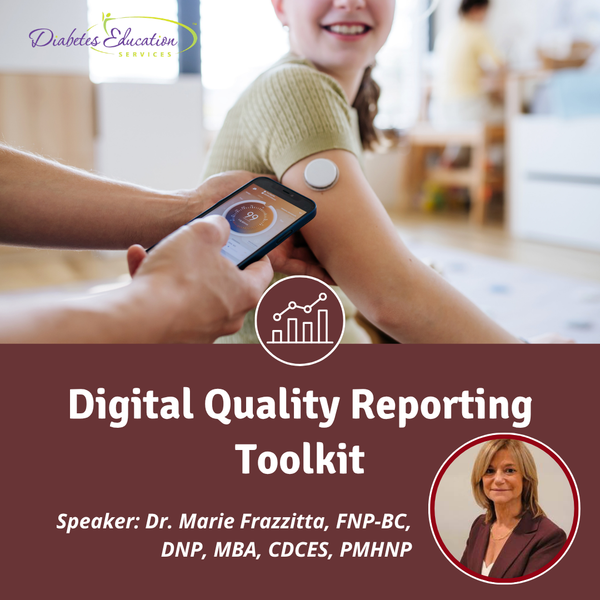
The U.S. healthcare system is rapidly shifting toward digital quality reporting, transforming how diabetes outcomes are measured, reimbursed, and improved.
In this 1-hour and 15-minute program. Dr. Marie Frazzitta, DNP, FNP‑C, PMHNP, CDCES, MBA, explores how national quality initiatives are modernizing diabetes metrics, including the integration of CGM-derived indicators and the upcoming measure that will track CGM adoption. We’ll also highlight the operational realities of digital reporting and show how DCESs can leverage these trends to expand their impact, strengthen care equity, and become strategic partners in quality improvement and population health.