“Jordan is a 52-year-old person living with type 2 diabetes whose provider recently added a second daily medication after their A1C rose from 7.6% to 9.1%. Jordan works alternating shifts and cares for an aging parent. At a follow-up visit, Jordan reports consistently taking their morning dose but missing the evening dose “”more nights than not.”” Jordan says, “”My schedule’s never the same two days in a row. By the time I remember, I’ve already gone to bed.”” Which response by the diabetes care and education specialist best supports sustainable medication-taking?”
Which response by the diabetes care and education specialist best supports sustainable medication-taking?
- A. “Missing doses can raise your glucose and increase your risk of complications. Let’s set a daily 8 PM phone alarm so you don’t forget, and I’ll check your adherence at the next visit.”
- B. “Your evenings sound unpredictable in a good and hard way. Is there something you do most nights, no matter what shift you’ve worked, that we could anchor this dose to?”
- C. “Since mornings are working well, let’s move you to a pill organizer with both doses pre-sorted by day, so you can just take whatever’s next whenever you think of it.”
- D. “Would it help if your parent reminded you each evening? Having someone else keep track might take the pressure off you.”
Want to Learn More about this Question?
Join Evgeniya Evans on Sept. 14 for the
From Compliance to Connection: Positive Psychology Strategies for Lasting Change in Diabetes Care Webinar
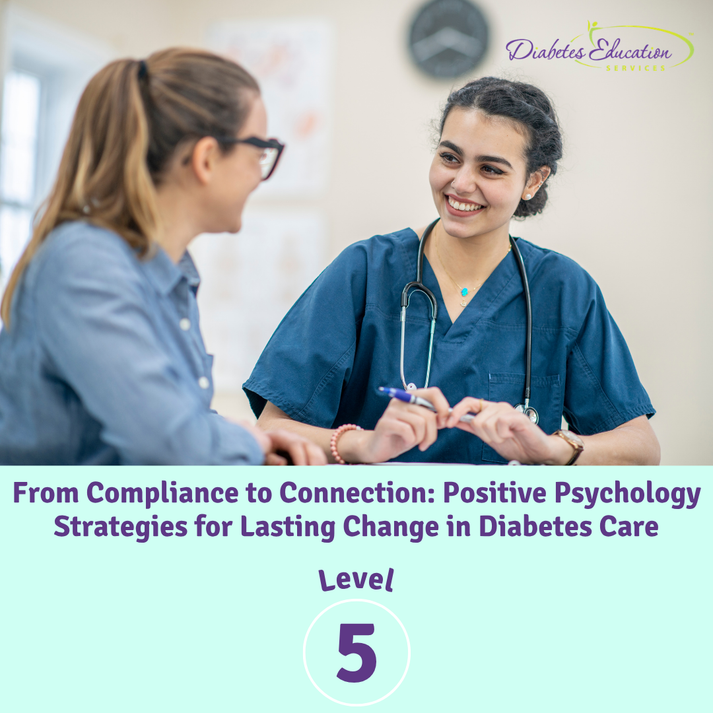
People living with diabetes are often well informed about actions needed to shift into a “healthy lifestyle”, yet often struggle to sustain health behaviors over time. This webinar introduces a positive psychology lens for diabetes care, showing how clinicians can help individuals with diabetes build lifestyles that feel psychologically nourishing, not just medically correct. Rather than focusing solely on risk and problem-solving, we’ll explore how to weave well-being, motivation, and strengths into everyday diabetes education and support.
Drawing on the PERMA framework—Positive Emotion, Engagement, Relationships, Meaning, and Accomplishment—participants will learn practical strategies to enhance motivation, resilience, and self-management. We’ll examine how PERMA aligns with key behavior-change principles such as autonomy, connection, and confidence-building, and translate these ideas into simple questions, reframes, and counseling approaches that can be used immediately in healthcare professionals’ practice.