
Subscribe
eNewsletter

Ready to get certified?
Free CDCES Coach App

eNewsletter
Free CDCES Coach App

COVID cases are surging throughout the United States. Providing the best care for people with diabetes is especially important during this crisis. Which of the following statements regarding diabetes and COVID is most accurate?
Click here to test your knowledge!
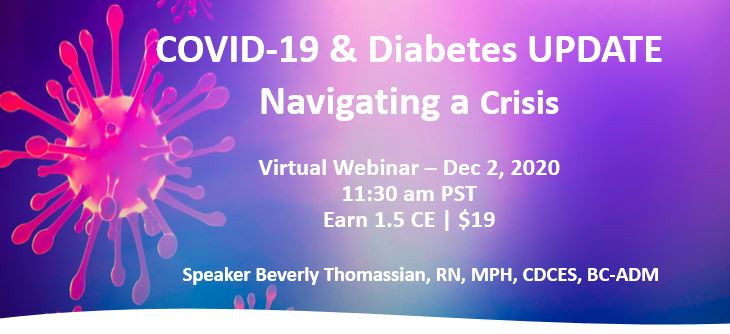
Join our Live Webinar on December 2 at 11:30 am PST | Earn 1.5 CE | $19
With the surge in new COVID cases, what is the essential information health care professionals and Diabetes Specialists need to navigate this overwhelming crisis?
What are the best practices to care for people with diabetes and COVID-19 in the outpatient and hospital setting?
Coach Beverly Thomassian, RN, MPH, CDCES, BC-ADM, has completely updated this critical presentation, to bring health care professionals up-to-date on the current state of COVID and its impact on diabetes care. She summarizes key information including critical teaching points and management strategies for people with diabetes who develop a COVID-19 infection.
Topics Include:
If you miss the live version, your registration guarantees access to the recorded version.
Join us to learn critical information about Diabetes and COVID Management

Instructor: Beverly Thomassian RN, MPH, CDCES, has been Board Certified in Advanced Diabetes Management for over 20 years. She is an Associate Clinical Professor at UCSF and Touro University and a nationally recognized diabetes expert.
Sign up for Diabetes Blog Bytes – we post one daily Blog Byte from Monday to Friday. And of course, Tuesday is our Question of the Week. It’s Informative and FREE! Sign up below!
[yikes-mailchimp form=”1″]Accreditation: Diabetes Education Services is an approved provider by the California Board of Registered Nursing, Provider 12640, and Commission on Dietetic Registration (CDR), Provider DI002. Since these programs are approved by the CDR it satisfies the CE requirements for the CDCES regardless of your profession.*
The use of DES products does not guarantee the successful passage of the CDCES exam. CBDCE does not endorse any preparatory or review materials for the CDCES exam, except for those published by CBDCE.
World Diabetes Day is celebrated in honor of Dr. Fredrick Banting, whose leadership, tenacity and belief led to the discovery of insulin.
The discovery of insulin has saved the lives of countless millions of people over the past hundred years and will continue to save millions of lives in the near future and beyond.
During a hot summer in 1921, Dr.Banting secured space to test out his theory at the University of Toronto. Along with his colleague, Charles Best, and a bare-bones lab, they conducted dozens of experiments on dogs, which ultimately led to the discovery of insulin.


Dr. Banting and Charles Best began their experiments ligating the pancreases of dogs, thinking this would prevent destruction by the digestive pancreatic juices, and then isolating the extract from the islet cells. They then processed the extract from the islet cells and injected this extract they called “insulin” into diabetic dogs. According to an audio interview with Dr. Best, by July 1921, they had 75 positive examples of insulin lowering blood glucose levels in dogs.

In February 1922, doctor Frederick Banting and biochemist John Macleod published their paper on the successful use of an alcohol-based pancreatic extract for normalizing blood glucose levels in a human patient.
Here are some photos of the first insulin bottles produced by the University of Toronto and Eli Lilly.
Soon, word of their discovery got out and the race was on to produce enough insulin to treat the flood of type 1 patients arriving in Toronto to receive this miracle injection.
But, as with any amazing discovery, there is always more to the story.
One of the biggest barriers to Banting was the simple fact that he was not involved in the field of diabetes research. The idea leading to the discovery of insulin came to him after preparing a lecture on the pancreas and diabetes, a subject he knew little about. He wasn’t a trained researcher and thus securing support for the project was initially difficult.
First Children to Receive Insulin
The first patient to receive insulin was a ‘welfare’ case at Toronto General Hospital – no clinical trial structure to say the least. People from Canada/US flooded into Toronto to receive treatment. Banting struggled with the lack of accessibility of insulin – volume needed issues of purification.
The earliest patients were “selected”, some youths from Canada/US, some soldiers with diabetes (probably because of Banting’s service in the First World War), and then later some select private patients. During this time they were working hard to increase the volume and continue to improve the purification process. Insulin was available for testing in the US, namely through Dr. Elliot Joslin in the late summer of 1922.
Takes a Team

While Best played a critical and important role, credit must also go to Professor Macleod, from the University of Toronto, who provided the lab space, showed Dr. Banting how to operate on dogs, provided his student Best and suggested they switch from saline to alcohol to purify the ‘extract’. Dr. Macleod also secured the support of JB Collip, the 4th man on the team, and the first person to purify insulin for human use. Best is also known for pushing Banting to return to the research during a particularly dark period of failure.
Dr. Banting – Fun and Interesting Facts

Want to Learn More About Dr. Banting?
Visit Banting House FaceBook Page
Sign up for Diabetes Blog Bytes – we post one daily Blog Byte from Monday to Friday. And of course, Tuesday is our Question of the Week. It’s Informative and FREE! Sign up below!
[yikes-mailchimp form=”1″]
Our November 3rd Question of the week quizzed test-takers on cystic fibrosis and hyperglycemia. The majority of respondents (60%) chose the correct answer! Great job. Even though most of you got it right, we think it is an important topic to explore and discuss.
Before we start though, if you don’t want any spoilers and haven’t tried the question yet, you can answer below: Answer Question
Question: Which of the following is accurate regarding cystic fibrosis-related diabetes?
Answer Choices:
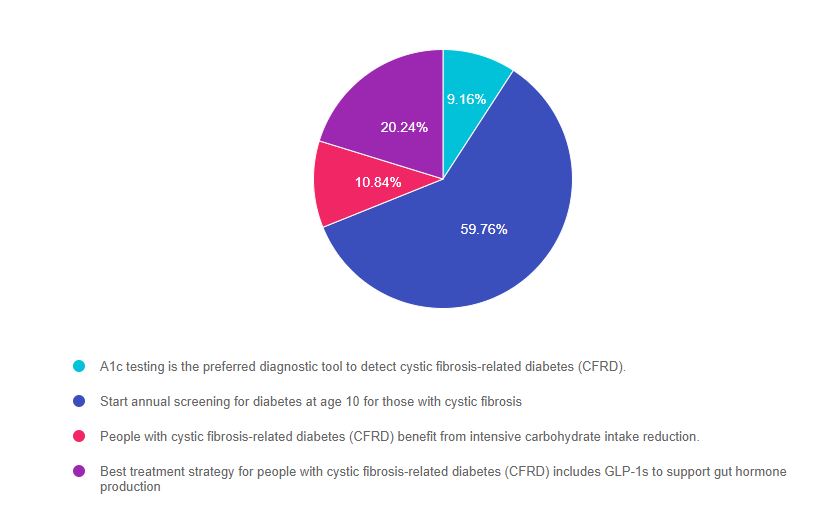
As shown above, the most common choice was option 2, the second most common answer was option 4, then option 3, and finally option 1.
If you are thinking about taking the certification exam, this practice test question will set you up for success. Test writers anticipate possible answers based on the details in the question. They will wave those “juicy answers” right under your nose. Your job is to weed through the particulars, pluck out the most important elements and choose the BEST answer.
Cystic fibrosis is a hereditary disease that affects the lungs and digestive system. The body produces thick and sticky mucus that can clog the lungs and obstruct the pancreas.
Cystic fibrosis-related diabetes (CFRD) is the most common comorbidity in people with cystic fibrosis, occurring in about 20% of adolescents and 40–50% of adults. If not treated adequately and promptly, it can lead to infections and weight loss. Learn more below.
Answer 1 is incorrect. 9.16% chose this answer, “A1c testing is the preferred diagnostic tool to detect cystic fibrosis-related diabetes (CFRD).” ADA recommends using the OGTT screening test to detect CFRD early on so insulin therapy can be provided.
According to ADA 2020 Standards, “A1C is not recommended for diagnosis of diabetes in children with cystic fibrosis”. That might change in the future since publications suggest that an A1C cut point lower than 5.4% (5.8% in a second study) would detect more than 90% of cases and reduce patient screening burden.
Answer 2 is correct. 59.76% of you chose this answer, “Start annual screening for diabetes at age 10 for those with cystic fibrosis-related diabetes (CFRD).” Great job.
According to ADA, “Annual screening for cystic fibrosis-related diabetes (CFRD) with an oral glucose tolerance test should begin by age 10 years in all patients with cystic fibrosis not previously diagnosed with CFRD.” Since CFRD occurs in about 20% of adolescents and 40–50% of adults, annual testing is important for prompt identification. People with CFRD also need to know the signs of hyperglycemia (especially unexplained weight loss) so they can receive immediate treatment to prevent weight loss and infections.
Answer 3 is incorrect. About 10.84% of respondents chose this, “People with cystic fibrosis-related diabetes (CFRD) benefit from intensive carbohydrate intake reduction.” This is not the best answer because people with CFRD often need up to 4,000 calories a day just to maintain their weight. Most important is to encourage them to eat as usual and cover with insulin. Weight maintenance while getting glucose to target are two big priorities.
Finally, Answer 4 is incorrect. 20.24% chose this answer, “Best treatment strategy for people with cystic fibrosis-related diabetes (CFRD) includes GLP-1s to support gut hormone production.” According to ADA, insulin therapy is the preferred treatment to lower glucose and maintain body weight.
People with CF make less of the pancreatic enzymes important for digestion, but GLP-1 hormones released from the intestine are intact.
For more information on CF and management of CFRD, please see these care guidelines; Clinical care guidelines for cystic fibrosis-related diabetes: 2010
We hope you appreciate this week’s rationale! Thank you so much for taking the time to answer our Question of the Week and participate in this fun learning activity!
“This is one of the best review courses I’ve ever taken.”
“I learned so much from the CDCES Exam Prep Toolkit. I now have an assessment after taking the practice exam on the areas I need to focus my studying.”
Student Feedback

Whether you are preparing for the CDCES or BC-ADM exam, this test-taking toolkit is designed to prepare you for success. This toolkit includes two courses with over 200 practice questions to help you prepare and simulate the exam. Plus, we have added a FREE bonus course, Language, and Diabetes – What we say matters. Coach Beverly added this course because she believes it contains critical content for the exam and for our clinical practice!
Sign up for Diabetes Blog Bytes – we post one daily Blog Byte from Monday to Friday. And of course, Tuesday is our Question of the Week. It’s Informative and FREE! Sign up below!
[yikes-mailchimp form=”1″]Accreditation: Diabetes Education Services is an approved provider by the California Board of Registered Nursing, Provider 12640, and Commission on Dietetic Registration (CDR), Provider DI002. Since these programs are approved by the CDR it satisfies the CE requirements for the CDCES regardless of your profession.*
The use of DES products does not guarantee the successful passage of the CDCES exam. CBDCE does not endorse any preparatory or review materials for the CDCES exam, except for those published by CBDCE.

Good nutrition can help fight infection, boost our immune system, and improve our quality of life.
This is especially important as we enter flu season during a pandemic.
While doing all doing we can to prevent getting the flu and COVID-19, we are also very concerned about people with diabetes and their susceptibility to getting sick this season.
Our immunity to viruses is complicated, but there are lifestyle habits that can help to keep us healthier this season. For people with diabetes, the most important thing to remember is keeping blood sugars on target. Healthy blood glucose levels support the immune system to operate most efficiently.
“While having diabetes does not put people at greater risk of getting the coronavirus, their state of health if they contract COVID will impact their outcomes.”
To improve outcomes with COVID and diabetes, it is important to keep blood sugars close to the target, especially for those living with co-morbidities such as obesity or hypertension. Diabetes, especially with elevated glucose for a long period of time, may cause inflammation, which also affects the immune system” states Janaki Vakharia, MD, a clinical fellow in the Endocrinology Division at Massachusetts General Hospital.
As a dietitian, I think a lot about how nutrition is a vital component in maintaining or gaining a healthy immune system. A vitamin deficiency of any kind can weaken our immune system and make us more susceptible to getting any virus; specifically, vitamin D and vitamin C.
Vitamin D can help immune cells function to fight off illness and infection. (1) Sadly, 2020 statistics find that 61% of the elderly population has a vitamin D deficiency. We can take vitamin supplements, but whole foods have so much to offer us. For example, salmon packs 988 IU of vitamin D per 3.5 oz and also provides omega-3 fatty acids which help maintain healthy blood vessels and may reduce chronic inflammation. Also, a vitamin C deficiency can impact our immunity. (2)

Vitamin C is naturally occurring in many fruit and vegetables. Lately, I have been intrigued by the pomegranate. My brother has a large pomegranate tree and recently sent me several beautiful pomegranates. I love the tangy-sweet taste of the juice.
As I started to research the nutrient content of pomegranates, I discovered that humans have had an 8000 year-long love affair with this fascinating fruit, dating from the very first civilization.
The tree’s root bark has been used to treat intestinal parasites. The skin of the fruit has been used to make ink, and the seed oil is used in cosmetics. Pomegranates are also an ancient symbol of fertility and the tree is pest-resistant while being able to withstand long periods of drought.
The most alluring part of the pomegranate is the vibrant red hue of the seeds. This red pigment contains polyphenols which are powerful antioxidants. This is the medicine of the fruit because these antioxidants are what can help our body reduce inflammation. (3) (4)
Most fruit and vegetables contain antioxidants, but the darker the food’s pigment usually the more medicinal the food. When working with our clients to encourage healthier eating to boost their immune system and decrease inflammation advising them to eat more from the food rainbow is very simple and empowering advice.
To add more color into our diets, I am sharing my Spinach Pomegranate Salad recipe
Toss the spinach leaves with the rest of the ingredients. Serves 4
Written by Dawn DeSoto RD, CDCES, our resident Nutrition Content Writer
References:
Sign up for Diabetes Blog Bytes – we post one daily Blog Byte from Monday to Friday. And of course, Tuesday is our Question of the Week. It’s Informative and FREE! Sign up below!
[yikes-mailchimp form=”1″]
Accreditation: Diabetes Education Services is an approved provider by the California Board of Registered Nursing, Provider 12640, and Commission on Dietetic Registration (CDR), Provider DI002. Since these programs are approved by the CDR it satisfies the CE requirements for the CDCES regardless of your profession.
The use of DES products does not guarantee the successful passage of the CDCES exam. CBDCE does not endorse any preparatory or review materials for the CDCES exam, except for those published by CBDCE.
Intestinal health and diabetes are co-related. Which of the following statements is true?
Click here to test your knowledge!
Can’t make the live version? That’s okay. Just register to receive the link to the recorded version later today.

New Webinar topics:
“This Webinar is filled with Bev’s energy, knowledge, and passion for diabetes that she replicates in all her teachings. She puts a demand on herself to be a mentor to all. Her information is well organized, full of current/relevant research, and helps CDCES’ view into the future as a changing world impacts diabetics. I find her to be the most exciting and engaging educator and … OUTSTANDING teacher!!” – recent participant
This one-hour complimentary journey will expand your view of how the trillions of bacterial hitchhikers profoundly influence our health. We will discuss how foods, the environment, and our medical practices have impacted our gut bacteria over time and strategies we can take to protect these old friends.
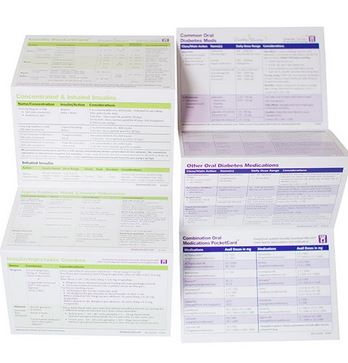
Emily Gibbons– “My coworker just ordered a bunch of these cards for the physicians we work with in the hospital. They are awesome. You guys are the best! I will continue to give you business.”
Our four-sided medication accordion Pocketcards were designed by Coach Beverly Thomassian to assist in clinical practice and exam preparation. One of our best sellers, the Diabetes Medication PocketCard is perfect for all Diabetes Care and Education Specialists.
Updates Include:
Sign up for Diabetes Blog Bytes – we post one daily Blog Byte from Monday to Friday. And of course, Tuesday is our Question of the Week. It’s Informative and FREE! Sign up below!
[yikes-mailchimp form=”1″]Accreditation: Diabetes Education Services is an approved provider by the California Board of Registered Nursing, Provider 12640, and Commission on Dietetic Registration (CDR), Provider DI002. Since these programs are approved by the CDR it satisfies the CE requirements for the CDCES regardless of your profession.*
The use of DES products does not guarantee the successful passage of the CDCES exam. CBDCE does not endorse any preparatory or review materials for the CDCES exam, except for those published by CBDCE.
To celebrate National Diabetes Month, we are excited to provide you with a bunch of helpful resources to help get the word out.

ADA’s FREE Living with Type 2 Diabetes Program: ADA’s program includes six digital, printable journeys to teach how to live well with diabetes; a monthly e-newsletter with tips, stories, and more resources; six free issues of the Diabetes Forecast® magazine; access to an online community and local events. (The program is available in both English and Spanish).
Insulin Cost Savings Toolkit Resource Page – A complete listing of low cost insulin options.
ADA Diabetes Education Library Offers over 170 topics on diabetes that are searchable by topic and language. A treasure trove of educational info.
CDC Diabetes Prevention Program Curricula and Handouts This site offers excellent resources for those interested in offering Diabetes Prevention Education.
National Diabetes Education Program is an online library of resources compiled by the NDEP to help provide accurate information and support for people living with prediabetes and diabetes.
Type 1 Diabetes Resource Page – Includes is a list of helpful online resources for Type 1 Diabetes. It include sites for national organizations like the American Diabetes Association (ADA), sites for diabetes interest groups, and other participant organizations that provide helpful diabetes tips and opportunities to join online groups.

See Full Free Resource Catalog
Sign up for Diabetes Blog Bytes – we post one daily Blog Byte from Monday to Friday. And of course, Tuesday is our Question of the Week. It’s Informative and FREE! Sign up below!
[yikes-mailchimp form=”1″]Accreditation: Diabetes Education Services is an approved provider by the California Board of Registered Nursing, Provider 12640, and Commission on Dietetic Registration (CDR), Provider DI002. Since these programs are approved by the CDR it satisfies the CE requirements for the CDCES regardless of your profession.*
The use of DES products does not guarantee the successful passage of the CDCES exam. CBDCE does not endorse any preparatory or review materials for the CDCES exam, except for those published by CBDCE.
Our October 27th Question of the week quizzed test takers on person-centered language. We are happy to report that 88% of respondents chose the correct answer. We thought that this was an important topic to discuss further, so we can pass on correct info to people living with diabetes.
Before we start though, if you don’t want any spoilers and haven’t tried the question yet, you can answer below: Answer Question
Question: Language use while interviewing someone with diabetes can have a profound impact on the meaningfulness of the interaction.
Which of the following comments uses a person-centered approach and exemplifies the use of updated diabetes language?
Answer Choices:
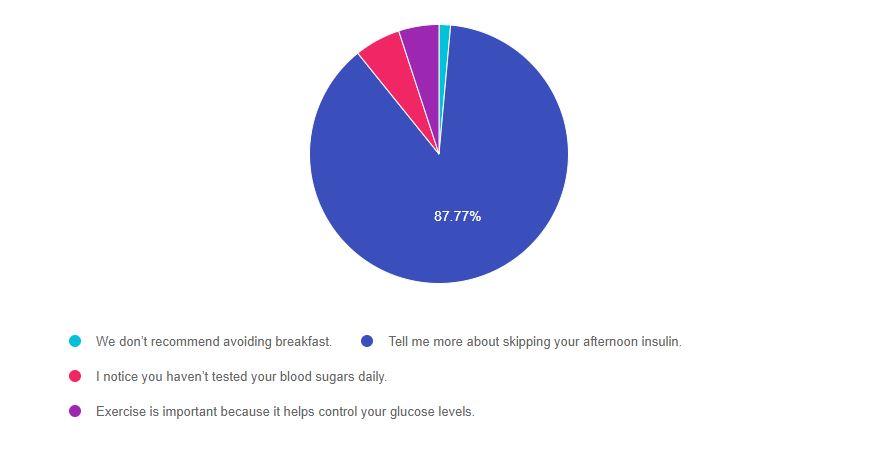
As shown above, the most common choice was option 2, the second most common answer was option 3, then option 3, and finally option 1.
If you are thinking about taking the certification exam, this practice test question will set you up for success. Test writers anticipate possible answers based on the details in the question. They will wave those “juicy answers” right under your nose. Your job is to weed through the particulars, pluck out the most important elements and choose the BEST answer.
Most of you chose the correct answer, which is really terrific. I have noticed an increased awareness of the new language paradigm when coaching people with diabetes. I am confident this person-centered approach will strengthen the meaningfulness of our interactions and improve quality of life for people living with diabetes.
Answer 1 is incorrect. 1.44% chose this answer. “We don’t recommend avoiding breakfast”
The fact that this sentence starts with the word “we”, gives us the first clue it is not person-centered. This approach and language align more with the out-dated compliance model, which simply gives people direction without seeking input or collaboration.
Answer 2 is correct. 87.77% of you chose this answer. “Tell me more about skipping your afternoon insulin”
This is an example of the preferred curiosity-based approach that is free of judgment. It simply acknowledges the fact that the person is skipping their afternoon insulin and requests more information about the circumstances. It represents a person-centered and collaborative approach.
Answer 3 is incorrect. About 5.76% of respondents chose this. “I notice you haven’t tested your blood sugars daily”
This approach is not strength-based, instead, it has a hint of judgment and criticism. The person receiving this message might feel shame or embarrassment. A strength-based approach would be, “You have been checking your blood sugars 4 times a week.” Then we could have a conversation to determine if that is often enough or if more checks would be beneficial. This strength-based approach engages the participant and acknowledges what they ARE doing.
Finally, Answer 4 is incorrect. 5.04% chose this answer. “Exercise is important because it helps control your glucose levels.”
Instead of telling people TO exercise, a better approach would be starting with a question like, “Did you know that every minute of exercise lowers your blood sugar about one point?”. Or, “Is there a type of activity you have done in the past that you enjoyed?” In addition, we avoid using the word “control” and replacing it with the word “manage”. We could also say, “The great thing about exercise is that helps manage blood sugars for 24-28 hours.”
We hope you appreciate this week’s rationale! Thank you so much for taking the time to answer our Question of the Week and participate in this fun learning activity!
Whether you are preparing for the updated CDCES or BC-ADM exam, this test-taking toolkit is designed to prepare you for success. This toolkit includes two courses with over 220 practice questions to help you prepare and simulate the exam.
Our exams incorporate changes to the CDCES content outline, including a more intensive focus on technology, social issues, and emergency readiness. Plus, we have added a FREE bonus course, Language and Diabetes – What we say matters (0.5 CEs). Coach Beverly added this course because she believes it contains critical content for the exam and for our clinical practice!
Sign up for Diabetes Blog Bytes – we post one daily Blog Byte from Monday to Friday. And of course, Tuesday is our Question of the Week. It’s Informative and FREE! Sign up below!
[yikes-mailchimp form=”1″]Accreditation: Diabetes Education Services is an approved provider by the California Board of Registered Nursing, Provider 12640, and Commission on Dietetic Registration (CDR), Provider DI002. Since these programs are approved by the CDR it satisfies the CE requirements for the CDCES regardless of your profession.*
The use of DES products does not guarantee the successful passage of the CDCES exam. CBDCE does not endorse any preparatory or review materials for the CDCES exam, except for those published by CBDCE.