
Subscribe
eNewsletter

Ready to get certified?
Free CDCES Coach App

eNewsletter
Free CDCES Coach App

AJ is motivated to decrease weight. AJ eats an egg sandwich and hash browns 5 times a week. You look up the calories on an app and find that the egg sandwich has 370 calories and the medium hash browns have 390 calories.
If AJ doesn’t eat the hash browns for one month, how much weight would AJ lose?
Click here to test your knowledge!
Join Dana Armstrong, RD, CDCES, a trailblazer and thought leader, for a lively and intensive review of the latest in Medical Nutrition Therapy with immediate application to your clinical practice.
Dana combines the newest findings, her clinical experiences, plus the ADA Standards of Care into an action-packed presentation that will inform your practice while preparing for the certification exam.
Webinar Dates
Session 1 – Medical Nutrition Therapy Overview | May 27 from 8:30 AM – 10:30 AM PDT
Session 2 – Meal Planning – How to Eat by the Numbers | May 27 from 11:30 AM – 1:30 PM PDT
All presentations are recorded and available for on-demand viewing.
These sessions are also included in our Virtual Conference.
Click here to enroll in the entire program.
Sign up for Diabetes Blog Bytes – we post one daily Blog Byte from Monday to Friday. And of course, Tuesday is our Question of the Week. It’s Informative and FREE! Sign up below!
[yikes-mailchimp form=”1″]
Accreditation: Diabetes Education Services is an approved provider by the California Board of Registered Nursing, Provider 12640, and Commission on Dietetic Registration (CDR), Provider DI002. Since these programs are approved by the CDR it satisfies the CE requirements for the CDCES regardless of your profession.*
The use of DES products does not guarantee the successful passage of the CDCES exam. CBDCE does not endorse any preparatory or review materials for the CDCES exam, except for those published by CBDCE.
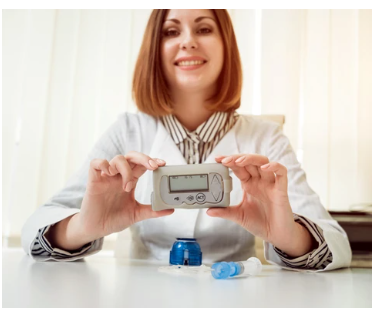
Last week we posted a blog titled “CMS Updates For CGM Coverage,” which on the surface seemed like very exciting, impactful changes on CMS regulations for CGM coverage during the COVID-19 pandemic.
After sharing this post, members of our community let us know that although CMS guidelines have been relaxed in writing, this hasn’t translated into better access on the ground.
To learn more we dove into the interim final rule with comment period (IFC) that was released by the Department of Health & Human Services – Centers for Medicare & Medicaid Services.
In the March 31st COVID-19 IFC, we finalized on an interim basis that we will not enforce the clinical indications for coverage across respiratory, home anticoagulation management, and infusion pump NCDs (Nation Coverage Determinations) and LCDs (Local Coverage Determinations) (including articles) allowing for more flexibility for practitioners to care for their patients. This enforcement discretion will only apply during the PHE for the COVID-19 pandemic.
The language in the IFC is vague and ambiguous regarding what it means to have less stringent and “more flexible” requirements of obtaining a CGM in the time of the COVID-19 for people with diabetes. Though we have found a few highlights from the document based on feedback by our community on what is unclear.
In this IFC, we are finalizing on an interim basis that we will not enforce the clinical indications for therapeutic continuous glucose monitors in LCDs. For example, we will not enforce the current clinical indications restricting the type of diabetes that a beneficiary must have or relating to the demonstrated need for frequent blood glucose testing in order to permit COVID-19 infected patients with diabetes to receive a Medicare-covered therapeutic continuous glucose monitor.
Overall, there is still much to learn about these changes as they apply to real-life situations. This is an unprecedented time for all of us and there is a lot of unknowing. We hope as things develop to keep you informed.
To read the full IFC click here. For more information about Medicaid Guidelines, click here.
If you have any more information on these changes, please click here to visit our survey to update us.
Written by Catherine Cullinane RN, CDCES, our resident Tech Thursday Content Writer
Sign up for Diabetes Blog Bytes – we post one daily Blog Byte from Monday to Friday. And of course, Tuesday is our Question of the Week. It’s Informative and FREE! Sign up below!
[yikes-mailchimp form=”1″]
Accreditation: Diabetes Education Services is an approved provider by the California Board of Registered Nursing, Provider 12640, and Commission on Dietetic Registration (CDR), Provider DI002. Since these programs are approved by the CDR it satisfies the CE requirements for the CDCES regardless of your profession.*
The use of DES products does not guarantee the successful passage of the CDCES exam. CBDCE does not endorse any preparatory or review materials for the CDCES exam, except for those published by CBDCE.
Figuring out what foods are “super” healthy is challenging for people with diabetes and health care professionals alike. An article from Outside Magazine has attempted to sort fact from fiction. They have ranked the top superfoods based on scientific evidence.
It is worth noting that not one superfood going to make people healthy. We have to consider the entirety of the daily food intake. But, here are some foods that do deliver a research-backed benefit.
We encourage you to read the entire article for some insights on the other 14 foods that often have the status of superfoods, that aren’t always backed by research.

Green tea contains compounds called catechins, that may contribute to increased metabolic rates and contain anticancer properties.
Based on longevity studies, the populations who have the longest lifespans have one food in common, legumes. Beans are high in fiber, iron and B vitamins. While all legumes are beneficial, black beans contain polyphenols, giving them an extra nutrient boost.
Super dark or 70 percent cocoa or higher is best. This food delivers flavonols that contribute to lower LDL cholesterol, improve blood flow, and improve mood.
Red wine contains resveratrol, which has anti-inflammatory and blood pressure-lowering benefits. Consumption, in moderate amounts, has also been associated with a decreased risk of diabetes. Keep in mind, that red grapes may offer similar benefits.
Salmon can help boost brain and heart health. The omega-3 fatty acids in salmon contain docosahexaenoic acid (DHA) and eicosapentaenoic acid (EPA). These are effective at not only improving brain health but also seem to decrease the risk of heart attacks and strokes. Plus, since salmon contains DHA, it can protect brain neurons and reduce the risk of Alzheimer’s.
This bright golden spice, derived from the rhizomes of the Curcuma longa plant, has been used in ancient medicine and Southeast Asian cuisine for centuries.
It has anti-inflammatory properties due to curcumin, a natural polyphenol that gives turmeric its bright yellow hue. Based on recent research, it may help fight cancer.
Suggested dosing is one-fourth teaspoon three times a day along with fiber for best absorption.

Blueberry’s power comes from the compound oligomeric proanthocyanidins, which lower the risk for heart disease and reduce joint and muscle pain by decreasing oxidative stress.
Choose organic berries and enjoy a half-cup of frozen blueberries daily.
To read the complete article, click here.
Interested in learning more about the power of nutrition?
Please join us on May 27th for our Virtual Course with Dana Armstrong, RD, CDCES, Medical Clinic Director of The Diabetes Center/Salinas Valley Medical Clinic.
Join Dana Armstrong, RD, CDCES, a trailblazer and thought leader, for a lively and intensive review of the latest in Medical Nutrition Therapy with immediate application to your clinical practice.
Dana combines the newest findings, her clinical experiences, plus the ADA Standards of Care into an action-packed presentation that will inform your practice while preparing for the certification exam.
Webinar Dates
Session 1 – Medical Nutrition Therapy Overview | May 27 from 8:30 AM – 10:30 AM PDT
Session 2 – Meal Planning – How to Eat by the Numbers | May 27 from 11:30 AM – 1:30 PM PDT
All presentations are recorded and available for on-demand viewing.
These sessions are also included in our Virtual Conference.
Click here to enroll in the entire program.
Sign up for Diabetes Blog Bytes – we post one daily Blog Byte from Monday to Friday. And of course, Tuesday is our Question of the Week. It’s Informative and FREE! Sign up below!
[yikes-mailchimp form=”1″]
Accreditation: Diabetes Education Services is an approved provider by the California Board of Registered Nursing, Provider 12640, and Commission on Dietetic Registration (CDR), Provider DI002. Since these programs are approved by the CDR it satisfies the CE requirements for the CDCES regardless of your profession.*
The use of DES products does not guarantee the successful passage of the CDCES exam. CBDCE does not endorse any preparatory or review materials for the CDCES exam, except for those published by CBDCE.
LS uses an insulin pump and the 500 rule for carbohydrate coverage. For breakfast, LS plans to eat ½ cup of oatmeal, 3/4 cup of blueberries, a cup of skim milk, a tablespoon of peanut butter, and a cup of coffee with a packet of Splenda. Her insulin to carb ratio is 1 to 12 for breakfast and lunch. Her insulin to carb ratio is 1 to 15 for dinner.
How much insulin does LS need for breakfast?
Click here to test your knowledge!
We hope you have enjoyed this Question of the Week. For resources on calculating carbs, we invite you to visit our Carb Resource Page.
Want to learn more from a leader and innovator in nutrition therapy?
Join Dana Armstrong, RD, CDCES, a trailblazer and thought leader, for a lively and intensive review of the latest in Medical Nutrition Therapy with immediate application to your clinical practice.
Dana combines the newest findings, her clinical experiences, plus the ADA Standards of Care into an action-packed presentation that will inform your practice while preparing for the certification exam.
Webinar Dates
Session 1 – Medical Nutrition Therapy Overview | Recorded & Ready for Viewing!
Session 2 – Meal Planning – How to Eat by the Numbers | Recorded & Ready for Viewing!
All presentations are recorded and available for on-demand viewing.
These sessions are also included in our Virtual Conference.
Click here to enroll in the entire program.
Sign up for Diabetes Blog Bytes – we post one daily Blog Byte from Monday to Friday. And of course, Tuesday is our Question of the Week. It’s Informative and FREE! Sign up below!
[yikes-mailchimp form=”1″]
Accreditation: Diabetes Education Services is an approved provider by the California Board of Registered Nursing, Provider 12640, and Commission on Dietetic Registration (CDR), Provider DI002. Since these programs are approved by the CDR it satisfies the CE requirements for the CDCES regardless of your profession.*
The use of DES products does not guarantee the successful passage of the CDCES exam. CBDCE does not endorse any preparatory or review materials for the CDCES exam, except for those published by CBDCE.
Diabetes Intensive with Dana Armstrong, RD, CDCES | Medical Nutrition Therapy + Meal Planning

Join Dana Armstrong, RD, CDCES, a trailblazer and thought leader, for a lively and intensive review of the latest in Medical Nutrition Therapy with immediate application to your clinical practice.
Dana combines the newest findings, her clinical experiences, plus the ADA Standards of Care into an action-packed presentation that will inform your practice while preparing for the certification exam.
Session 1 May 27 | Medical Nutrition Therapy Overview | Ready for Viewing!
Session 2 May 27| Meal Planning – How to Eat by the Numbers | Ready for Viewing!
$69 | Earn 4.0 CEs
Course Description: These two 2-hour courses review the latest national nutrition guidelines and provide strategies to translate this information to an individual living with diabetes.
Included is a discussion on different approaches to meal planning and the benefits and limitations of each. Dana will also review metabolic surgery, gastroparesis, and disordered eating.
She reviews nutrition approaches during pregnancy and for those living with chronic co-conditions. Dana also provides insights on how to support the transition to healthier eating using a “tasteful” approach.
Objectives:
Speaker Bio for Dana Armstrong, RD, CDCES
We are thrilled to welcome our guest speaker, Dana Armstrong, who will be joining our Virtual and Live Courses!
Dana received her degree in nutrition and dietetics from the University of California, Davis, and completed her internship in dietetics at the University of Nebraska Medical Center in Omaha. Dana is the Medical Clinic Director of The Diabetes Center/Salinas Valley Medical Clinic. She provides leadership for the Department of Diabetes Services and ensures coordination and integration of an effective system-wide Diabetes Center of Excellence across the organization for optimum patient care and collaboration of services. Having a child with diabetes, she combines her professional knowledge with personal experience and understanding.
These sessions are also included in our Virtual Conference.
Click here to enroll in the entire program.
Sign up for Diabetes Blog Bytes – we post one daily Blog Byte from Monday to Friday. And of course, Tuesday is our Question of the Week. It’s Informative and FREE! Sign up below!
[yikes-mailchimp form=”1″]
Accreditation: Diabetes Education Services is an approved provider by the California Board of Registered Nursing, Provider 12640, and Commission on Dietetic Registration (CDR), Provider DI002. Since these programs are approved by the CDR it satisfies the CE requirements for the CDCES regardless of your profession.*
The use of DES products does not guarantee the successful passage of the CDCES exam. CBDCE does not endorse any preparatory or review materials for the CDCES exam, except for those published by CBDCE.
Yesterday, we shared our blog about the CMS Updates For CGM Coverage. These updates made us feel hopeful that people with diabetes would have fewer barriers and improved access to CGM devices.
After sharing this post, members of our community let us know that although CMS guidelines have been relaxed in writing, this hasn’t translated into better access on the ground.
We are hoping to open up a dialogue around this topic and hear from our community members about how these guidelines apply to real-life situations.
If you have information to share, please fill out our brief survey by clicking here.
We will send a follow-up post next week with updates.
Sign up for Diabetes Blog Bytes – we post one daily Blog Byte from Monday to Friday. And of course, Tuesday is our Question of the Week. It’s Informative and FREE! Sign up below!
[yikes-mailchimp form=”1″]
Disclaimer: We always strive to give accurate information with our blogs. For this article, we discovered we need to dig deeper into this topic to make sure we got it absolutely right. If you have any information on this content, please click here to visit our survey to update us.
We have positive news to share for people with diabetes who are on insulin and would like to use a CGM (Continuous Glucose Monitor)!
The Center for Medicare and Medicaid Services (CMS) is relaxing some of their stringent requirements for obtaining a CGM during the COVID-19 pandemic.
“CMS will not enforce certain clinical criteria in local coverage determinations that limit access to therapeutic continuous glucose monitors for beneficiaries with diabetes. As a result, clinicians will have greater flexibility to allow more of their diabetic patients to monitor their glucose and adjust insulin doses at home.”
CMS just announced they would not enforce certain clinical criteria for obtaining a CGM, insulin pump, or associated supplies during the pandemic. For example, in-clinic provider visits, certain lab tests like a C-peptide or antibody testing, and demonstrations of SMBG would not be mandatory.
This is huge for people with diabetes!
It would limit visits to hospitals, clinics, and labs and help reduce exposure to the coronavirus at these public facilities.
Since CGM’s and insulin pumps have the ability to transmit the collected data to a provider for a telehealth consult, providers can now use that data to review during telehealth visits. This can strengthen the relationship during COVID by allowing for data-driven insulin adjustments.
This is a win-win situation and we can hope that private insurance companies will follow the lead of CMS for the benefit of people with diabetes who use insulin.
To learn more read diaTribe’s article and visit CMS.gov.
Written by Catherine Cullinane RN, CDCES, our resident Tech Thursday Content Writer
Sign up for Diabetes Blog Bytes – we post one daily Blog Byte from Monday to Friday. And of course, Tuesday is our Question of the Week. It’s Informative and FREE! Sign up below!
[yikes-mailchimp form=”1″]
Accreditation: Diabetes Education Services is an approved provider by the California Board of Registered Nursing, Provider 12640, and Commission on Dietetic Registration (CDR), Provider DI002. Since these programs are approved by the CDR it satisfies the CE requirements for the CDCES regardless of your profession.*
The use of DES products does not guarantee the successful passage of the CDCES exam. CBDCE does not endorse any preparatory or review materials for the CDCES exam, except for those published by CBDCE.
As Diabetes Specialists, we want to ensure the safety of patients and colleagues, while providing diabetes care to those who may be the most vulnerable and isolated during this pandemic.

According to the CARES Act, Diabetes Self-Management Training (DSMT) can be provided to patients via telehealth during the pandemic. Though the original regulations had many gaps.
Previously, the CARES Act required that telehealth visits must include both audio and video, while many hospital outpatient clinics were running into billing barriers. In addition, under the original guidelines, RNs and Pharmacists were not included in the approved list of telehealth DSMT Providers.
See: ADCES Summary Sheet of DSMT and Telehealth FAQ for more information.
Though as of April 23, 2020 the guidelines have been updated.
Good News – these updates to the CARES Act now expand blanket waivers under the 1135 waiver.
For any of the information below, please check with your compliance team for clarification and share the important resource links below with your billing department.
DSMT services may be billed for audio-only, but only if the video is not available or possible. Make sure to document the mode of instruction and the rationale if using audio-only.
See: COVID-19 Emergency Declaration Waiver for more information.
The ADA and ADCES have been working hard to decipher the language and intent in the updated guidelines. It seems that RN and Pharmacists are now included based on an assessment of the wording in the new documents. CMS continues to expand the definition of providers eligible to furnish telehealth services during the COVID-19 public health emergency.
As DSMT programs bill as an entity, rather than at the individual provider level, the American Diabetes Association is seeking confirmation that DSMT programs that are eligible through Medicare Part B, are considered distant site practitioners approved to furnish telehealth services.
See: Blanket Waivers for HealthCare Providers Fact Sheet for more information.
Hospital-Based Programs Can Bill for Telehealth DSMT on the UB-04 (Medicare Claims) Form
Hospitals may now bill for education and management services (i.e. DSMT) as if they were furnished in the hospital and consistent with any specific requirements for billing Medicare in general, including any relevant modifications in effect during the COVID-19 PHE.
In summary:
See: CMS Hospitals Without Walls Initiative for more information.
Important to note: Please consult with your organization’s billing department and compliance team if you have questions.