Subscribe
eNewsletter

Ready to get certified?
Free CDCES Coach App

eNewsletter
Free CDCES Coach App

National Nurses Week is celebrated annually, starting with National Nurses Day on May 6th (this Wednesday), through Florence Nightingale’s, the founder of modern nursing, birthday, on May 12th!
I am so proud to call myself a nurse and be a part of this dedicated, hard-working, self-sacrificing and healing profession for over 25 years. During the COVID-19 pandemic, we have witnessed and cried along with our nursing colleagues as they have risked their lives to provide care to those impacted by the virus.
Thank you nurses for your careful listening, compassionate care and for providing reassurance and love to those who need it most.
Coach Beverly, RN for 25+ years
Though this year Pope Francis, the ANA, and others are recognizing 2020 as the year of nurses.
We want to highlight all of their hard work and bravery during this time. We simply couldn’t do this without them.
“Let us pray for them all that they may do their precious work in the best possible way,” said Pope Francis earlier this year of nurses and midwives.
The American Nurses Association has put together a page dedicated to the Year of the Nurse.
This page has a place to support nurses on the front-lines of COVID-19, space for nurses to share their stories, inspiring videos and podcasts, and more.
Sign up for Diabetes Blog Bytes – we post one daily Blog Byte from Monday to Friday. And of course, Tuesday is our Question of the Week. It’s Informative and FREE! Sign up below!
[yikes-mailchimp form=”1″]
For this week’s Free Resource Friday, we want to share with you our new COVID-19 & Diabetes Resource Page!
Over the past weeks, we have been collecting resources to learn more about COVID-19 and how it affects people living with diabetes.
We have decided to gather all of these resources together into one page to share with you.
This page includes webinars, ADA & ADCES COVID-19 resource hubs, handouts, mental wellness resources, and much more!
Sign up for Diabetes Blog Bytes – we post one daily Blog Byte from Monday to Friday. And of course, Tuesday is our Question of the Week. It’s Informative and FREE! Sign up below!
[yikes-mailchimp form=”1″]What does it feel like to be ill with COVID-19 as a person with diabetes? Much of the novel virus COVID-19 is still a mystery that we learn more about every day.
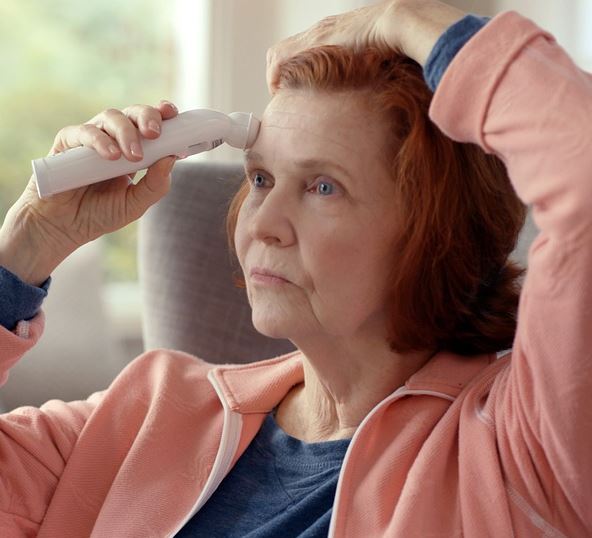
Through the stories of those who have contracted COVID-19, we know that the impacts vary. Symptoms can appear mild with a slight fever and some coughing, like Andrew O’Dwyer from the UK experienced.
While for others symptoms can be more severe, like how a secondary-school teacher living with diabetes had. She had a much longer list of symptoms including difficulty breathing, dizziness, dehydration, and vomiting.
Though even with her more severe symptoms, she struggled with whether she should go to the hospital or not.
“I’m unsure whether to go to the hospital. I feel as though I’ll be wasting valuable resources and I may be an infection risk to vulnerable patients.
As many medical systems are overwhelmed and resources continue to be limited, it’s important to think of ways to reduce the risk of transmission so individuals can get the care they need. Because despite this wide range of impact, COVID-19 continues to emerge with very severe complications for people with or without diabetes.
For people with diabetes who are treating COVID-19, glucose control is key! Keeping BG levels as close to the target range as possible can help reduce the inflammatory response, caused by hyperglycemia. Following the basic guidelines of sick day management will assist the type 1 person who might be diagnosed with COVID-19.
To minimize the risk of transmission, hospitals are starting to use CGM’s for glucose checks in ICUs and in COVID-19 units.
“We knew we needed to get creative” states Carol Levy, MD, Clinical Director of the Mount Sinai Diabetes Center, while discussing “a new initiative to utilize CGM for critically ill patients with COVID-19 to reduce patient-provider contact, conserve PPE, and reduce risks for virus transmission.”
For more information, please see our Emergency Preparedness Blog Post.
There is an incredible amount of information regarding COVID-19 and diabetes. These articles show a glimmer of hope for all people with diabetes that might develop COVID-19.
Written by Catherine Cullinane RN, CDCES, our resident Tech Thursday Content Writer
To read more Mount Sinai’s efforts click here. Click here for For Arthur’s full story, or for the secondary school’s story click here.
*From ADA Treatment & Care Fact Sheet, “People with diabetes are not more likely to get COVID-19 than the general population. The problem people with diabetes face is primarily a problem of worse outcomes, not a greater chance of contracting the virus. In China, where most cases have occurred so far, people with diabetes had much higher rates of serious complications than people without diabetes.” To help friends and family keep safe, here is an excellent handout on Keeping Safe and Home and in the Workplace by the World Health Organization.

SL is 17 years old, with type 1 diabetes. SL uses an insulin pump and checks glucose levels before meals and at bedtime. SL started track team at high school a week ago and noticed that they are waking up with vivid dreams and morning blood glucose levels are higher than usual.
Which of the following is the best recommendation?
Click here to test your knowledge!

As health care professionals and Diabetes Specialists, how do we prepare people with diabetes for the possibility of a COVID-19 infection and hospitalization?
What are the best practices to care for people with diabetes and COVID-19 in the outpatient and hospital setting?
Topics:
Instructor: Beverly Thomassian RN, MPH, CDCES, has been Board Certified in Advanced Diabetes Management for over 20 years. She is an Associate Clinical Professor at UCSF, a working educator and a nationally recognized diabetes expert.
Sign up for Diabetes Blog Bytes – we post one daily Blog Byte from Monday to Friday. And of course, Tuesday is our Question of the Week. It’s Informative and FREE! Sign up below!
[yikes-mailchimp form=”1″]
As health care professionals and Diabetes Specialists, how do we prepare people with diabetes for the possibility of a COVID-19 infection and hospitalization?
What are best practices to care for people with diabetes and COVID-19 in the outpatient and hospital setting?
Updates:
The Telehealth guidelines for providing DSMT have been updated since the streaming of this webinar. Please see this blog, Telehealth and DSMT | Latest Updates from CMS, for updated information.
Coach Beverly Thomassian, RN, MPH, CDCES, BC-ADM, has summarized key information including critical teaching points and management strategies for people with diabetes who develop a COVID-19 infection.
In addition to the webinar, we will provide attendees with useful resources to provide care and education to colleagues and community members alike.
Topics:
Updates:
The Telehealth guidelines for providing DSMT have been updated since the streaming of this webinar. Please see this blog, Telehealth and DSMT | Latest Updates from CMS, for updated information.
Instructor: Beverly Thomassian RN, MPH, CDCES, has been Board Certified in Advanced Diabetes Management for over 20 years. She is an Associate Clinical Professor at UCSF, a working educator and a nationally recognized diabetes expert.
See a complete listing of our upcoming FREE Webinars
Sign up for Diabetes Blog Bytes – we post one daily Blog Byte from Monday to Friday. And of course, Tuesday is our Question of the Week. It’s Informative and FREE! Sign up below!
[yikes-mailchimp form=”1″]Medtronic announces the launch of their Next-Gen Bluetooth automated insulin delivery (AID) and CGM systems!

At last year’s Advanced Technologies and Treatment for Diabetes (ATTD) Conference in Berlin, Germany, Medtronic announced that they will be launching their Next-Gen of AID and CGM systems while sharing the results of a recent study they conducted on children who use their 670G AID system.
The study conducted evaluated the efficiency of the 670G AID (automated insulin delivery) system in children from 2-6 years old. The results were positive. After 3 months, the participants:
Next-Gen AIDs & CGMs
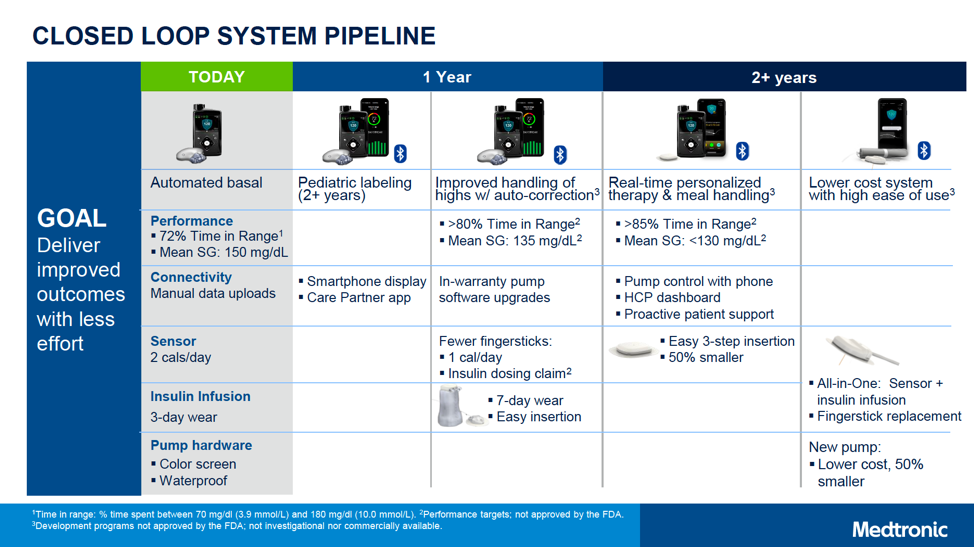
In addition to this great news for younger kids and their families, Medtronic shared several products that they plan to launch over the next several years, phased into “1 year” and “2+ year” timelines.
These products hope to offer a wide range of new features, including:
This is such positive information in the on-going advances of CGM and automated insulin delivery systems for children and adults with type 1 diabetes.
Click here for in-depth details of these advances.
Written by Catherine Cullinane RN, CDCES, our resident Tech Thursday Content Writer
Sign up for Diabetes Blog Bytes – we post one daily Blog Byte from Monday to Friday. And of course, Tuesday is our Question of the Week. It’s Informative and FREE! Sign up below!
[yikes-mailchimp form=”1″]You are working with KS, a 57-year-old with type 2 diabetes and an A1c of 6.8%, who wants to join the water aerobics program at their local YMCA. KS has a history of hypothyroidism and has an LDL cholesterol of 98 mg/dl. KS’s medications include levothyroxine and metformin XR 1000 mg BID.
According to the ADA and the American College of Sports Medicine, what would be the best recommendation?
Click here to test your knowledge!
Sign up for Diabetes Blog Bytes – we post one daily Blog Byte from Monday to Friday. And of course, Tuesday is our Question of the Week. It’s Informative and FREE! Sign up below!
[yikes-mailchimp form=”1″]
To help prevent the spread of COVID-19, the CDC recommends everyone wears a cloth face-mask when in public.
In addition to washing our hands frequently and maintaining a 6ft. distance from others, cloth masks can help in situations where social distancing is more difficult, such as the grocery store.
Cloth face-masks can easily be made at home with a scarf, bandana, hand towel, or t-shirt, just be sure to wash them frequently. Here are a few tips for making your mask:
Click here to read more.
Sign up for Diabetes Blog Bytes – we post one daily Blog Byte from Monday to Friday. Tuesday is our Question of the Week. It’s Informative and FREE! Sign up below!
[yikes-mailchimp form=”1″]