
Subscribe
eNewsletter

Ready to get certified?
Free CDCES Coach App

eNewsletter
Free CDCES Coach App
The BC-ADM certification is an ever-growing field in diabetes care. It’s an advanced certification which validates a health care professional’s knowledge of advanced clinical practice and diabetes skills. This certification verifies a health care professionals expert ability to adjust medications, identify, treat and monitor acute and chronic complications, and more!

Join Coach Beverly as she reviews test taking strategies, study tips, and eligibility requirements of the BC-ADM in this FREE webinar.
Preparing for the BC-ADM Webinar airs February 17 @ 11:30 a.m. PST
Sign up for Diabetes Blog Bytes – we post one daily Blog Byte from Monday to Friday. And of course, Tuesday is our Question of the Week. It’s Informative and FREE! Sign up below!
[yikes-mailchimp form=”1″]Happy Friday! As I get older, font sizes seem to be getting smaller. Excited to see the updated Injectables Algorithm, I turned my ADA Book to Standard 9 and quickly realized that in order to read the print, I had to hold the page inches from my nose. And there was no way could I read the footnotes even using my iphone flashlight to illuminate the words.
Thank goodness I collaborate with wonderful staff who boast youthful eyes and 2020 vision.
Robert (our Assistant Director and my high school senior) set to work recreating a draft of the document on Word. Getting the arrows to line up and fitting all the content in little boxes, was challenging, but he persevered. Taryn added the footnotes and I completed the final editing and the creation of the PDF.
We created this readable version because the algorithm is an important document that can be used to promote a collaborative practice.
Coach Beverly
I consider the ADA Standards my clinical “playbook”. The medication algorithms are of particular importance because it provides us with the opportunity to engage in a collaborative practice with our referring providers. “These are the evidence based medication recommendations from the ADA. I use it as a guide to recommend medication additions or changes”.
Enjoy our font enhanced Figure 9.2: Intensifying to Injectable Therapy
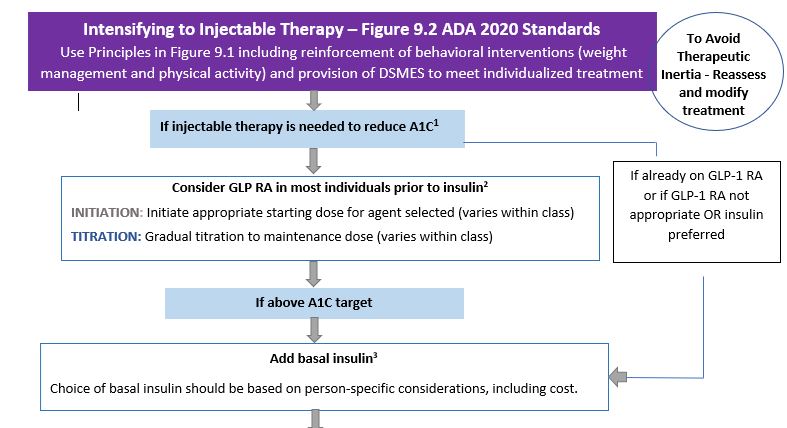
Then we can start a conversation exploring if a collaborative practice and medication adjustments using the algorithm is comfortable for the provider and perhaps include into our practice guidelines.
Enjoy this helpful 2 page reference guide, on us!
The 2020 Standards of Care is ready for viewing. Coach Beverly highlighted changes from 2019-2020 and summarized important need-to-know content for CDCES’s!
Purchase our Level 1 Standards of Care, or buy the full Level 1 bundle to benefit from all the 2020 updates! Earn 9.0 CEs for $109
Sign up for Diabetes Blog Bytes – we post one daily Blog Byte from Monday to Friday. And of course, Tuesday is our Question of the Week. It’s Informative and FREE! Sign up below!
[yikes-mailchimp form=”1″]For Question of the week, QoW, test takers usually choose the correct answer 70-80% of the time. However, for one question of the week, about 55% of respondents chose the correct answer.
So, we thought this would be a perfect opportunity for another answer rationale. We’ll explore this question and the best answer in more detail and throw in some test-taking tips along the way. Before we start though, if you don’t want any spoilers and haven’t tried the question yet, you can answer below:
Question of the week:
JR has noticed that over the past few weeks blood glucose levels have been steadily climbing, even though his eating and medication dose have been stable. Which of the following issues is most likely contributing to hyperglycemia?
Answer Choices:
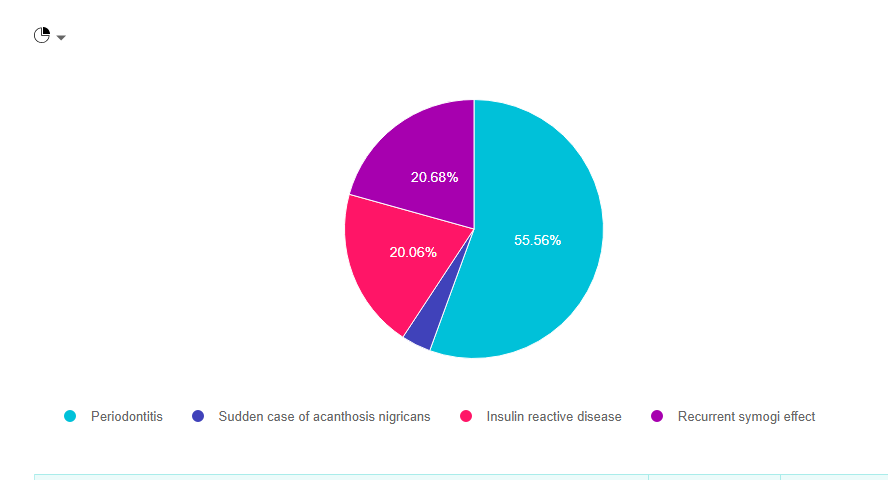
As shown above, the most common choice was option 1, the second most common answer was option 4, then option 3, and finally option 2.
Congratulations! The majority of participants got this question right!
Option 1 is the correct answer. We know that periodontitis (inflammation of the gums and supporting structures of the teeth) and hyperglycemia are co-associated. When blood glucose levels rise, risk of periodontitis increases. When there is periodontitis, blood glucose levels rise. As a matter of fact, periodontitis is often called the 6th complication of diabetes. (see SciElo for more details).
Option 2 is incorrect because acanthosis nigricans is a skin condition where skin typically thickens and darkens due to insulin resistance, but the scenario in this question doesn’t mention anything about the skin of JR. We also know acanthosis nigricans isn’t associated with sudden hyperglycemia. It develops over time, so a “sudden case of” helps us to remove it as a possible answer by process of elimination.
Option 3 is incorrect because “insulin reactive disease” is not a recognized diagnosis or condition. This answer was included because “reactive” can look a lot like “resistance”. It is considered a juicy answer because it sounds right.
Finally, Option 4 is incorrect because the recurrent symogi effect indicates hypoglycemia which leads to hyperglycemia on specific occasions, not contributing to overall hyperglycemia. So, this was another option included to encourage careful reading of the question.
We hope you appreciate this week’s rationale and keep studying hard! Thank you so much for taking the time to answer our Question of the Week and participate in this fun learning activity!
Sign up for Diabetes Blog Bytes – we post one daily Blog Byte from Monday to Friday. And of course, Tuesday is our Question of the Week. It’s Informative and FREE! Sign up below!
[yikes-mailchimp form=”1″]
Our Diabetes Detective Team scans the diabetes news to discover the most relevant info that Diabetes Educators need in their daily practice. We post one daily Blog Byte from Monday to Friday. And of course, Tuesday is our Question of the Week. It’s Informative and FREE! Sign up below!

We’re updating our DiabetesEd Test Taking Toolkit in January and March.
This Test Taking Toolkit is designed to prepare you for exam success. This Toolkit includes:
Preparing for Certification Practice Exam 2020 online course includes (March 24, 2020):
ADA Standards Test Taking Tips Course + 113 Question Practice Test includes (February 10, 2020):
Sign up for Diabetes Blog Bytes – we post one daily Blog Byte from Monday to Friday. And of course, Tuesday is our Question of the Week. It’s Informative and FREE! Sign up below!
[yikes-mailchimp form=”1″]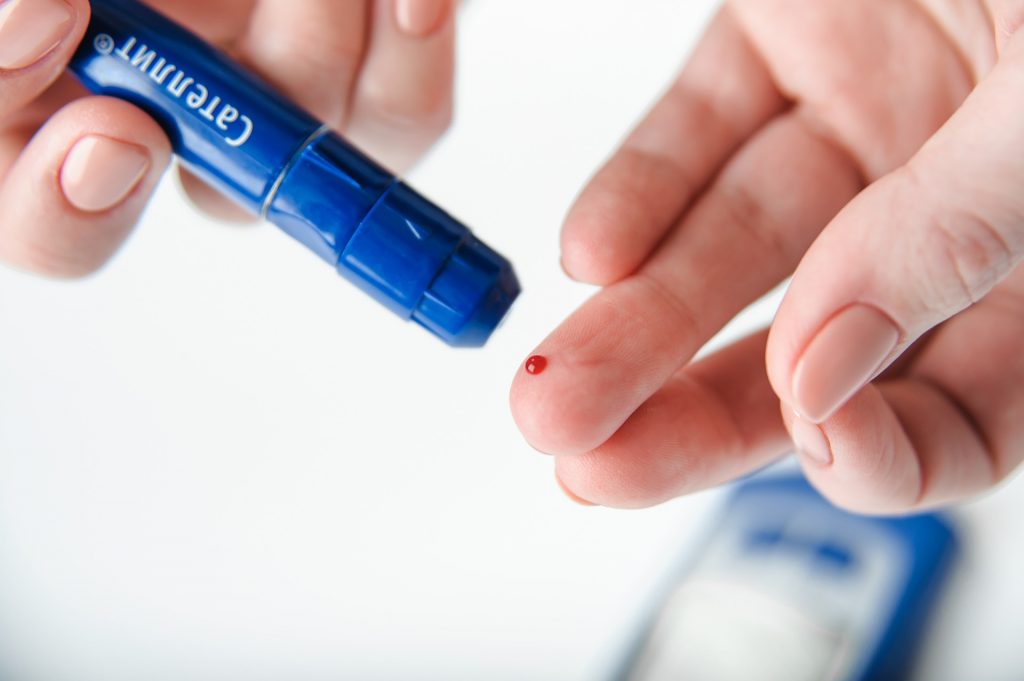
A new company called One Drop is helping people self-manage their chronic conditions.
The program connects each participant with a dedicated Certified Diabetes Education Specialist or personal health coach to help them navigate and manage their diabetes.
One Drop offers 3 monthly memberships for either a Digital Membership, a supply membership, or a membership with both.
The Digital Membership includes goal setting, coaching, and tracking your healthcare goal progress. The supply membership includes items like blood glucose meters, a lancing device, 50 test strips, 10 lancets, and a carry case supplied every few months.
One Drop offers some interesting new features on glucose monitors that make it a bit unique in the marketplace. The subscription comes with a free app that provides real-time support from professionals and education on diabetes, prediabetes, high blood pressure, and high cholesterol.
One Drop is helping to give access to people who are not able to physically go and see a health care professional. Another unique feature of the app is it can give you an eight-hour glucose forecast based on your behavior and One Drop’s AI. One Drop’s monitors are now available in Walmart (for $69.95) and at select Apple retail locations.
Read more about it here.
Sign up for Diabetes Blog Bytes – we post one daily Blog Byte from Monday to Friday. And of course, Tuesday is our Question of the Week. It’s Informative and FREE! Sign up below!
[yikes-mailchimp form=”1″]Over the past few years, providers and advocacy groups rallied to make insulin affordable for all people with diabetes.
In line with other insulin manufacturers, starting on January 2nd of this year, Novo Nordisk launched a discounted insulin program to help improve access to insulin.
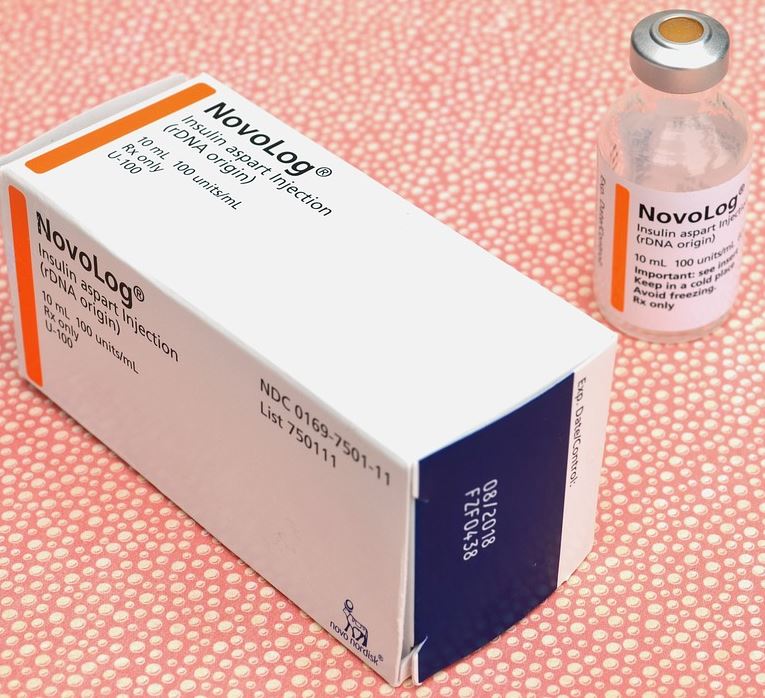
My$99 Insulin Cash Card Program: By using the Cash Card Program, participants can get up to three vials or two packs for $99 of FlexPen®/FlexTouch®/PenFill® pens of any combination of Novo Nordisk Inc. insulins. For most people, this provides about a one month supply of insulin.
To benefit from this discounted rate, users need to enroll at NovoCare.com to receive an online card that can be used at their usual pharmacy, whether or not they have insurance.
Novo Nordisk human insulin is also offered at Walmart and CVS for about $25 for a 10mL vial.
Follow-on brand insulins: Follow-on brand (also called FOB or authorized generics) versions of NovoLog® and NovoLog®
Novo has cut the price by about 50% for the FOB insulins listed below.
Because these Follow-On Brands are “authorized generic,” those with a prescription for NovoLog will be able to buy these Follow-On Brands without a new prescription.
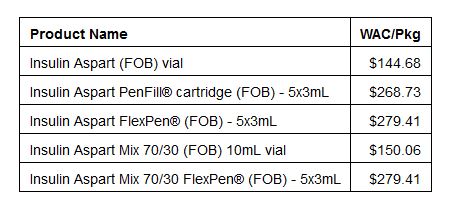
People can order them at the pharmacy and they’ll be available for pick up in 1-3 business days.
Immediate Supply Option
By calling 1.844.NOVO4ME (1.844.668.6463) or by visiting NovoCare.com, people who are struggling to access insulin may be eligible for a one-time immediate supply of up to three vials or two packs of pens with a prescription.
More Information on Affordable Insulin
Sanofi Insulins Valyou Savings Program offers any of their insulins (Toujeo, Lantus, ADMELOG, and Apidra) for $99/month to those who qualify.
Check out diaTribe’s comprehensive resource on insulin affordability options.
Lilly cuts insulin price by 50% – March, 2019
To stay up to date on the latest medical updates join Coach Beverly on January 21st at 11:30 for her annual State of the Standards Live Webinar.
Sign up for Diabetes Blog Bytes – we post one daily Blog Byte from Monday to Friday. And of course, Tuesday is our Question of the Week. It’s Informative and FREE! Sign up below!
[yikes-mailchimp form=”1″]The 2020 ADA Standard Six, reviews Glycemic Targets. Two things caught my eye in this section:
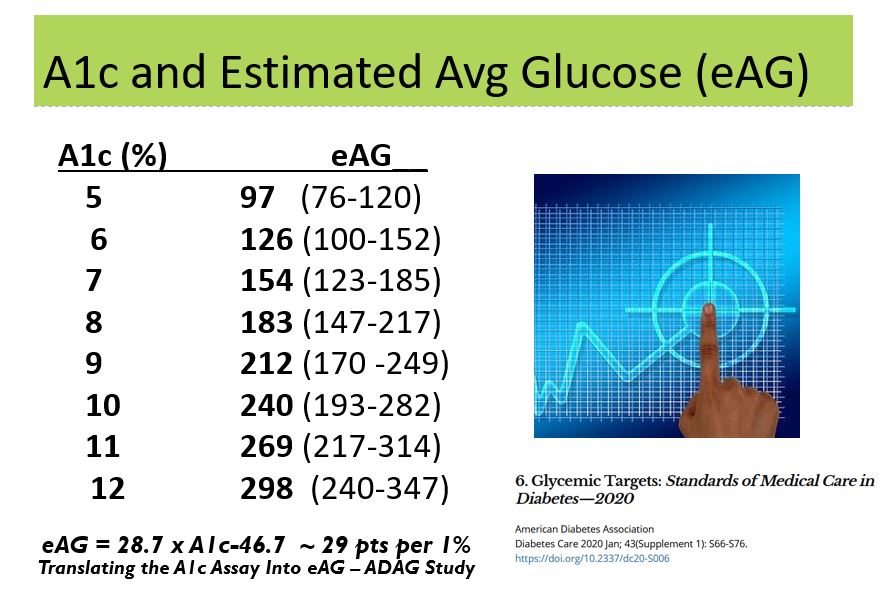
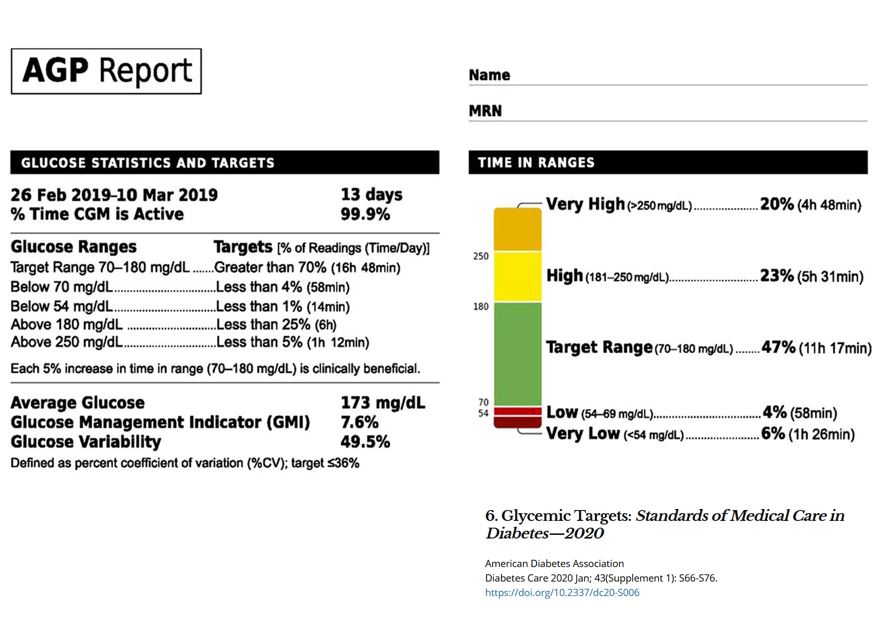
Ambulatory Glucose Profile (AGP) Report benefits: Since the A1C does not provide a measure of glycemic variability or hypoglycemia, the AGP is especially helpful for those prone to bigger glycemic swings.
Glycemic management is best evaluated by the combination of results from SMBG or CGM and A1C. A review of the AGP Report is recommended at each visit for those using CGM technology.
The overall goal is to reach Time in Target Range (70-180) at least 70% percent of the time with minimal hypo and hyperglycemia. In this snapshot ADP Report example below, we see that the A1c is 7.6%, but when we look at the right hand Time in Range side, we quickly note that this individual is struggling with frequent lows and very low glucose levels coupled with hyperglycemia. The time is range is only 47%.
This data is invaluable to help start the process of problem solving to decrease hypo and hyperglycemic events and increase time in target.
An A1c by itself, even if accompanied with frequent blood sugar checks, may not capture this complete picture of 24 hour glucose variability.
See our blog on Time in Range for more info about targets for different groups.
Those are just some of the highlights of the 2020 Standards of Care. Please join Coach Beverly on January 21st at 11:30 for her annual State of the Standards Live Webinar.
Sign up for Diabetes Blog Bytes – we post one daily Blog Byte from Monday to Friday. And of course, Tuesday is our Question of the Week. It’s Informative and FREE! Sign up below!
[yikes-mailchimp form=”1″]Our Diabetes Detective Team scans the diabetes news to discover the most relevant info that Diabetes Educators need in their daily practice. We post one daily Blog Byte from Monday to Friday. And of course, Tuesday is our Question of the Week. It’s Informative and FREE! Sign up below!

Start 2020 off right with all the clinical updates you need for exam success! This series is designed for health care professionals who are interested in getting started in diabetes education and for those actively working toward becoming a Diabetes Care and Education Specialist. Each course in this series provides the critical building blocks and foundation for those entering the diabetes field. Plus, they prepare you to advance to our Level 2 Beyond the Fundamentals courses.
Sign up for Diabetes Blog Bytes – we post one daily Blog Byte from Monday to Friday. And of course, Tuesday is our Question of the Week. It’s Informative and FREE! Sign up below!
[yikes-mailchimp form=”1″]