
Subscribe
eNewsletter

Ready to get certified?
Free CDCES Coach App

eNewsletter
Free CDCES Coach App
After treat-to-target trial findings showed that mealtime and postprandial treatment with Fiasp resulted in effective glycemic control and safety results similar to slightly slower insulin aspart (Novolog), the FDA has approved Fiasp for use in pediatrics with diabetes.
Fiasp, a rapid-acting human insulin analog, was compared with NovoLog in a randomized trial involving 777 pediatrics (aged 2 to 17 years). There were blind meal injections and open-label postprandial injections. Week 26 of the trial showed both were effective at getting glucose to target.
In children and adolescents with type 1 diabetes, mealtime and postmeal faster aspart with insulin degludec provided effective glycemic control and superior HbA1c with no additional safety risks versus aspart (Novolog).
Read more at PubMed.
Sign up for Diabetes Blog Bytes – we post one daily Blog Byte from Monday to Friday. And of course, Tuesday is our Question of the Week. It’s Informative and FREE! Sign up below!
[yikes-mailchimp form=”1″]2020 marks the official release of the updated nutrition label.
To help sort out how this new version is different, the Food and Drug Administration (FDA) released a treasure trove of helpful information, including this label comparison.
The goal of this updated label is to all consumers, including people with diabetes, to make quick, informed food choices to help start eating healthier.
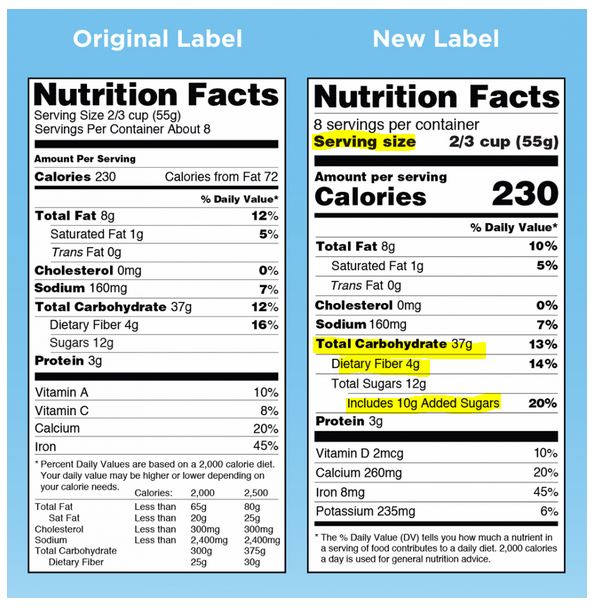
Read more on FDA Nutrition Labels here.
Sign up for Diabetes Blog Bytes – we post one daily Blog Byte from Monday to Friday. And of course, Tuesday is our Question of the Week. It’s Informative and FREE! Sign up below!
[yikes-mailchimp form=”1″]Merry Christmas from Coach Beverly and family. Sending you warm winter wishes for peace, joy and love!

No matter what people tell you, words and ideas can change the world.
Robin Williams
Read more about the kindness movement at Random Acts of Kindness.
Sign up for Diabetes Blog Bytes – we post one daily Blog Byte from Monday to Friday. And of course, Tuesday is our Question of the Week. It’s Informative and FREE! Sign up below!
[yikes-mailchimp form=”1″]For Question of the Week, QoW, test takers usually choose the correct answer 70-80% of the time. However, for this question of the week, about 56% of respondents chose the correct answer.
This presents a perfect opportunity for another answer rationale. We’ll explore this question and the best answer in more detail and throw in some test-taking tips along the way. Before we start though, if you don’t want any spoilers and haven’t tried the question yet, you can answer below:
Question of the week:
Which of the following is an accurate recommendation according to the nutrition principles as outlined by the American Diabetes Association Standards of Care?
Answer Choices:
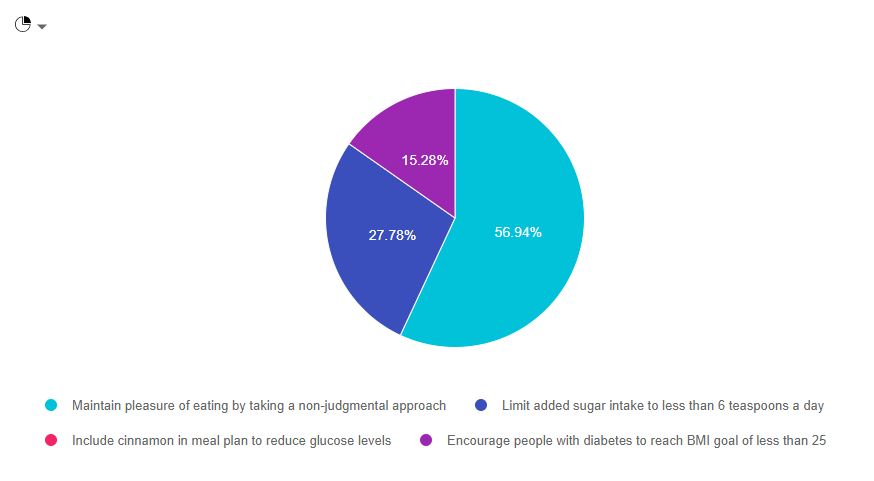
As shown above, the most common choice was option 1, the second most common answer was option 2, then option 4. No one chose option 3.
Option 1 is the correct answer. “Maintain pleasure of eating by taking a non-judgmental approach” has been a mainstay of the ADA’s Medical Nutrition Therapy principles for years. This statement beautifully speaks to the importance of taking a person-centered approach with a clear vision of promoting a healthy relationship with food.
Option 2 is incorrect because although the ADA and AHA both recommend that added sugar intake should be limited to about 6 teaspoons a day, the American Diabetes Association has not taken a specific stance on sugar intake per day.
The most recent comprehensive document, the 2019 ADA Nutrition Therapy Consensus Report states on page 3 to “minimize sugar and refined grains” and on page 10 they state “replace sugar sweetened beverages with water as often as possible”.
Option 3 was not chosen. Good job! Based on the lack of scientific evidence, the ADA does not endorse any nutraceuticals or supplements to reduce glucose levels.
Option 4 is incorrect because it is not individualized or based on the standards. The ADA goal for people with diabetes is to strive for a long term goal of 5% weight loss to improve outcomes. To achieve this structured programs and ongoing support are critical.,
BMI of 25: Based on population studies, the risk of getting diabetes increases with a BMI of 25 or greater (for Asians a BMI of 23 or greater). See our Diabetes Risk and Diagnosis Cheat Sheet. As a community, this means we want to help our children move into adulthood with a sound knowledge of healthy eating and active lifestyles to empower them to prevent prediabetes and diabetes.
We hope you appreciate this week’s rationale and keep studying hard! Thank you so much for taking the time to answer our Question of the Week and participate in this fun learning activity!
Sign up for Diabetes Blog Bytes – we post one daily Blog Byte from Monday to Friday. And of course, Tuesday is our Question of the Week. It’s Informative and FREE! Sign up below!
[yikes-mailchimp form=”1″]As we continue our kindness theme, enjoy this quote from the 1700’s that still resonates today. We wish you safe travels and joyful moments.
I expect to pass through life but once. If therefore, there be any kindness I can show, or any good thing I can do to any fellow being, let me do it now, and not defer or neglect it, as I shall not pass this way again.
Stephen Grellet

Read more about the kindness movement at Random Acts of Kindness.
Sign up for Diabetes Blog Bytes – we post one daily Blog Byte from Monday to Friday. And of course, Tuesday is our Question of the Week. It’s Informative and FREE! Sign up below!
[yikes-mailchimp form=”1″]HumanLight is a Humanist celebration on December 23rd to focus on the “positive, secular human values of reason, compassion, humanity and hope”. The use of candles to symbolize reason, hope, compassion, and humanity has become widespread among those celebrating. Groups today also observe the HumanLight holiday using charity work, gift exchanges, and other ideas associated with holidays and celebrations.

The best portion of a good man’s life is his little, nameless, unremembered acts of kindness and of love.
William Wordsworth
Read more about the kindness movement at Random Acts of Kindness.
Sign up for Diabetes Blog Bytes – we post one daily Blog Byte from Monday to Friday. And of course, Tuesday is our Question of the Week. It’s Informative and FREE! Sign up below!
[yikes-mailchimp form=”1″]On this first night of Hanukkah, we celebrate the festival of lights and acts of kindness. A little light goes a long way.
The Hanukkah candles are lit when dusk is falling. Perched in the window, they serve as a beacon for the darkening streets. No matter how dark it is outside, a candle of goodness can transform the darkness itself into light.

Acts of kindness never die. They linger in the memory, giving life to other acts in return.
Jonathan Sacks, From Optimism to Hope
Read more about the kindness movement at Random Acts of Kindness.
Sign up for Diabetes Blog Bytes – we post one daily Blog Byte from Monday to Friday. And of course, Tuesday is our Question of the Week. It’s Informative and FREE! Sign up below!
[yikes-mailchimp form=”1″]Coach Beverly, Taryn and Robert wish everyone Happy Holidays!
Since we will be spending time with our families and loved ones, the office will be closed from December 23 – December 27.
During this time of reflection and celebration, we will not be posting our usual blogs. Instead, we will post a daily message of kindness inspired by a host of holidays. This is a small gesture of gratitude for your service and dedication to the diabetes community.
With a heart full of thanks from all of us at Diabetes Education Services.

Read more about the kindness movement at Random Acts of Kindness.
Sign up for Diabetes Blog Bytes – we post one daily Blog Byte from Monday to Friday. And of course, Tuesday is our Question of the Week. It’s Informative and FREE! Sign up below!
[yikes-mailchimp form=”1″]