Subscribe
eNewsletter

Ready to get certified?
Free CDCES Coach App

eNewsletter
Free CDCES Coach App
Free Med Pocket Cards

Author: Christine Craig, MS, RDN, CDCES
Founder: Nutrition for Daily Living
This year’s National Nutrition Month’s theme is “Discover the Power of Nutrition.” Nutrition has the power to help individuals and communities thrive.
The nutrition profession offers diverse career pathways spanning clinical care, community health, education, research, industry, leadership, and private practice, allowing Registered Dietitian Nutritionists (RDNs), also known as Registered Dietitians (RDs), to grow and evolve their careers over time.
RDs leverage “the power of nutrition” while delivering evidence-based medical nutrition therapy (MNT) across the diabetes care continuum.
Nutrition is both a challenge and an opportunity for individuals living with diabetes and can have direct impacts on health outcomes.
As of February 2026, more than 113,900 RDNs are credentialed in the United States.1 In 2025, just over 8,600 RDNs also held the Certified Diabetes Care and Education Specialist (CDCES) credential, representing approximately 45% of all CDCES professionals2. Employment for dietitians is projected to grow by 6%3. However, the field has recently seen a decline in new graduates, likely due to post-pandemic enrollment shifts and the 2024 transition to a required master’s degree4. Supervised practice hours and passing the national examination continue to be required. Despite these challenges, the RDN credential remains the gold standard for evidence-based nutrition practice and new career opportunities continue to evolve.
Dietitians in diabetes care practice in a wide range of settings, including hospitals and outpatient clinics, primary care and endocrinology offices, federally qualified health centers, public health programs, academia, digital health, industry, community-based organizations and more. Increasingly, entrepreneurship has also emerged as another pathway. Approximately 12% of RDNs in the United States are self-employed.5
ADCES recently launched an Entrepreneurship Community of Interest (COI) group, leaning into this growing career trend. For many dietitians, private practice offers an opportunity to meet an unmet need or specialization, schedule flexibility, and a space to design new programs and interventions.
Both the American Diabetes Association and the Academy of Nutrition and Dietetics recommend referral to MNT for individuals with diabetes, yet fewer than 10%6 receive these services. Barriers include limited access to RDNs within health systems, fragmented referral networks, and inconsistent insurance coverage for nutrition care.7 These gaps in access were a key motivator for my own entrepreneurial venture, reinforcing that many successful innovations are often driven by unmet needs.
In 2023, I founded Nutrition for Daily Living to help address access barriers within my own local community. Building a business required learning the business of nutrition including marketing, finances, legal requirements, and navigating insurance for MNT. What began as a part-time side hustle has now become a full-time practice, enabling me to work towards my goal of delivering personalized care while fostering long-term partnerships with clients. No matter your setting, innovation can start with awareness and creativity and when paired with courage, it can open doors to meaningful impact and success.
Dietitians in diabetes care play an important role in advancing our profession by bridging nutrition innovations, clinical care expertise, behavioral strategies, and collaboration with patients, communities, and care teams. With the increasing complexity of diabetes management, RDNs bring essential skills in leadership, problem-solving, and patient-centered care. Individuals with an entrepreneurial spirit, no matter the care setting, can pilot new approaches, identify unmet needs, and design new care models. As we celebrate National Nutrition Month together, let’s recognize the many important contributions RDNs provide in transforming diabetes care.
Christine Craig, MS, RDN, CDCES
Founder: Nutrition for Daily Living
References:

Course credits through AMA PRA Category 1 Credits™, ACPE, ANCC, and CDR!
Get exam-ready with confidence.
Our CDCES Boot Camp Online Prep Bundle is a comprehensive, high-impact program built specifically for healthcare professionals preparing for the Certified Diabetes Care and Education Specialist (CDCES) exam who want to level-up their clinical knowledge and skills.
✔ Learn at your pace with expert-led, exam-focused content
✔ Everything you need—organized, practical, and in one place
✔ Perfect for self-directed learners who want complete, person-centered content for clinical practice and exam prep.
✔ Build knowledge, sharpen test-taking skills, and prepare with confidence—on your schedule.
Focused. Flexible. Proven.
Basic & e-Deluxe CDCES Boot Camp Bundle Includes:

Course credits through AMA PRA Category 1 Credits™, ACPE, ANCC, and CDR!
Get exam-ready with confidence.
Our comprehensive BC-ADM Online Study Programs are specifically designed for healthcare professionals who are studying for the Board Certified in Advanced Diabetes Management (BC-ADM) exam.
✔ Learn at your pace with expert-led, exam-focused content
✔ Everything you need—organized, practical, and in one place
✔ Perfect for self-directed learners who want complete, person-centered content for clinical practice and exam prep.
✔ Build knowledge, sharpen test-taking skills, and prepare with confidence—on your schedule.
Focused. Flexible. Proven.
Basic & e-Deluxe BC-ADM Boot Camp Bundle include:


Are you a healthcare professional providing diabetes care in an under-resourced community? Are you working toward earning your certification in diabetes education (CDCES or BC-ADM?)
If yes, please consider applying for our Bridge Scholarship, which covers the registration cost for the DiabetesEd Training Conference in San Diego, Oct 22-23, 2026 (value of $559). This program will provide you with the content needed to prepare for mastery-level diabetes certification and beyond!
Recipients will be awarded the Training Conference reg fee, including the live program, printed syllabus, 30+ CE’s, plus access to the online bonus courses for one year! Applications Due on July 20th, 2026

🌟Updated Schedule: ADA Boot Camp, Tech, MNT & More
Live in Beautiful San Diego – Oct 22-23, 2026
Re-Ignite your Passion & Prepare for Diabetes Certification Exams
🎓 Earn 30+ CEs: AMA PRA Category 1 Credits™, ACPE, ANCC, and CDR!
📅
2-Day Conference
Oct 22–23, 2026
⏱️
15.5 Live CEs
+ 17 bonus CEs
🏅
CDCES & BC-ADM
Exam Prep + Renewal
📍
San Diego, CA
1.7 mi from airport
The field of diabetes care is expanding and evolving rapidly. This unique training conference will keep you on the cutting edge plus prepare you for certification exams. It also fulfills the Standards of Care renewal requirement. Join us for two days of intensive education that is fun and inspiring. Add on the optional Day 3 (Engaging the Disengaged), to complete your conference exeperience.
Coach Beverly and Diana Isaacs, PharmD, BC-ADM, CDCES co-lead an exciting day that brings the ADA and AACE Standards to life. Gain fresh insights, practical tools, and a deeper understanding of the latest in person-centered diabetes care. After attending, you will be empowered to share the latest in diabetes care with your colleagues and the people in your care.
Take your knowledge to the next level with this intensive deep-dive into insulin therapy, dosing and pattern management with Dr. Diana Isaacs. Next, stay for the diabetes tech show-and-tell as Diana demonstrates the specs of the latest pumps and sensors. After lunch, nutrition whiz Christine Craig, MS, RDN, CDCES expertly details the latest in MNT and provides real strategies on translating this content to your clinical practice. You will have a chance to put it all together as Coach Beverly leads you through a series of case studies that integrates content from Day 1 and Day 2.
On Saturday, join this exceptional day-long program led by William H. Polonsky, PhD, CDCES & Susan Guzman, PhD (Behavioral Diabetes Institute) that reveals psychosocial forces behind diabetes self-management — tools to break through resistance and inspire change.
Read more below
📜 Essentials
Registration
+ Printed Syllabus
$559.00
🌟 Deluxe
Essentials
+ ADA Standards Book
$589.00
🏆 Complete – Best Value!
Deluxe
+ ADCES Review Guide e-Book
$669.00

Transform how you engage patients with diabetes — master behavior change, reduce distress, and overcome medication hesitancy.
Why do so many patients know what they should do — but still struggle to do it?
The answer lies in the psychology of diabetes.
In this transformative full-day course, world-renowned experts William H. Polonsky, PhD, CDCES, and Susan Guzman, PhD, from the Behavioral Diabetes Institute reveal the hidden psychosocial forces that drive — or derail — diabetes self-management.
You’ll walk away with a completely new toolkit for breaking through patient resistance, dissolving medication hesitancy, and creating clinical encounters that actually inspire change!

Coach Beverly is thrilled you will be joining this special gathering and celebration!
During this virtual book launch, a special guest interviewer will join Coach Bev for a heartfelt conversation about why this book matters now and the real stories from clinical practice that inspired it. Coach Bev will also share the personal journey of writing Healing through Connection and how she discovered her voice along the way. We will conclude with an interactive question-and-answer session and allow time for connection.
Come celebrate connection, healing, and the power of story as we honor the shared human experience at the heart of healthcare.

Have you heard about the twiist insulin pump? If not, don’t worry – we are here to keep you in the loop! The twiist is the latest automated insulin delivery (AID) system to join the diabetes treatment toolbox. This insulin pump features a unique algorithm powered by Tidepool Loop Technology, offering clients another option in insulin management.
The twiist is an AID system that looks and acts a bit differently than current insulin pumps. FDA-approved for individuals 6 years old and older, it is a circular-shaped insulin pump. There is a bladder-type reservoir, called a cassette, that holds up to 300 units of insulin. The twiist AID system is currently compatible only with the Libre 3+ continuous glucose monitor (CGM) and iPhone. Meal and correction boluses are delivered via the phone app or Apple Watch for discreet diabetes management. Humalog (insulin lispro) U-100 and Novolog (insulin aspart) are the insulins approved for use with the twiist insulin pump.
The twiist AID system uses iiSure technology within the pump and the cassette to dose insulin. Sound waves are used for direct volume measurement to ensure accurate insulin dosing. This feature also identifies occlusions faster than other currently available AID
systems.¹ Insulin moves through the pump chamber into the iiSure chamber, where sound waves use four checkpoints to verify insulin flow and correct dosing:
1. A baseline measurement is taken of the empty iiSure chamber before the insulin reaches this part of the cartridge.
2. The iiSure chamber fills with the determined dose of insulin and is measured for accuracy.
3. A second check of the iiSure chamber is verified for accuracy.
4. After insulin delivery, the pump measures the iiSure chamber to calculate the amount of insulin delivered. ¹ Tidepool Loop is the algorithm that powers the twiist AID system. Tidepool Loop creates a 6-hour glucose prediction forecast based on pump settings, insulin on board, recent carbohydrate entries, and CGM history. This information is collected every 5 minutes to create a 6-hour glucose forecast. Clients using twiist can view this glucose forecast to help make treatment decisions.
As we have discussed, twiist not only looks different but also functions slightly differently from other AID systems.
Here are a few more unique features:
Target Range: One of the most interesting twiist differences is that the lowest target range setting is 87 mg/dL, with the highest being 180 mg/dL for insulin delivery recommendations.
Retroactive Meal Adjustment: Users can adjust the CHO amount for a meal or snack bolus if they consume fewer carbs than planned.
Emojis: Using meal emojis helps the algorithm set a personalized prediction of food absorption based on carb, fiber, and fat content. If emojis aren’t used, the system defaults to a 3-hour food absorption.
No contracts: The twiist is a pharmacy benefit (rather than a Durable Medical Equipment benefit) and does not require a long-term contract commitment.
Premeal Preset: This option allows the user to temporarily lower the correction range before a meal to help prevent a post-meal glucose spike.
Workout Preset: This optional setting allows for glucose ranges from 87 mg/dL to 250 mg/dL to be set before, during, or after a workout.
Diabetes healthcare professionals are considered experts in insulin pumps. Whether you are discussing insulin pump options, training, or troubleshooting the twiist insulin pump with clients, here are some helpful clinical pearls:
References:
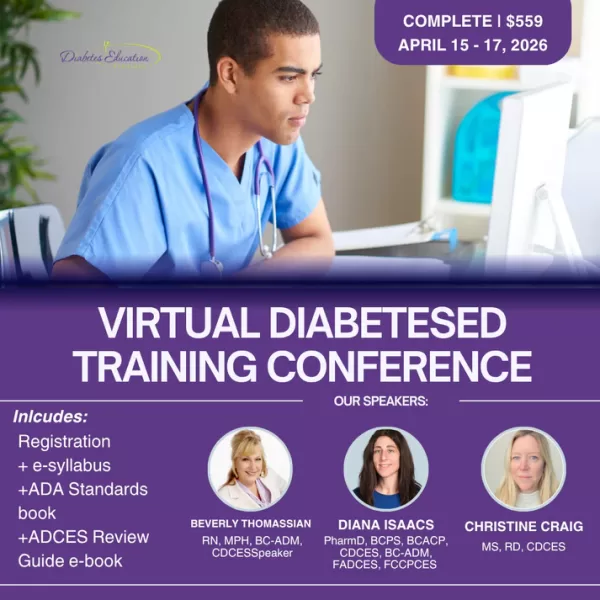
Gain fresh insights, practical tools, and a deeper understanding of the latest in person-centered diabetes care. Our expert team brings the ADA Standards of Care to life—covering medications, behavior change, technology, and more!
If you’re preparing for the CDCES or BC-ADM exam, this conference, paired with a handful of free bonus courses, serves as the ideal study companion! Plus, this content counts toward the ADA Standards requirements for CDCES Renewal.
With interactive co-teaching, we keep sessions engaging, relevant, and fun.
Let’s learn and grow together!
Course credits through AMA PRA Category 1 Credits™, ACPE, ANCC, and CDR!
Program Objectives:
Upon completion of this activity, participants should be able to:
According to the new 2026 ADA Standards, “type 2 diabetes is associated with insulin secretory defects related to” which of the following?
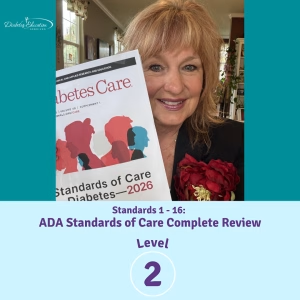
For last week’s practice question, we quizzed participants on JR studying to take their CDCES exam, and they have questions studying for the 2025 or 2026 ADA Standards of Care. 55.56% of respondents chose the best answer. We want to clarify and share this important information, so you can pass it on to people living with diabetes and your colleagues, plus prepare for exam success!
Before we start though, if you don’t want any spoilers and haven’t tried the question yet, you can answer it below: Answer Question
JR has been diligently studying to take their CDCES exam at the end of January 2026. They are wondering if they should study the 2025 or 2026 ADA Standards of Care.
As a mentor to healthcare professionals entering the field of diabetes, what do you recommend?
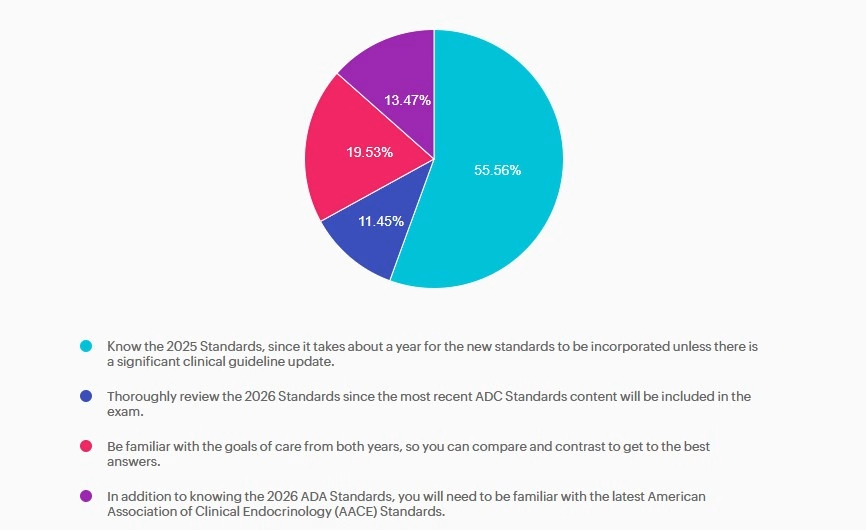
Answer A is correct: 55.56% chose this answer, “Know the 2025 Standards, since it takes about a year for the new standards to be incorporated unless there is a significant clinical guideline update.” Answer A is the BEST answer. It takes at least a year for the CBDCE to update the exam based on the ADA Standards. Knowing the 2025 Standards along with any urgent clinical updates announced in 2026 will help prepare JR for success.
Answer B is incorrect: 11.45% chose this answer, “Thoroughly review the 2026 Standards since the most recent ADC Standards content will be included in the exam.” Answer B is not the best answer. Since it takes at least a year for the CBDCE to update the exam based on the ADA Standards, JR can feel comfortable knowing the 2025 Standards along with any urgent clinical updates announced in 2026.
Answer C is incorrect: 19.53% chose this answer, “Be familiar with the goals of care from both years, so you can compare and contrast to get to the best answers.” Answer C is not the best answer. Thinking about comparing and contrasting two consecutive years standards and lead to testing confusion. JR can feel comfortable knowing the 2025 Standards along with any urgent clinical updates announced in 2026.
Answer D is incorrect: 13.47% chose this answer, “In addition to knowing the 2026 ADA Standards, you will need to be familiar with the latest American Association of Clinical Endocrinology (AACE) Standards.” Answer D is not the best answer. Since it takes at least a year for the CBDCE to update the exam based on the ADA Standards, JR can feel comfortable knowing the 2025 Standards along with any urgent clinical updates announced in 2026.
We hope you appreciate this week’s rationale! Thank you so much for taking the time to answer our Question of the Week and participate in this fun learning activity!
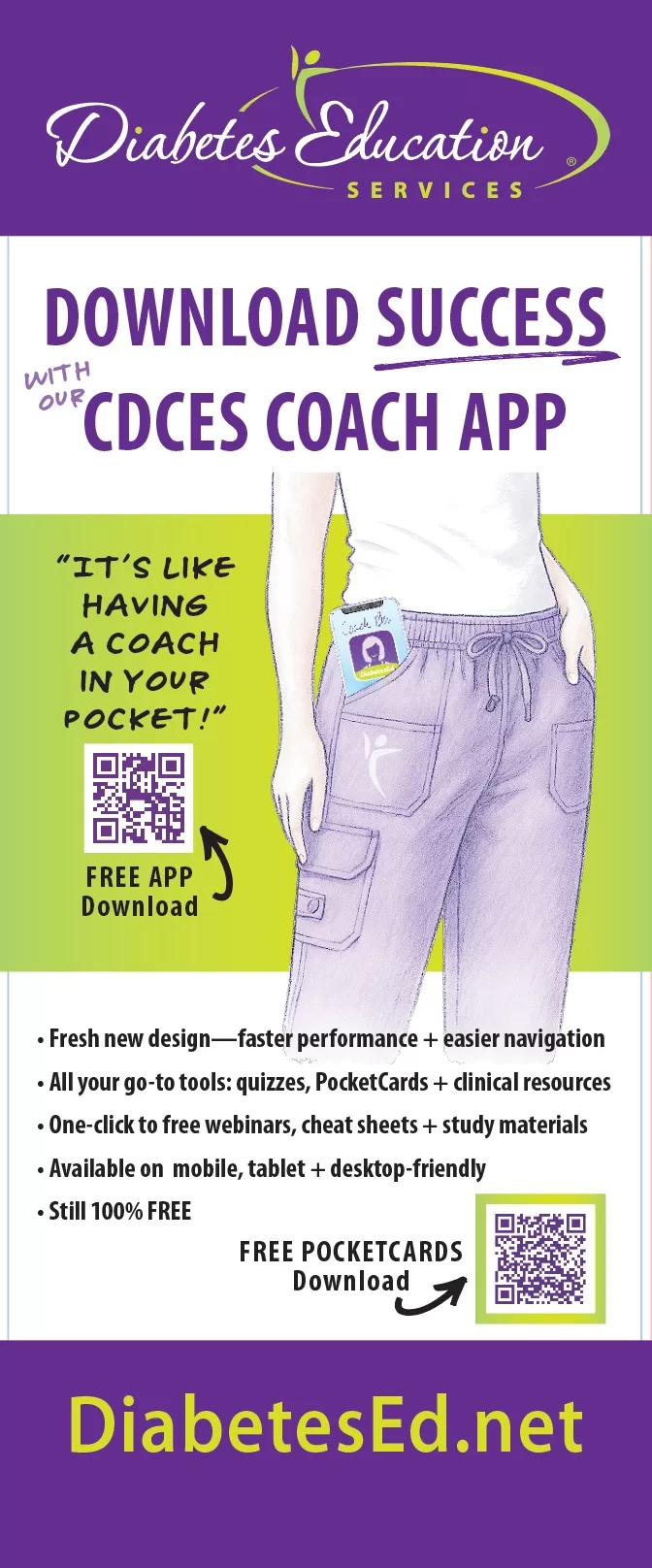
You have been asking for it, and are please to announce that we have delivered.
Challenge yourself with one or both sets of 25 Practice Test questions written by the experts. Each set of test questions includes a detailed rationale. Prepare yourself for exam success.
To take advantage of all these enhanced features, sign up for the new CDCES Coach App today!
Why can’t I log in to the Online University through the app?
Will my registration for the old app automatically?
Do I have to download the new CDCES Coach app to have access to all the free resources and Question of the Week?
What are some of the new features of this CDCES Coach App Version?
Do I have to pay for this new CDCES Coach App?
We developed this app with the belief that healthcare professionals deserve access to vital resources that enhance clinical care. Users can conveniently access a variety of study tools and clinical resources while on the move!
Created by Coach Beverly Thomassian, RN, MPH, BC-ADM, CDCES, this app serves as a vital resource for novice to seasoned diabetes healthcare professionals!


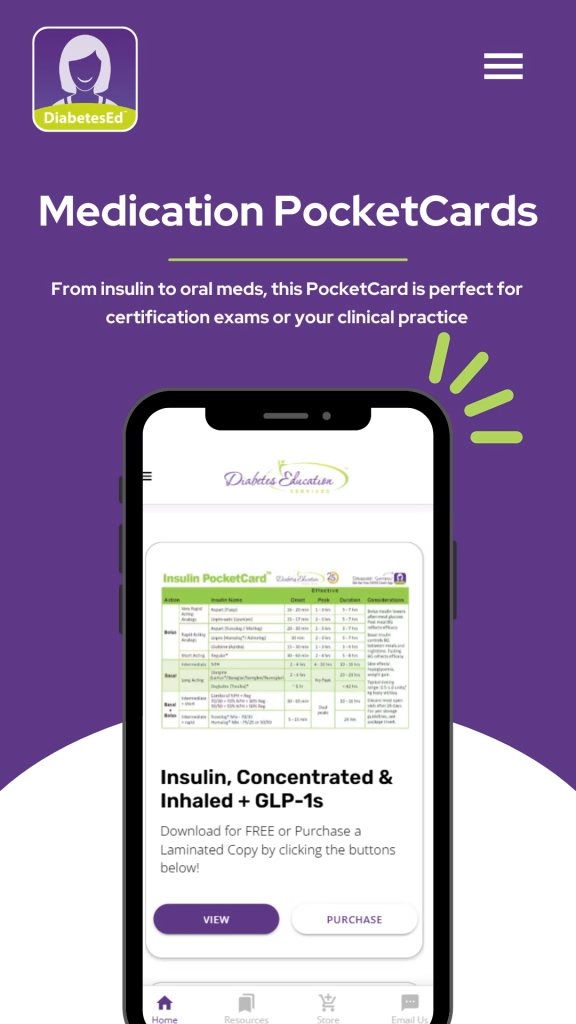
We know that studying can be overwhelming. We encourage you to create a study group with your colleagues so you don’t have to walk this path alone.
Teamwork makes the dream work! For groups of 3 people or more, we offer 20% group discounts on our certification Boot Camps and Training Programs.
Even better, our CE credits count toward the CDCES exam and CDCES / BC-ADM renewal. With our newly expanded accreditation, our CE credits will also apply towards your license renewals if you are a physician, nurse, pharmacist, or dietitian.
Welcome to our community. We are so glad you are here!
Katie is a 14-year-old living with type 1 diabetes since age 10. She uses multiple daily insulin injections (MDI) therapy to manage her diabetes and started using a continuous glucose monitor (CGM) 3 months ago at the recommendation of her endocrinology team. Her A1c has increased to 9.2% since starting CCM technology.
Her mother reports that Katie has episodes of prolonged hyperglycemia when she is away from home. When at home, her mother will remind Katie to bolus based on the alerts she gets on the CGM share app. Katie reports she mutes alarms and alerts because she doesn’t want her classmates to hear them, afraid they will judge her. When you ask if she has uploaded her data to the school nurse or her endocrinology team she says, “The app is really confusing.” Her mother is frustrated with Katie for not paying attention to the CGM, saying, “She can text her friends without any problem; I don’t know why she struggles with the CGM”.
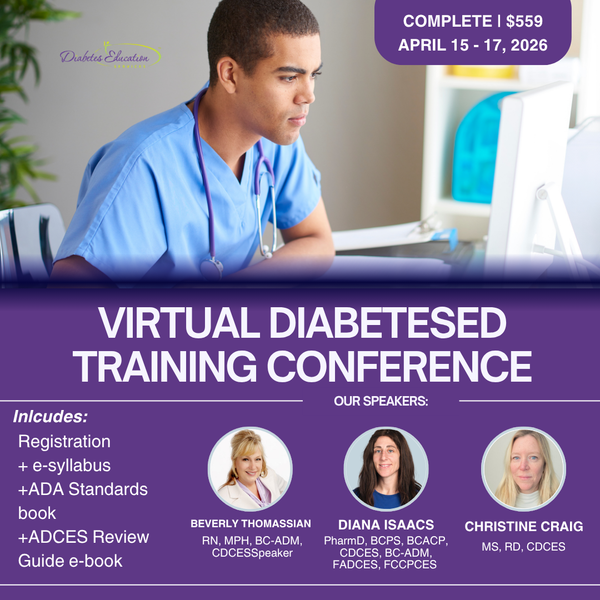
Gain fresh insights, practical tools, and a deeper understanding of the latest in person-centered diabetes care. Our expert team brings the ADA Standards of Care to life—covering medications, behavior change, technology, and more!
If you’re preparing for the CDCES or BC-ADM exam, this conference, paired with a handful of free bonus courses, serves as the ideal study companion! Plus, this content counts toward the ADA Standards requirements for CDCES Renewal.
With interactive co-teaching, we keep sessions engaging, relevant, and fun.
Let’s learn and grow together!
Course credits through AMA PRA Category 1 Credits™, ACPE, ANCC, and CDR!
Program Objectives:
Upon completion of this activity, participants should be able to:
Featured Articles ___________________________ |
Upcoming Programs ___________________________
Upcoming FREE Webinars ___________________________ Pre-Order ADA Standards Book for 2026
|
Hi friends, we have two pieces of exciting news!
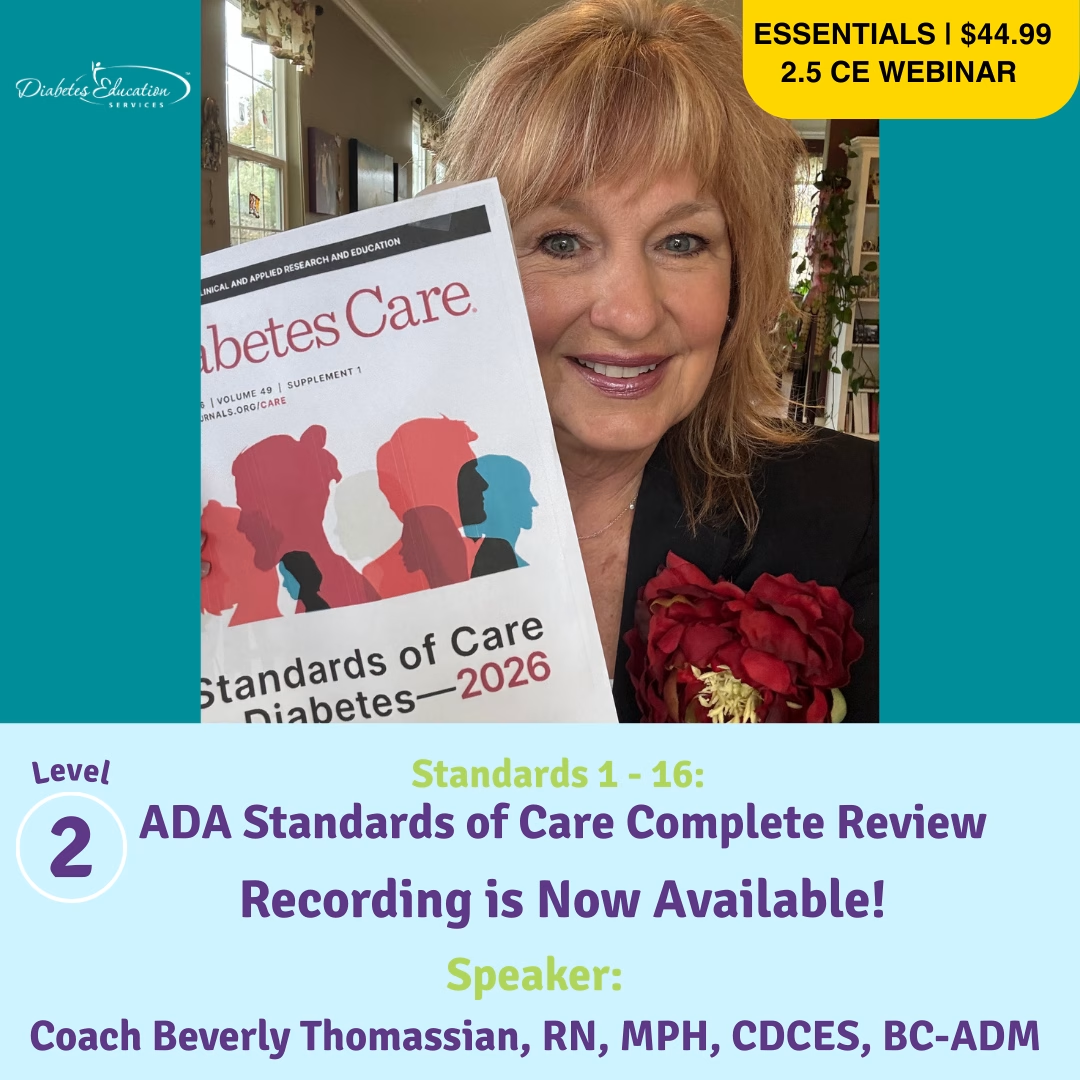
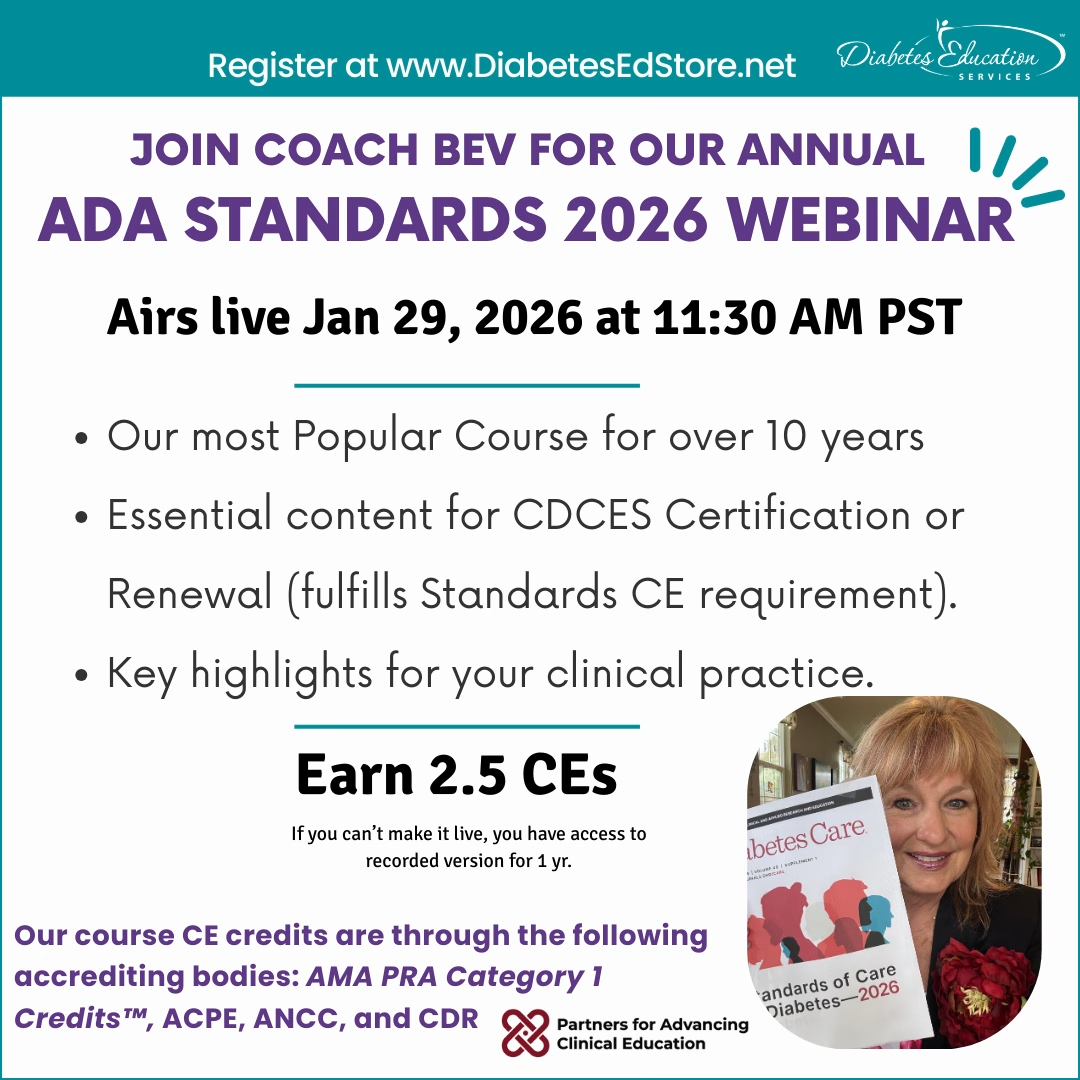
First, the 2026 ADA Standards of Care are here! This updated content is full of evidence-based guidelines and clinical pearls that you can bring back to your practice, prepare for certification exams, and, of course, advocate on behalf of people living with pre-diabetes and diabetes.
As a busy healthcare professional, we understand that you may not have time to read all 350+ pages! We have a solution.
Join Coach Bev on January 29th for a 2.5 CE Live Webinar that summarizes the critical content you need to know. If you can’t join us live, once you register, you have access to the recorded version for a full year.
You can relax as your expert guide, Coach Bev, leads you through a two hour journey highlighting updates to the ADA Standards. You will walk away feeling confident and focused on what’s most important for certification exams and your practice.
Second exciting announcement!
The New CDCES Coach App is NOW available on Apple and Google Play. Best part? It’s still FREE!
After 6 months of renovation (thanks, Bryanna), you are going to love our new and improved CDCES Coach App. Our older version is sunsetting at the end of the month, so download the new version today! Enjoy quick access to the ADA Standards, new sample test questions with rationales, cheat sheets, Question of the Week and more!
Coach Beverly, Bryanna, Astraea & Katarina
Our new, revitalized CDCES Coach app, will equip you with certification exam study tools and clinical resources- right at your fingertips!
✨ Fresh new design with easier navigation.
New Quizzes with Rationale for In-app Purchase Option
✨ 25 Practice Test Questions with Rationale – Only $9.99! ✨
📱 Register Today! To take advantage of all these enhanced features, you will need to sign up for the new CDCES Coach App! The old app sunsets on 12/31/2025.
You have been asking for these app improvements. We are happy to deliver new features while keeping your favorite resources at the ready!
📱 Works on mobile, tablet, and desktop-friendly!