Subscribe
eNewsletter

Ready to get certified?
Free CDCES Coach App

eNewsletter
Free CDCES Coach App
For last week’s practice question, we quizzed test takers on why diabetes foot care is important. 91% of respondents chose the best answer. We want to share this important information, so you can pass it on to people living with diabetes and your colleagues, plus prepare for exam success!
Before we start though, if you don’t want any spoilers and haven’t tried the question yet, you can answer it below: Answer Question
Question: Why is it important that people with diabetes pay special attention to taking care of their feet?
Answer Choices:
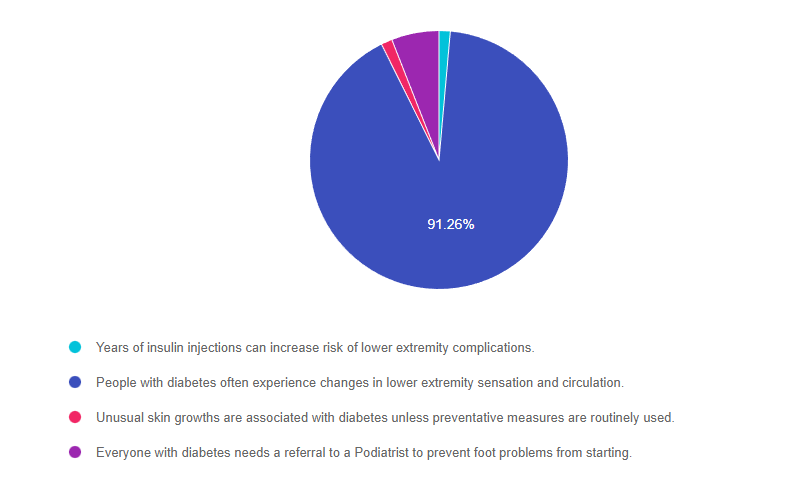
As shown above, the most common choice was option 2, the second most common answer was option 4, then a tie for options 1 and 3.
Answer 1 is incorrect. 1.39% chose this answer, “Years of insulin injections can increase risk of lower extremity complications.” Insulin injections don’t increase the risk of lower extremity problems and they might even reduce the risk of vascular disease by improving blood glucose levels.
Answer 2 is correct. 91.29% of you chose this answer, “People with diabetes often experience changes in lower extremity sensation and circulation.” YES, GREAT JOB. Diabetes can contribute to increased risk of vessel disease and neuropathy if blood glucose levels and blood pressure readings are chronically above target. Of course, genetics and environment also play a role in increasing or decreasing the risk of lower extremity complications. By providing people with diabetes strategies to protect lower extremities and care for their feet, health care professionals make a big dent in improving outcomes. We have free patient education handouts that you are welcome to share with the clients you serve. Foot Care Teaching Sheet – Steps to Healthy Feet. This handout covers the important elements of foot care for people living with diabetes with simple and straightforward language and is also available in Spanish, Foot Care Teaching Sheet in Spanish– Pasos Para Tener Pies Sanos.
Answer 3 is incorrect. 1.39% of respondents chose this answer, “Unusual skin growths are associated with diabetes unless preventative measures are routinely used.” People with diabetes are not at increased risk of skin growths, however they are at risk for fungal infections, especially if blood sugars are elevated. Keeping feet clean and dry, especially in between toes can help ward off infections and interdigit maceration. We have free patient education handouts that you are welcome to share with the clients you serve. Foot Care Teaching Sheet – Steps to Healthy Feet. This handout covers the important elements of foot care for people living with diabetes with simple and straightforward language and is also available in Spanish, Foot Care Teaching Sheet in Spanish– Pasos Para Tener Pies Sanos.
Finally, Answer 4 is incorrect. 5.92% chose this answer, “Everyone with diabetes needs a referral to a Podiatrist to prevent foot problems from starting.” A person with diabetes, well managed glucose levels, who can safely provide their own foot care does not need a referral to a Podiatrist. However, people with neuropathy, vascular disease, foot deformities, thick toenails, or a history of foot problems, usually benefit from being referred to a Podiatrist for assessment and care. You can download or free 3 Steps to Save Feet – Assess, Screen, Report Handout. This handout walks health care professionals through the steps involved in a 10-minute foot assessment and monofilament screening. Also includes a Screening Form to document and report findings.
People with diabetes are at increased risk of foot complications. Basic foot care education and intervention can reduce the risk of amputation by over 50 percent.
This bundle comes with our:
We have included instructions on assessing and inspecting feet, risk assessment, and action steps. We enhanced the teaching tools and forms from the Lower Extremity Prevention Program (LEAP) and are excited to share them with our community of diabetes advocates.
Read More: FREE Handouts and Resources 3 Steps to Save Feet – Assess, Screen, Report Handout. This handout walks health care professionals through the steps involved in a 10-minute foot assessment and monofilament screening. Also includes a Screening Form to document and report findings. Foot Care Teaching Sheet – Steps to Healthy Feet. This handout covers the important elements of foot care for people living with diabetes with simple and straightforward language. Foot Care Teaching Sheet in Spanish– Pasos Para Tener Pies Sanos. This handout covers the important elements of foot care for people living with diabetes with simple and straightforward language. Sign up for Diabetes Blog Bytes – we post one daily Blog Byte from Monday to Friday. And of course, Tuesday is our Question of the Week. It’s Informative and FREE! Sign up below! The use of DES products does not guarantee the successful passage of the CDCES exam. CBDCE does not endorse any preparatory or review materials for the CDCES exam, except for those published by CBDCE. We have created a Foot Care Toolkit! This toolkit includes a Handout on how to perform a 10-minute foot assessment, a patient education handout, plus a webinar detailing how to use these tools. Plus, we now offer discounted monofilaments that you can use in your practice setting. 3 Steps to Save Feet – Assess, Screen, Report Handout. This handout walks health care professionals through the steps involved in a 10-minute foot assessment and monofilament screening. Also includes a Screening Form to document and report findings. Foot Care Teaching Sheet – Steps to Healthy Feet. This handout covers the important elements of foot care for people living with diabetes with simple and straightforward language. Foot Care Teaching Sheet in Spanish– Pasos Para Tener Pies Sanos. This handout covers the important elements of foot care for people living with diabetes with simple and straightforward language. Webinar: Coach Beverly will walk participants through the 3 Step Process to Save Feet; Assess, Screen and Report. She will provide simple and clear instructions on how to assess and inspect feet, along with risk assessment and action steps. We will share free teaching tools, strategies, and documentation forms adapted from the Lower Extremity Prevention Program (LEAP) that you can immediately implement in your practice setting. No matter your profession, learning the basics of lower extremity assessment can help you to identify when people with diabetes are in jeopardy of serious foot problems. Basic foot care assessment and education can reduce the risk of amputation by over 50%. According to a 2019 article published in Diabetes Care, the rate of amputations in the U.S. is increasing. Each year, people with diabetes experience over 100,000 non-traumatic amputations. In the United States, every 17 seconds someone is diagnosed with diabetes, and every day 230 Americans with diabetes will suffer an amputation. There are also major health disparities in people at the highest risk of losing their lower extremities. African Americans are 4 times more likely to experience diabetes-related amputation than whites. If each one of us reading this article prevented ONE amputation, we could prevent 40, 000 amputations. By assessing and screening for feet at risk, including using a monofilament to detect loss of protective sensation, diabetes healthcare professionals can immediately identify high-risk feet and take steps to protect lower extremities. Learn how to take an active role in decreasing this devastating loss of limb and often life. Research clearly demonstrates the importance of glucose control during hospitalization to improve outcomes not only in the inpatient setting but after discharge. This course reviews the evidence that supports inpatient glucose control and outlines practical strategies to achieve targets in the inpatient setting. We incorporate the latest ADA Standards and provide links to resources and inpatient management templates. Objectives: This bundle includes our CDCES Online Prep Bundle plus the ADCES Review Guide. The online bundle includes Level 1, Level 2, and Level 3 (Boot Camp), plus two bonus courses. The ADCES Review Guide offers over 480+ practice questions and is a fantastic independent study tool and comprehensive resource for the Diabetes Care and Education Specialist Exam. Read More: What is a CDCES? First awarded in 1986, as Certified Diabetes Educator (CDE) credential and in 2020 with a new name: Certified Diabetes Care and Education Specialist (CDCES) to more accurately reflect the specialty. CDCES has become a standard of excellence for the delivery of quality diabetes education. Those who hold this certification are known to possess comprehensive knowledge of and experience in diabetes prevention, management, and prediabetes. “Becoming a Certified Diabetes Care and Education Specialist (CDCES) is one of the best professional and personal decisions I have ever made.” – Coach Beverly Thomassian, RN, MPH, CDCES, BC-ADM Read More: 3 Reasons to Become a CDCES “The best part of becoming a CDCES is working with my colleagues and people living with diabetes. As diabetes educators, we hear compelling and beautiful life stories. I am astounded by the barriers they face and inspired by their adaptability, problem-solving skills, and resilience.” Reason 1: CDCES is a widely recognized certification by employers and health care professionals throughout the U.S. This credential demonstrates a specialized and in-depth knowledge in the prevention and treatment of individuals living with pre-diabetes and diabetes. Reason 2: Currently, 10% of people in the U.S. have diabetes and another 35% have pre-diabetes which means 45% of Americans are running around with elevated blood glucose levels. Given this epidemic, there will be plenty of future job opportunities. Reason 3: Having my CDCES along with my nursing degree, has opened many doors of opportunity; from working as an inpatient Diabetes Nurse Specialist in a hospital to working as a Manager of Diabetes Education in the outpatient setting to starting my own consulting company. Sign up for Diabetes Blog Bytes – we post one daily Blog Byte from Monday to Friday. And of course, Tuesday is our Question of the Week. It’s Informative and FREE! Sign up below! The use of DES products does not guarantee the successful passage of the CDCES exam. CBDCE does not endorse any preparatory or review materials for the CDCES exam, except for those published by CBDCE. When I was considering college, my dad offered me some simple advice, “Why don’t you become a nurse?” Four years later, I stood proudly with my white cap and nursing pin securely fastened as an RN graduate. As I reflect on my years in this noble profession, I have witnessed the most unselfish acts of love and pure heroism by my nursing colleagues. I have highlighted some top qualities that represent my gratitude, but this thank you list could encompass an entire page. This week is a perfect time to let our nursing colleagues, mentors, professors, and friends know how much they are appreciated. Coach Beverly thanks each nurse who has cared for me, held my hand, and reassured me that I am going to be okay. These are just a few ideas to get started. As you think of that special moment of gratitude, maybe you will come up with the perfect idea for that one special nurse. With gratitude, Coach Beverly Sign up for Diabetes Blog Bytes – we post one daily Blog Byte from Monday to Friday. And of course, Tuesday is our Question of the Week. It’s Informative and FREE! Sign up below! The use of DES products does not guarantee the successful passage of the CDCES exam. CBDCE does not endorse any preparatory or review materials for the CDCES exam, except for those published by CBDCE. Like me, you might feel overwhelmed and powerless with all the news about global warming, habitat loss and planetary suffering. There is HOPE. After listening to many experts, I have come to the conclusion that our actions CAN MAKE A DIFFERENCE, no matter how small. As a diabetes specialist, I also know that rates of diabetes have increased dramatically over the past 20 years as the microbial diversity of humans (and the planet) is in sharp decline. I am acutely aware that the health of our people is inextricably linked to the health of our planet. As a diabetes leader and CEO, I have a tremendous opportunity and obligation to speak up and support my community in making positive changes to promote the well-being of humans and our planet. We came up with a list of 10 Simple Steps we can take to improve planetary health. I am committing to making all 10 of these changes in my personal and professional life, starting today. Change isn’t easy. We aren’t going for perfect, we are starting with intention and slowly moving to action, giving ourselves lots of grace along the way. I am excited to share my successes and wrong turns with you on this journey and we would love to hear from you too! In celebration of Earth Day, we are excited to highlight the importance of plants and their role in supporting wildlife. The biggest secret to success is choosing Native Plants for your outdoor pots, balcony, yard or garden this year. Read more on our blog, Earth Day Secrets to Improving Planet Health Stay tuned and we share details and resources on each of these 10 Steps over the next few months. And, please send us your stories too at [email protected]. We want to hear from you! We came up with a list of 10 simple steps you can take to improve planetary health. Just pick your action(s) on this survey or come up with your own, and we will send you two gifts of appreciation, for free. To thank you for taking action, we will mail you (while supplies last) our world-famous Medication PocketCard and a Wildflower Seed Post Card, complete with 10 simple action steps printed on it, that you can read, review and then plant. Like you, I have a deep appreciation for all the earth has given me and I want to give back to this beautiful blue planet. Each intention and action matters. We are excited to celebrate Earth Day on April 22 and everyday. We will be posting blogs and resources to expand on actions we can all take to protect this precious earth we have the privilege to live on. Each action, no matter how small, matters. We can do this! With wishes for improved planetary health, Beverly, Bryanna, Jackson, and Amanda We have a favor to ask. In celebration of Earth Day, could you commit to taking just one action to protect the planet? We made it super easy and came up with a list of 10 simple steps you can take to improve planetary health. Just pick your action(s) on this survey or come up with your own, and we will send you two gifts of appreciation, for free. To thank you for taking action, we will mail you our world-famous Medication PocketCard and a Wildflower Seed Post Card, complete with 10 simple action steps printed on it, that you can read, review and then plant. The health of our people is inextricably linked to the health of our planet. Like you, I have a deep appreciation for all the earth has given me and I want to give back to this beautiful blue planet. Each intention and action matters. We are excited to celebrate Earth Day on April 22 and everyday. We will be posting blogs and resources to expand on actions we can all take to protect this precious earth we have the privilege to live on. Free PocketCard and Wildflower Seed Postcard We have created a list of 10 Actions to Celebrate Earth Day and printed these actions on wildflower seed postcards, that are ready for planting. To thank you for your pledge to commit to one or more actions that invest in the well-being of our planet, we will mail you a Free Medication PocketCard and Wildflower Seed PostCard. It’s easy! Just pick your action(s) on this Earth Action survey and provide a mailing address where to send these gifts of appreciation. Each action, no matter how small, matters. We can do this! With wishes for improved planetary health, Beverly, Bryanna, Jackson, and Amanda We have a favor to ask. In celebration of Earth Day, could you commit to taking just one action to protect the planet? We made it super easy and came up with a list of 10 simple steps you can take to improve planetary health. Just pick your action(s) on this survey or come up with your own, and we will send you two gifts of appreciation, for free. To thank you for taking action, we will mail you our world-famous Medication PocketCard and a Wildflower Seed Post Card, complete with 10 simple action steps printed on it, that you can read, review and then plant. The health of our people is inextricably linked to the health of our planet. Like you, I have a deep appreciation for all the earth has given me and I want to give back to this beautiful blue planet. Each intention and action matters. We are excited to celebrate Earth Day on April 22 and everyday. We will be posting blogs and resources to expand on actions we can all take to protect this precious earth we have the privilege to live on. Free PocketCard and Wildflower Seed Postcard We have created a list of 10 Actions to Celebrate Earth Day and printed these actions on wildflower seed postcards, that are ready for planting. To thank you for your pledge to commit to one or more actions that invest in the well-being of our planet, we will mail you a Free Medication PocketCard and Wildflower Seed PostCard. It’s easy! Just pick your action(s) on this Earth Action survey and provide a mailing address where to send these gifts of appreciation. Each action, no matter how small, matters. We can do this! With wishes for improved planetary health, Beverly, Bryanna, Jackson, and Amanda This course provides you with the need-to-know information regarding the microvascular complications of diabetes. We start with a brief overview of the pathophysiology and clinical manifestations then sum up with prevention strategies and screening guidelines. This straight-forward program will provide you with information you can use in your clinical setting and also provides critical content for the diabetes educator exam. Objectives: This course integrates the ADA Standard of Care on elements of a comprehensive medical assessment (Standard 4) of the individual living with prediabetes, diabetes, or hyperglycemia. Through case studies and real-life situations, we discover often hidden causes of hyperglycemia and other complications, such as liver disease, sleep apnea, pancreatitis, autoimmune diseases, fractures, and more. We delve into therapy for complicated situations and discuss management strategies for other conditions associated with hyperglycemia such as Cystic Fibrosis, and Transplants. Join us for this unique and interesting approach to assessing and evaluating the hidden complications of diabetes. Objectives: This bundle is specifically designed for healthcare professionals who want to learn more about the ADA Standards of Diabetes Care for their clinical practice or for those who are studying for the BC-ADM or the CDCES certification exam. Previously recorded Upcoming Updates Sign up for Diabetes Blog Bytes – we post one daily Blog Byte from Monday to Friday. And of course, Tuesday is our Question of the Week. It’s Informative and FREE! Sign up below! The use of DES products does not guarantee the successful passage of the CDCES exam. CBDCE does not endorse any preparatory or review materials for the CDCES exam, except for those published by CBDCE. Foot Care Toolkit: A 3-Step Process to Save Feet
All health care professionals are invited to learn how to assess feet.
Foot Care Toolkit
You’re Invited | Hospitals & Hyperglycemia Standards Webinar
Join us for our final 2022 Standards of Care Intensive Update!
Hospitals & Hyperglycemia | Level 2 | $29 for 1.5 CEs
Join us live Thursday, May 26 at 11:30 am PST
Studying for the CDCES Exam?
Enroll in CDCES Online Prep Bundle + 5th Ed ADCES Review Guide Book | 47 CEs
What is a Certified Diabetes Care and Education Specialist?
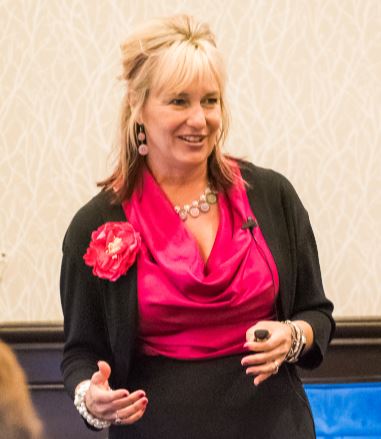
Why become a CDCES?
Three Reasons from Coach Beverly Happy International Nurses Day – 5 Ways to say Thank You
Like the founder of nursing, Florence Nightingale, you are all “Holding the Lamp” and shining it in dark places that are often scary and unknown to provide comfort to those with the greatest need.

5 Ways to Thank a Nurse
Happy Earth Day | Promoting Planetary and People Health
I am going to share my planet pledge journey and resources with you in our weekly blog posts.
10 Earth Actions We Pledge to Take
1. Grow plants native to you area.
By choosing plants that originated from your geographic area, you help support your regional ecosystem and offer pollinators, birds, butterflies and other healthy critters needed food, pollen and building materials for their survival.2. Compost kitchen scraps and cut down on waste
3. Eat more sustainable veggies, fruits, grains and less meat, processed foods.
4. Drive less and walk more, especially in nature
5. Think of 3 ways to use less water
6. Use cold water to wash, hang clothes to dry.
7. Turn appliances, lights and computers off when not in use.
8. Purchase used items and re-use everything you can. Swap and trade instead of buying new.
9. Try to use less plastics
10. Trade out filament light bulbs for new LED bulbs.
Take the Planetary Pledge for a PocketCard
How to Protect the Planet Resources Page
Free Diabetes PocketCard for Planet Pledge
How to Protect the Planet Resources Page
Free Diabetes PocketCard for Planet Action Pledge
How to Protect the Planet Resources Page
Upcoming Standards of Care Webinar Updates | Airs April 26th & 28th
Join us live next Tuesday and Thursday as we continue our Level 2 – Standards of Care Intensive live updates! Read more and enroll below.
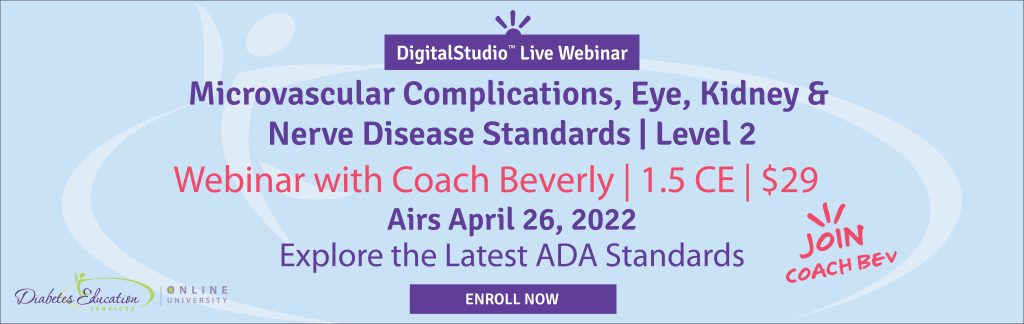
Level 2 | Microvascular Complications, Eye, Kidney & Nerve Disease Standards | 1.5 CEs | $29
Join us live on April 26, 2022, at 11:30 am PST
Level 2 | Critical Assessment – Fine-Tuning your Diabetes Detective Skills Standards | 2.0 CEs | $29
Join us live on April 28, 2022, at 11:30 am PST
Level 2 | Standards of Care Intensive | 20 CEs | $199
2022 Update Airs April 26 – May 26, 2022