
Subscribe
eNewsletter

Ready to get certified?
Free CDCES Coach App

eNewsletter
Free CDCES Coach App
What wisdom can you find that is greater than kindness?
Jean-Jacques Rousseau
Thank you for being a part of our seven days of kindness. Each post reminded me of the power of kindness to improve the lives of our fellow humans. Even the smallest gesture can leave a life long impression. Each spark, each light, each moment of humanness connects us with a hope that when we really see each other, we can do anything. With love, Coach Beverly

Read more about the kindness movement at Random Acts of Kindness.
Sign up for Diabetes Blog Bytes – we post one daily Blog Byte from Monday to Friday. And of course, Tuesday is our Question of the Week. It’s Informative and FREE! Sign up below!
[yikes-mailchimp form=”1″]
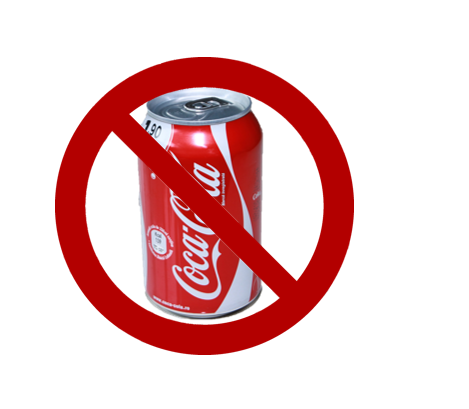
In a study conducted by University of California San Francisco’s (UCSF) Elissa Epel and colleagues, Epel wanted to evaluate the relationship between access to sugar-sweetened beverages (SSB) in the workplace and total daily consumption.
Epel and team banned the sale of all SSBs at UCSF for 10 months. Her team found that in employees deemed “frequent” SSB drinkers, consumption went down from 35 fluid ounces to a startling 17 oz.
Even though the employees still had access to SSBs outside of the campus, their consumption decreased significantly, highlighting the impact of eliminating access to SSBs in the work environment.
“This shows us that simply ending sales of sugary drinks in the workplace can have a meaningful effect on improving health in less than one year,” Epel said in a statement. “There is a well-known pathway from soda to disease. High sugar intake leads to abdominal fat and insulin resistance, which are known risk factors for diabetes, heart disease, cancer and even dementia. Recent studies have also linked sugar intake to early mortality.”
But this correlation was not enough for Epel. Before the ban went into effect, her team recruited 214 full-time employees who were self-reported “frequent” SSB drinkers. Epel and her team then randomly separated the employees into two groups: one group would receive a motivational intervention along with the SSB ban, while the other group wouldn’t receive any intervention. The motivational intervention included a 15-minute motivational session to begin and 5-minute calls one week, one month, and sixth months after the ban was put into effect.
The results were astounding; the participants in the intervention group consumed 25.4 oz less compared to the control group who only consumed 8.2 oz less.
Epel and her team had successfully proven a correlation between banning SSBs and consumption as well as a correlation between intervention and consumption. To read more about Epel’s study click here.
Sign up for Diabetes Blog Bytes – we post one daily Blog Byte from Monday to Friday. And of course, Tuesday is our Question of the Week. It’s Informative and FREE! Sign up below!
[yikes-mailchimp form=”1″]
Getting ready to take a test in the future? Many adults find test taking stress inducing, both in the study time leading up to it and during the exam itself.

Tufts University reported on a study on learning methods, particularly retrieval practice (learning by taking practice tests), and how this strategy can protect against the negative effects of stress.
The researchers analyzed two approaches to learning:
After a 24-hour break, half of each group was exposed to and experienced an episode of acute stress.
After this, both groups were given two memory tests to recall the words or images studied the previous day: one immediately after the stress scenario, and one twenty minutes after.
The stressed group who practiced retrieval practice remembered more items than their non-stressed counterparts who simply used multiple study periods (memorization). Those who used memorization and were exposed to a stressful scenario remembered the least out of the groups.
This study suggests that retrieval practice can help with long-term memory retention and guard against the adverse effects of stress!
We are proud to be using “retrieval practice” as the mode of studying for our practice tests and courses based on these scientific studies.
Our test results let students know if they chose the right our wrong answer. This approach encourages review of the material and retesting for better recall in finding the right answer. By omitting the answer key and encouraging retesting, we provide the opportunity for students to enhance long term knowledge retention and incorporate “retrieval practice” into their studies.
Read the full study here.
We hope you all appreciate and enjoy the test questions we come up with for our Question of the Week, Free Quizzes, and for all of our courses!
Interested in more practice? Our Test Taking Toolkit offers over 200 practice questions for the exam! You can purchase that here for only $49.
Sign up for Diabetes Blog Bytes – we post one daily Blog Byte from Monday to Friday. And of course, Tuesday is our Question of the Week. It’s Informative and FREE! Sign up below!
[yikes-mailchimp form=”1″]
As lifestyle coaches and diabetes specialists, we all know how important regular activity is to improve well-being, glucose levels, and overall health. Yet, keeping engaged in an ongoing activity is one of the biggest challenges most people face.
Soul line dancing might just offer an unexpected solution.

Soul line dancing – like country line dancing – is really just choreographed dance moves that you do in a group, without a partner. “It’s a sneaky way to get exercise in”
Andrea powell – soul dancing devotee
This activity offers the benefit of connecting with friends, learning a sequence of moves (that is great for brain function) and having fun. It’s an efficient way to improve cardiovascular health and keep fit.
Soul line dancing is held in local churches, gyms, community recreation and senior centers. “There is such enjoyment and that is part of music and part of rhythm, and is almost innate in humans,” say Terri Lipman, a professor in the School of Nursing at the University of Pennsylvania. Lipman is collecting data on the impact of soul dancing programs and says that the data shows that soul line dancing counts as moderate exercise.
Since soul line dancing is an exercise that is both fun and social, it creates a habit that is more likely to last for the long run!
Read more here from NPR Story: Soul Line Dancing: Come For The Fitness. Stay For The Friendships
And, if you want to learn the World Diabetes Day Flash Mob, here are the steps and a video. Just in time for National Diabetes Month in November.
Sign up for Diabetes Blog Bytes – we post one daily Blog Byte from Monday to Friday. And of course, Tuesday is our Question of the Week. It’s Informative and FREE! Sign up below!
[yikes-mailchimp form=”1″]
A recent study, analyzing more than 2,600 German adults, showed an association between height and diabetes risk. Specifically, that tall people may have lower risk for developing Type 2, while shorter people may be at increased risk for developing Type 2.

The study showed that for every 10 cm of greater height, the risk for Type 2 was 41% lower for men and 33% lower for women.
Research found that the association between height and risk for type 2 diabetes was a stronger association in people with normal weight, rather than those experiencing overweight or an elevated BMI above 30.
For men and women with normal weight, every 10 cm of greater height lessened the risk of developing Type 2 by 86% in men and 67% in women.
The study suggested that this association between height and Type 2 diabetes risk may be based on healthier cardiometabolic profiles attributable to height.
For full study details, read more on Healio.
Sign up for Diabetes Blog Bytes – we post one daily Blog Byte from Monday to Friday. And of course, Tuesday is our Question of the Week. It’s Informative and FREE! Sign up below!
[yikes-mailchimp form=”1″]
Happy Mindful Monday! Below we highlight a beautiful poem by Liezel Graham who has a son living with type 1 diabetes.

In my fridge,
in the shelf that is designed
to hold cheese,
there are vials of hope,
and an emergency kit
in bright orange,
remember, remember
in case you forget
how to breathe,
with pre-filled hormone,
so that when my fingers
fumble with fear
I have a needle
ready
to plunge deep into muscle,
to bring you back
if you should ever slip
too far away
from me.
I keep nocturnal vigils with foxes
and
other moon mothers
who have to keep on keeping on,
until
the
day
breaks
fresh
hope
over
me,
and how tired can a mother
be and still breathe?
I punch a calculator in my head
with every meal,
and
I sing songs of
no, you cannot eat that now
and please,
you must drink this now,
or else…
and in this home we know needles, and
we
know
fear,
and we are the ones with
a yellow sharps container
on our kitchen counter
where
others
have no such things, and
we are intimately familiar
with the fear
that
can
slip
into
a word,
hypo
hyper
ketones
coma
death.
but, I also know this hope that lives in delicate glass vials,
where every drop
holds life
yours,
and also my heart, and
I promise you
that cells might forget
how to keep
you alive,
but I will not forget,
or
give up,
ever.
and
for you,
and for life,
I am grateful.
— on mothering diabetes.
Sign up for Diabetes Blog Bytes – we post one daily Blog Byte from Monday to Friday. And of course, Tuesday is our Question of the Week. It’s Informative and FREE! Sign up below!
[yikes-mailchimp form=”1″]
A new study from the University of Nottingham suggests yes! The study examined the effect coffee on brown fat.

Brown fat is a heat generating form of fat, unlike white fat which simply store the body’s excess calories. The heat generation of brown fat helps burn calories in the process of thermogenesis.
Brown fat normally is triggered in response to cold and helps the body produce heat by burning sugar and fat. In this study, the brown fat actually became hotter after a drink of coffee!
Michael Symonds, the study leader, explained the next step will be testing if caffeine supplements create a similar effect. Read the full report on the study here.
Sign up for Diabetes Blog Bytes – we post one daily Blog Byte from Monday to Friday. And of course, Tuesday is our Question of the Week. It’s Informative and FREE! Sign up below!
[yikes-mailchimp form=”1″]
A study from the University College London, published in Depression & Anxiety showed an association between eating dark chocolate, and lessening symptoms of depression.

This study isolated the effects of dark chocolate only, avoiding variables such as socioeconomic status, which they believed could “confound the association between chocolate and depression.”
The study showed significantly lower odds of symptoms of clinical depression in study participants who ate dark chocolate as compared to other chocolate types.
The findings indicate a positive relationship between dark chocolate and lessened depression. However, they need to be confirmed in duplicate studies that carefully consider confounding variables.
In another study, researchers highlighted that highly stressed people who ate the equivalent of one average-sized dark chocolate candy bar (1.4 ounces) each day for two weeks experienced reduced levels of cortisol and catecholamine levels compared to highly stressed people who did not eat dark chocolate for 2 weeks.
Researchers also say dark chocolate appeared to have beneficial effects on the participants’ metabolism and microbial activity in the gut.
Bottom line – looks like we all need to eat more dark chocolate!
Read University College London Study on Chocolate Reduces Depression Risk
Read Dark Chocolate Lowers Stress Hormones from Web MD
Sign up for Diabetes Blog Bytes – we post one daily Blog Byte from Monday to Friday. And of course, Tuesday is our Question of the Week. It’s Informative and FREE! Sign up below!
[yikes-mailchimp form=”1″]