
Subscribe
eNewsletter

Ready to get certified?
Free CDCES Coach App

eNewsletter
Free CDCES Coach App
 A study conducted by the Journal of the American Medical Association has found that individuals who consume more organic foods have a decreased risk of developing cancer. The study found that eating organic especially decreases risk of developing postmenopausal breast cancer and Hodgkin lymphoma in comparison those who did not.
Researchers assessed the diets of 68,946 adults in France. Nearly 3/4 of participants were women in their mid-40s. Subjects were separated into four separate groups based off of their consumption of organic foods including “fruits and vegetables, meats and fish, ready-to-eat meals, vegetable oils and condiments, dietary supplements, and other products.”
Out of the 68,946 subjects, 1,340 developed some form of cancer. The most prevalent for this group of subjects was breast cancer with 459 individuals developing it at the end of the 4.5 year period. 180 subjects were diagnosed with prostate cancer, 135 with skin cancer, 99 with colorectal cancer and 47 with non-Hodgkin lymphomas.
Researchers found that there was a “negative relationship between high scores (eating the most organic food) and overall cancer risk.” Individuals who scored high in organic food consumption decreased their risk of developing cancer by 25%. They were also 73% less likely to develop non-Hodgkin lymphoma and decreased risk of developing breast cancer by 21%. Individuals with low-moderate organic food intake still demonstrated a decreased risk in developing various forms of cancer.
The authors on the study believe that decreased risk may be due to reduction of contamination of food. Further research on the topic may be reason enough to promote consumption of organic food as a preventative health strategy to decrease risk of cancer.
To learn more about consumption of organic food and decreased risk of cancer, visit “Cut Your Cancer Risk by Eating Organic.”
You can also join our “Cancer and Diabetes” online webinar to learn more:
Cancer and Diabetes – 1.5 CEs | $29
Sign up for Diabetes Blog Bytes – we post one daily Blog Byte from Monday to Friday. And of course, Tuesday is our Question of the Week. It’s Informative and FREE! Sign up below!
[yikes-mailchimp form=”1″] Appetite control is often associated with risk of obesity and Type 2 Diabetes. Researchers at the University of California, San Diego have found that leptin resistance may have a significant impact on hunger and satisfaction. In animal studies, a high-fat diet increases the amount of an enzyme named MMP-2, which damages leptin receptors that signal your brain when you’re full. When the hormone leptin’s receptor sites are damaged, the neurons do not send a satiety signal to the stomach to stop eating. This may explain why obese individuals often eat past the point of fullness.
Leptin is released from white fat tissue, the most predominant form of fat, when a person is eating a meal. “Leptin travels through the bloodstream to the brain, specifically the hypothalamus, where it stimulates neural receptors to signal that the stomach is full.” Individuals who are overweight or obese typically have plenty of leptin in the blood, but due to the abundance of the MPP-2 enzyme, the system fails to send the signal of satiety to the hypothalamus.
This study found the enzyme MMP-2 is responsible for the damage to leptin receptors. Subjects who did not produce the MMP-2 enzyme gained less weight overall. Their leptin receptors still remained in tact. Researchers of this study, believe that, “other membrane receptors may be destroyed in the same way.” Further research must be conducted to determine if this is the case for other receptors as well.
This research team is calling for a large-scale clinical trial to investigate whether MMP-2 inhibitors might help people lose weight
For more information on leptin resistance, check out at the study Leptin Resistance and Appetite Control.
Contributed By: Sofia Sepulveda
 South L.A. has been burdened with limited access to fresh and healthy foods for years. Hank’s Mini Market, a locally owned store originally opened in 1997, has decided to introduce more wholesome and healthy foods to the area. The small corner store has partnered with Sweetgreen and California FreshWorks Fund to provide the community with produce that is both fresh and affordable.
South Los Angeles, famous for the 1992 LA Riots, is often referred to as a food desert. The American Nutrition Association defines this as “a place where residents lack access to fresh fruit, vegetables, and other healthy whole foods. Food deserts generally occur in low-income areas where fast food is easier to find than an affordable grocery store.”
The hope for this grocery store’s transformation, is to allow the community to have access the healthy foods which will greatly impact their quality of life and reduce risk of diet-related diseases. The store is also providing a space for local art in hopes that it will help to build a sense of community.
The owner of the corner store states, “we should be able to shop locally, we should have nice spaces, we are deserving.” She is hoping that the transformation of her family-owned store will encourage others to demand more from their community and encourage change.
To read more about this topic, visit “Re-opened convenience store brings healthy options to South L.A.
 Many popularized western diets promote a low-carb/high-protein diet for weight loss, however, recent studies show that a low-carb diet can actually increase your mortality risk. The study suggests that a low-carb diet can be just as detrimental to your long-term health as a high-carb diet.
Multiple studies with over 400k participants, “suggest a U-shaped relationship between life expectancy and overall carbohydrate intake, in which lifespan is greatest among people with 50%-55% carbohydrate intake, a level that might be considered moderate in North America and Europe but low in other regions, such as Asia,” study authors wrote.
Despite many popularized diets such as the paleo or keto diet, substituting carbohydrates with animal-based protein actually increased mortality risks, study finds. When carbohydrates were replaced with plant-based protein (nuts, vegetables, whole-grain bread), mortality risks decreased. According the to the study, the popularity of the “low-carb” diet is mainly due to the short-term weight loss vs. long term health outcomes.
We should still pay attention to what type of carbohydrates we are consuming, but skipping them all together for a long-term weight loss solution may not be the answer. Rather, according to this study, if you are looking to replace carbohydrates or cut back, choose plant protein over animal-based proteins to decrease your mortality risk and improve your outcomes!
To learn more – “Higher Mortality Risk Seen with Low Carb Diet” by MEDPAGE TODAY
Humans are said to have five basic tastes: salty, sweet, bitter, sour, and the least known, umami. Umami is a Japanese word “used to express a delicious, savory meal.” Recent studies are beginning to show that healthy eating habits may be influenced by consuming savory foods.
Glutamate, a key component of Umami taste, is an amino acid that is commonly found in savory foods with higher protein values. Previous studies have shown that consuming glutamate via broth can decrease overall appetite and intake. This is especially helpful for individuals who struggle with overeating and weight gain. A study by the Journal of Neurophyschopharmacology found that the participants, “had more focused gazes during the meal and had more engagement of a brain area that is linked to successful self-regulation during food choice.”
Further research may help encourage and facilitate healthier eating patterns and reduce the amount of individuals at risk for developing type 2 diabetes and becoming obese.
To learn more about Umami and its prevalence in weight loss and appetite control, visit Savory Foods May Help Promote Healthy Eating.
“Children who drink fruit juice with breakfast are more likely to become overweight or obese.”
A recent study by the Medical University of Vienna reported that “children who had orange or apple juice with their breakfast were 50% more likely to be overweight.” On the alternative end, the children consuming water in the study decreased their risk for obesity by 40%. The study also evaluated the children’s overall eating habits and whether or not they skipped breakfast. The study found that the children who ate breakfast every morning were generally three pounds lighter than the children who skipped it all together.
The experts in the study recommended to look for fruit juices with lower added sugar and very simple ingredients. The increased risk of obesity is likely due to the the added sugars as well as the overall higher energy content. A small glass of freshly squeezed orange juice with no added sugar is a better, low-calorie option since it contains beneficial vitamins and minerals that are vital for children’s development. The fiber content in natural fruit juices is also beneficial for promoting good digestive health. Of course, enjoying the whole fruit is always the best option.
In summary, fruit juice does not necessarily need to be eliminated altogether. Consider it a special treat. But better choices include eating the fruit instead or diluting the juice with 50% water (sparkly water works great) to decrease overall sugar and energy content.
To read more about this topic, visit Children who drink fruit juice with breakfast 50% more likely to be overweight.
Written by: Sofia Sepulveda
Maintaining a wide diversity of gut microbiome is vital for good health. A large amount of these microbes can be acquired through fermented foods like yogurt, kombucha, and sauerkraut. Fermented foods and the microbes they provide have proven to improve digestion of lactose, aid in weight management, lower risk of type 2 diabetes, and lower risk of developing cardiovascular disease.
This guide to fermented foods provides a quick and dirty guide to increasing gut bacteria diversity and through fermented foods.
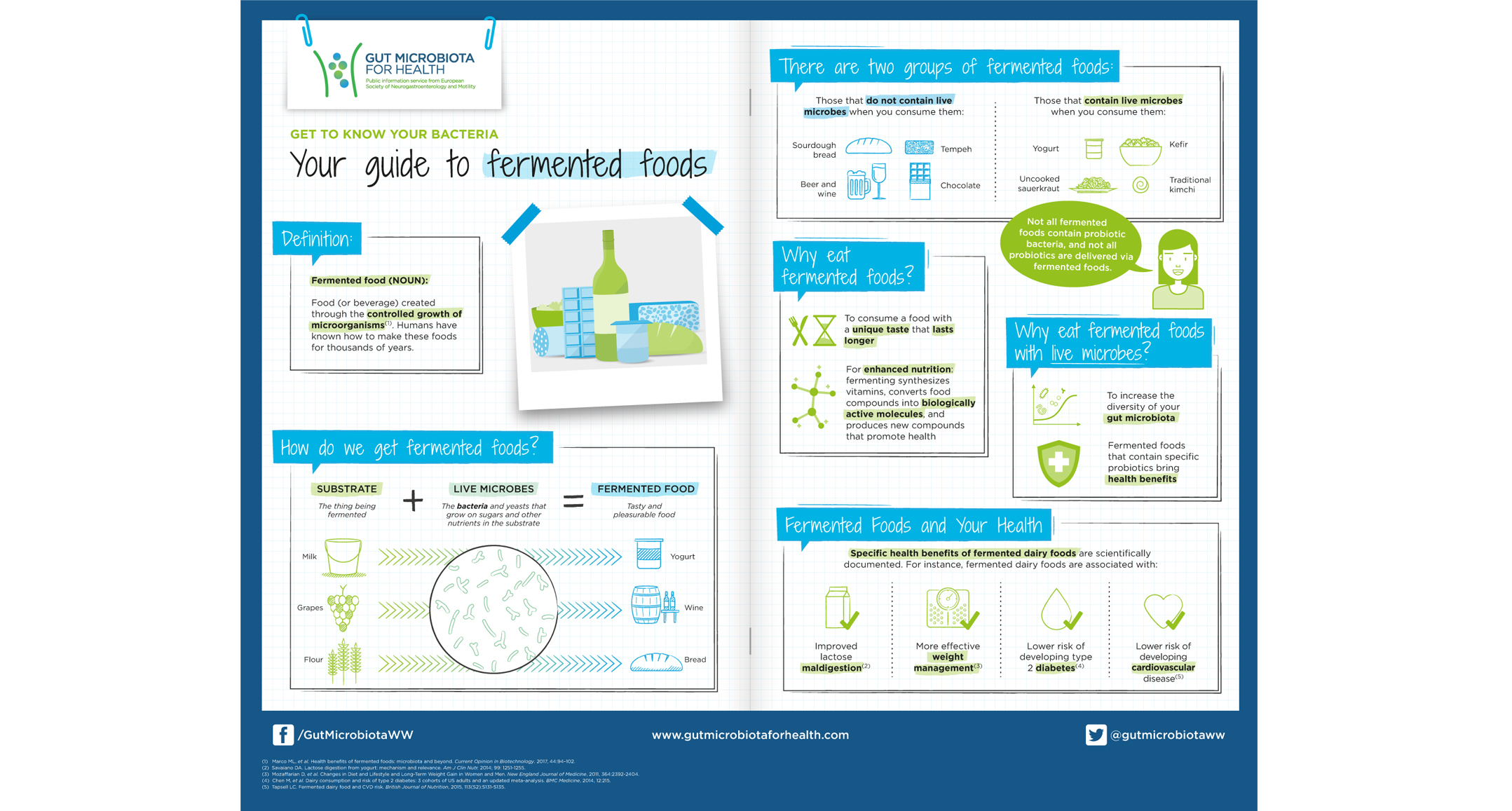
Want to learn more? Join the wonderment as we explore the role of our Microbiome with our “New Horizons – Getting to the Gut” webinar
Join us to learn about the exciting advances in our understanding of the pathology of diabetes and novel approaches to prevention. We will discuss trends in diabetes diagnosis and classification. The role and importance of gut bacteria in the pathology of type 1 and type 2 will explored. A detailed discussion on emerging research and clinical trial on interventions to delay or prevent diabetes is also included.
Topics Include:


Many people wonder if they should eat breakfast before working out or hold off on consuming calories until after exercise. Recent research by the University’s Department for Health at the universities of Birmingham, Newcastle, and Stirling has shown that the pre-workout breakfast can actually increase post meal glucose utilization.
In this study, 12 healthy males were given a control breakfast and were required to rest for three hours prior to exercise. Blood glucose levels and muscle glycogen levels were then tested post exercise and rest. Researchers found that consuming breakfast actually made the body more effective at burning carbohydrates during exercise, “as well as increasing the rate the body digested and metabolised food eaten after exercise too.”
They compared the results to participants who skipped breakfast. The researchers found that fasting before exercise actually had the opposite effect and made the body far less efficient at burning carbohydrates during exercise. Researchers also discovered that the subjects were not only burning carbohydrates from their breakfast but from their muscle glycogen stores as well. This provides explanation for why there is rapid clearance of blood sugar after lunch.
This study has only assessed short term effects. Therefore, further research must be performed to discover long term implications.
To learn more about carbohydrate metabolism, visit Eating breakfast burns more carbs during exercise and accelerates metabolism for next meal.
Contributed by Sofia Sepulveda