
Subscribe
eNewsletter

Ready to get certified?
Free CDCES Coach App

eNewsletter
Free CDCES Coach App
When I was considering college, my dad offered me some simple advice, “Why don’t you become a nurse?” I rolled my eyes and said, “Nah, I want to be a social worker.” Four years later, I stood proudly with my white cap and nursing pin securely fastened as an RN graduate.
As I reflect on my years in this noble profession, I have witnessed the most unselfish acts of love and pure heroism by my nursing colleagues. I have highlighted some top qualities that represent my gratitude, but this thank you list could encompass an entire page.
2020 – 2021 has been a tough year for the four million nurses in the United States. But they have not wavered from their commitment to providing care to even the sickest among us.
This week is a perfect time to let our nursing colleagues, mentors, professors, and friends know how much they are appreciated.
Coach Beverly thanks each nurse who has cared for me, held my hand, and reassured me that I am going to be okay.
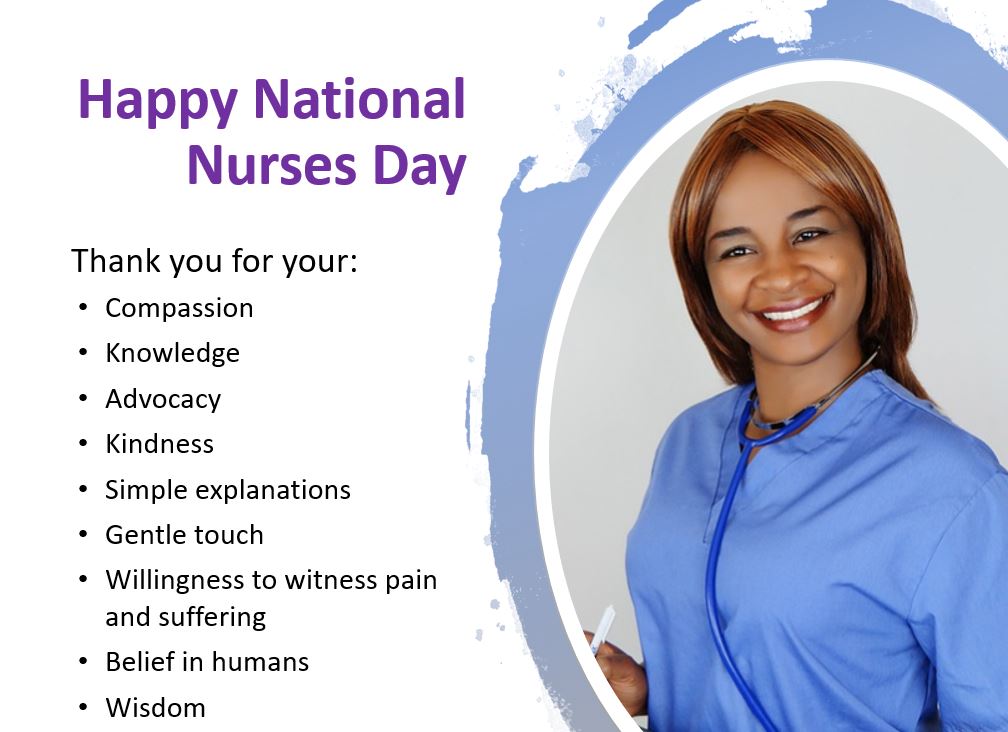
These are just a few ideas to get started. As you think of that special moment of gratitude, maybe you will come up with the perfect idea for that one special nurse.
With gratitude,
Coach Beverly
Sign up for Diabetes Blog Bytes – we post one daily Blog Byte from Monday to Friday. And of course, Tuesday is our Question of the Week. It’s Informative and FREE! Sign up below!
[yikes-mailchimp form=”1″]
Accreditation: Diabetes Education Services is an approved provider by the California Board of Registered Nursing, Provider 12640, and Commission on Dietetic Registration (CDR), Provider DI002. Since these programs are approved by the CDR it satisfies the CE requirements for the CDCES regardless of your profession.*
The use of DES products does not guarantee the successful passage of the CDCES exam. CBDCE does not endorse any preparatory or review materials for the CDCES exam, except for those published by CBDCE.

MS is 63, has type 1 diabetes, and will be having knee surgery. In addition to using an insulin pump and CGM to manage their type 1 diabetes, MS also takes empagliflozin (Jardiance) 25 mg daily to improve glucose levels.
In preparation for the upcoming surgery, which of the following is an accurate statement?
Click here to test your knowledge!
Join us for our Upcoming Webinar

Glucose control in the hospital matters! This course provides participants with a step-by-step approach to safely and effectively implement Basal Bolus Insulin Therapy in the inpatient setting. We discuss appropriate insulin dosing based on the person’s clinical presentation and apply dosing strategies to a variety of case studies. Included are hard-to-manage situations that commonly occur in hospital settings and a discussion of solutions that will keep people safe and get glucose levels to goal. In addition, sample basal/bolus and insulin drip guidelines plus lots of resource articles are included.
Topics Include:
Including Brand New Specialty Courses!
Can’t join live? No worries, we will record the webinar and post it to the Online University!
Sign up for Diabetes Blog Bytes – we post one daily Blog Byte from Monday to Friday. And of course, Tuesday is our Question of the Week. It’s Informative and FREE! Sign up below!
[yikes-mailchimp form=”1″]
Accreditation: Diabetes Education Services is an approved provider by the California Board of Registered Nursing, Provider 12640, and Commission on Dietetic Registration (CDR), Provider DI002. Since these programs are approved by the CDR it satisfies the CE requirements for the CDCES regardless of your profession.*
The use of DES products does not guarantee the successful passage of the CDCES exam. CBDCE does not endorse any preparatory or review materials for the CDCES exam, except for those published by CBDCE.

May 6th kicks off the seven-day celebration of Nurses Week and culminates on May 12th, the birthday of the founder of the field of nursing, Florence Nightingale.
Florence established the first professional training school for nurses, the Nightingale Training School at St Thomas’ Hospital in 1860. The school is now part of King’s College London. She published over 200 books, reports, and pamphlets on hospital planning and organization which are still widely read and respected today. Her most famous work is pictured above, Notes on Nursing: What It Is and What It Is Not which still offers nurses relevant content almost two centuries later.
In nursing school, Florence Nightingale‘s history was required reading. But, in my early twenties, I didn’t really grasp the significance of “the Lady with the Lamp” and her contributions until I visited the Florence Nightingale Museum in London, England.
My most meaningful experience as a tourist in London was my stop at the Florence Nightingale Museum.
Even 200 years after her birth, we are still building upon the messages and framework that Florence established. Florence had an aptitude for statistics and applied research. She quickly realized that the root of many diseases was the lack of access to clean water, decent working conditions, a safe living environment, healthy food, clean air, and sunshine. In order to improve the health of our communities, Florence campaigned to provide these most basic needs to all people.

Florence was born in 1820 in Italy Florence Nightingale. Born in an era when middle-class women were expected to simply make a good marriage and raise a family, Florence sensed a ‘calling’ from God at an early age and believed she was destined to do something greater with her life.
At the age of 33 Florence convinced her parents to attend a 3-month ‘nursing’ training and soon she became superintendent of a hospital in London.
In 1854, Florence went to Turkey with 38 other “nurses” to provide care to suffering and wounded soldiers during the Crimean War. She quickly set about organizing the hospitals to improve supplies of food, blankets, and beds, as well as the general conditions and cleanliness.
The comforting sight of her checking on the soldiers at night earned her the name ‘Lady of the Lamp’, along with the undying respect of the British soldiers.
Florence was a champion of sanitation and handwashing. She was determined to avoid the medical mistakes she witnessed during her two-year-long service at the military hospital.
As a skilled statistician, she vividly communicated the need for medical reform using detailed charts which showed that more men had died from disease than from their wounds. She then instigated a Royal Commission into the health of the army which led to a large number of improvements and saved the lives of many.
Her attention later turned to the health of the British army in India. Through careful research, she demonstrated that bad drainage, contaminated water, overcrowding, and poor ventilation were causing the high death rate.
She concluded that the health of the army and the people of India had to go hand in hand and so campaigned to improve the sanitary conditions of the country as a whole.
The Nightingale Training School was established in 1860 in London using donations from the Nightingale Fund. Its reputation soon spread and Nightingale nurses were requested to start new schools all over the world, including Australia, America, and Africa.
Nursing students worked long days and their dorms were often located on the hospital site. Graduates became invaluable leaders in the areas of infection control, comfort, sanitation, and improving quality of life.
During her lifetime, Florence Nightingale witnessed the development of the nursing profession and created a standardized curriculum for the development of new nurses. Almost 200 years later, our profession has flourished and taken a leadership role in hospitals, teaching institutions, clinics, public health, military, research, and more. Nurses are four million strong, with a big vision for the future coupled with the art of caring for each individual.
Hat’s off to our Founder and Trailblazer, Florence Nightingale. Our lights keep shining bright forever.
Segments of this article were excerpted from Florence Nightingale Museum. Please feel free to enjoy their video stories and extensive information. And, if you go to London, make sure to stop by and let them know Beverly sent you!
Sign up for Diabetes Blog Bytes – we post one daily Blog Byte from Monday to Friday. And of course, Tuesday is our Question of the Week. It’s Informative and FREE! Sign up below!
[yikes-mailchimp form=”1″]
Accreditation: Diabetes Education Services is an approved provider by the California Board of Registered Nursing, Provider 12640, and Commission on Dietetic Registration (CDR), Provider DI002. Since these programs are approved by the CDR it satisfies the CE requirements for the CDCES regardless of your profession.*
The use of DES products does not guarantee the successful passage of the CDCES exam. CBDCE does not endorse any preparatory or review materials for the CDCES exam, except for those published by CBDCE.

For our April 20th Question of the Week, 44% of respondents chose the best answer. We wanted to “take a closer look” into this question.
Before we start though, if you don’t want any spoilers and haven’t tried the question yet, you can answer below: Answer Question
Question: ML has had type two diabetes for 12 years, a BMI of 33.7, an A1 C of 8.3%, and elevated triglycerides and LDL cholesterol levels. You notice ML’s palms are deeply red.
Which of the following conditions is ML most likely experiencing in addition to diabetes?
Answer Choices:
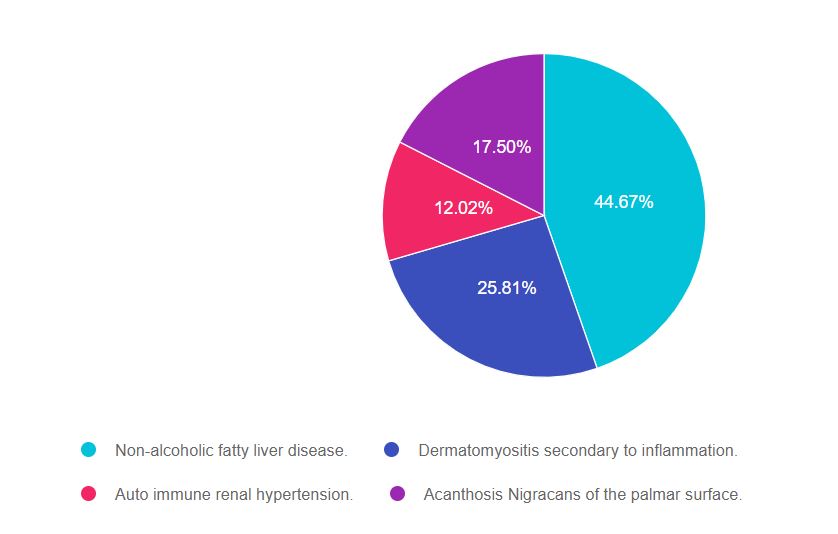
As shown above, the most common choice was option 1, the second most common answer was option 2, then option 4, and finally option 3.
If you are thinking about taking the certification exam, the content of this practice test question will set you up for success. The exam will present questions that require test takers to be familiar with identifying common diabetes co-conditions, screening guidelines and interventions.
Answer 1 is correct, 44.67% chose this answer, “Non-alcoholic fatty liver disease.” Good job! Up to 20% of people with diabetes are living with non alcoholic steatohepatitis (NASH) which can lead to cirrhosis, liver failure and cancer. Risk factors associated with NASH include hyperlipidemia, hyperglycemia, and a BMI of 30 or greater. People with NASH may have elevated liver enzymes including ALT and AST. Physical symptoms include acanthosis nigricans, abdominal pain, sense of fullness, facial spider angiomas and red palms.
The major focus of treatment includes weight loss, increased activity, aggressive management of lipids and glucose. Some research also indicates that Actos, Vitamin E and liraglutide may improve liver histology. Join our Critical Assessment Course to learn more about NASH and other diabetes co-conditions.
Answer 2 is incorrect, 25.81% of you chose this answer, “Dermatomyositis secondary to inflammation.” This rare autoimmune condition is usually associated with type 1 diabetes. Signs of dermatomyositis include a dusky red rash on the face and eyelids, and in areas around the nails, knuckles, elbows, knees, chest, and back. Muscle weakness is frequent.
ML’s profile doesn’t match the clinical manifestations of this condition.
Answer 3 is incorrect, 12.02% of you chose this answer, “Auto immune renal hypertension.” This juicy answer with a fancy name suggests that ML has this rare condition. However, since ML has type 2 diabetes, test takers would be suspicious of any answer that points to autoimmune conditions. Type 2 is not an immune mediated condition, but a condition of inflammation.
ML’s profile doesn’t match the clinical manifestations of this condition.
Answer 4 is incorrect, 17.50% of you chose this answer, “Acanthosis Nigricans of the palmar surface.” Acanthosis nigricans (AN) is a dermatologic indicator of insulin resistance. However, it does not present on the palms, nor is it red in color. AN is a darkening and thickening of the skin often coupled with the appearance of skin tags. Common locations for AN include folds of skin in the neck, axilla, groin, elbows, knees and ankles.
We hope you appreciate this week’s rationale! Thank you so much for taking the time to answer our Question of the Week and participate in this fun learning activity!

Diabetes Education Services Online University Courses are an excellent way to study for your exam anytime and anywhere that is convenient for you. You will have immediate access to your courses for 1 year after your purchase date. Each individual online course includes a: 90-minute video presentation, podcast, practice test, and additional resources.
This course integrates the ADA Standard of Care on elements of a comprehensive medical assessment (Standard 4) of the individual living with prediabetes, diabetes, or hyperglycemia. Through case studies and real-life situations, we discover often hidden causes of hyperglycemia and other complications, such as liver disease, sleep apnea, pancreatitis, autoimmune diseases, fractures, and more. We delve into therapy for complicated situations and discuss management strategies for other conditions associated with hyperglycemia such as Cystic Fibrosis, and Transplants. Join us for this unique and interesting approach to assessing and evaluating the hidden complications of diabetes.
Topics Include:
Intended Audience: These courses are knowledge-based activities designed for individual or groups of diabetes educators, including RNs, RDs, Pharmacists, Nurse Practitioners, Clinical Nurse Specialists, Physician Assistants, and other health care providers interested in enhancing their diabetes assessment skills.
Instructor: Beverly Thomassian RN, MPH, CDCES, BC-ADM is a working educator and a nationally recognized diabetes expert.
Can’t join live? No worries, we will record the webinar and post it to the Online University!
Sign up for Diabetes Blog Bytes – we post one daily Blog Byte from Monday to Friday. And of course, Tuesday is our Question of the Week. It’s Informative and FREE! Sign up below!
[yikes-mailchimp form=”1″]
Accreditation: Diabetes Education Services is an approved provider by the California Board of Registered Nursing, Provider 12640, and Commission on Dietetic Registration (CDR), Provider DI002. Since these programs are approved by the CDR it satisfies the CE requirements for the CDCES regardless of your profession.*
The use of DES products does not guarantee the successful passage of the CDCES exam. CBDCE does not endorse any preparatory or review materials for the CDCES exam, except for those published by CBDCE.
JR is a 38 yr old who received a kidney transplant 3 months ago and has a GFR >60 and creatinine of 0.9. JR takes prednisone 10mg daily as part of the post-transplant protocol. JR’s most recent A1c came back at 7.9% and the provider asks the Diabetes Specialist what intervention is recommended.
Which of the following is the best response?
Click here to test your knowledge!
Read More: Critical Assessment Webinar
Diabetes Education Services Online University Courses are an excellent way to study for your exam anytime and anywhere that is convenient for you. You will have immediate access to your courses for 1 year after your purchase date. Each individual online course includes a: 90-minute video presentation, podcast, practice test, and additional resources.
Topics Include:
Read More: Meds Management for Type 2

During this live stream webinar, we will discuss diabetes medication benefits, considerations, and critical information to share with people with diabetes and providers.
Topics include:
Read More: Basal/Bolus Therapy in Hospitals
Glucose control in the hospital matters! This course provides participants with a step-by-step approach to safely and effectively implement Basal Bolus Insulin Therapy in the inpatient setting. We discuss appropriate insulin dosing based on the patient’s clinical presentation and apply dosing strategies to a variety of case studies. Included are hard-to-manage situations that commonly occur in hospital settings and a discussion of solutions that will keep patients safe and get glucose levels to goal. In addition, sample basal/bolus and insulin drip guidelines plus lots of resource articles are included.
Topics Include:
Can’t join live? No worries, we will record the webinar and post it to the Online University!
Sign up for Diabetes Blog Bytes – we post one daily Blog Byte from Monday to Friday. And of course, Tuesday is our Question of the Week. It’s Informative and FREE! Sign up below!
[yikes-mailchimp form=”1″]
Accreditation: Diabetes Education Services is an approved provider by the California Board of Registered Nursing, Provider 12640, and Commission on Dietetic Registration (CDR), Provider DI002. Since these programs are approved by the CDR it satisfies the CE requirements for the CDCES regardless of your profession.*
The use of DES products does not guarantee the successful passage of the CDCES exam. CBDCE does not endorse any preparatory or review materials for the CDCES exam, except for those published by CBDCE.
For our April 13th Question of the Week, 62% of respondents chose the best answer. We wanted to “take a closer look” into this question.
Before we start though, if you don’t want any spoilers and haven’t tried the question yet, you can answer below: Answer Question
Question: LR loves going to the gym 3 times a week. LR is 78, with Latent Autoimmune Diabetes (LADA) and is on basal bolus insulin. LR also takes a statin and ACE Inhibitor. LR has a history of retinopathy and peripheral neuropathy. During your assessment, LR proudly shares that when on the treadmill, their heart rate never goes above 100 beats per minute.
What best explains this heart rate?
Answer Choices:
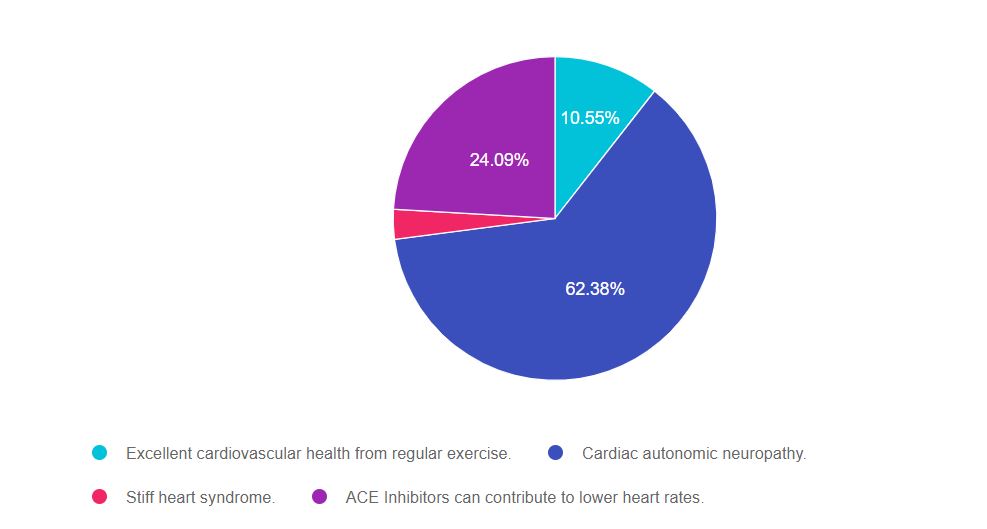
As shown above, the most common choice was option 2, the second most common answer was option 4, then option 1, and finally option 3.
If you are thinking about taking the certification exam, the content of this practice test question will set you up for success. The exam will present questions that require test takers to make sure the answer matches the ADA Standards of Care and best clinical practice.
Answer 1 is incorrect, 10.55% chose this answer, “Excellent cardiovascular health from regular exercise .” On first blush, this answer is tempting, yet it doesn’t consider in all the factors described in the case study. If we look at his age and the presence of microvascular disease and neuropathy, we are correct to suspect that he may also have autonomic neuropathy. Therefore, his low heart rate isn’t an indication of robust health but a sign of autonomic dysfunction.
Answer 2 is correct, 62.38% of you chose this answer, “Cardiac autonomic neuropathy.” Good job! When we look at his age and the presence of microvascular disease and neuropathy, we are right to suspect he also has cardiac autonomic neuropathy. As a result of nerve disease, his heart rate isn’t able to respond to the cardiac demand of intense exercise and never exceeds 100. This “fixed heart rate” is a sign of autonomic dysfunction that warrants further investigation.
Answer 3 is incorrect, 2.98% of you chose this answer, “Stiff heart syndrome.” People with diabetes are more likely to have stiff fibrotic hearts and this can lead to increased risk of heart failure. However, there is no such condition as a “stiff heart syndrome”. This answer was a distractor.
Answer 4 is incorrect, 24.09% of you chose this answer, “ACE Inhibitors can contribute to lower heart rates.” This was our juicy answer. The blood pressure class of ACE Inhibitors does not lower heart rates but does lower blood pressure. The blood pressure class Beta Blockers, can lower heart rate, but it was not included in this question. See our Med Cheat Sheets 2021 | Hypertension, Lipids, and Neuropathy for more info.
We hope you appreciate this week’s rationale! Thank you so much for taking the time to answer our Question of the Week and participate in this fun learning activity!
Diabetes Education Services Online University Courses are an excellent way to study for your exam anytime and anywhere that is convenient for you. You will have immediate access to your courses for 1 year after your purchase date. Each individual online course includes a: 90-minute video presentation, podcast, practice test, and additional resources.
This course integrates the ADA Standard of Care on elements of a comprehensive medical assessment (Standard 4) of the individual living with prediabetes, diabetes, or hyperglycemia. Through case studies and real-life situations, we discover often hidden causes of hyperglycemia and other complications, such as liver disease, sleep apnea, pancreatitis, autoimmune diseases, fractures, and more. We delve into therapy for complicated situations and discuss management strategies for other conditions associated with hyperglycemia such as Cystic Fibrosis, and Transplants. Join us for this unique and interesting approach to assessing and evaluating the hidden complications of diabetes.
Topics Include:
Intended Audience: A great course for healthcare professionals who want to learn the steps involved in providing a thorough lower extremity assessment.
Instructor: Beverly Thomassian RN, MPH, CDCES, BC-ADM is a working educator and a nationally recognized diabetes expert.
Can’t join live? No worries, we will record the webinar and post it to the Online University!
Sign up for Diabetes Blog Bytes – we post one daily Blog Byte from Monday to Friday. And of course, Tuesday is our Question of the Week. It’s Informative and FREE! Sign up below!
[yikes-mailchimp form=”1″]
Accreditation: Diabetes Education Services is an approved provider by the California Board of Registered Nursing, Provider 12640, and Commission on Dietetic Registration (CDR), Provider DI002. Since these programs are approved by the CDR it satisfies the CE requirements for the CDCES regardless of your profession.*
The use of DES products does not guarantee the successful passage of the CDCES exam. CBDCE does not endorse any preparatory or review materials for the CDCES exam, except for those published by CBDCE.
ML has had type two diabetes for 12 years, a BMI of 33.7, an A1 C of 8.3%, and elevated triglycerides and LDL cholesterol levels. You notice ML’s palms are deeply red.
Which of the following conditions is ML most likely experiencing in addition to diabetes?
Click here to test your knowledge!
Diabetes Education Services Online University Courses are an excellent way to study for your exam anytime and anywhere that is convenient for you. You will have immediate access to your courses for 1 year after your purchase date. Each individual online course includes a: 90-minute video presentation, podcast, practice test, and additional resources.
This course integrates the ADA Standard of Care on elements of a comprehensive medical assessment (Standard 4) of the individual living with prediabetes, diabetes, or hyperglycemia. Through case studies and real-life situations, we discover often hidden causes of hyperglycemia and other complications, such as liver disease, sleep apnea, pancreatitis, autoimmune diseases, fractures, and more. We delve into therapy for complicated situations and discuss management strategies for other conditions associated with hyperglycemia such as Cystic Fibrosis, and Transplants. Join us for this unique and interesting approach to assessing and evaluating the hidden complications of diabetes.
Topics Include:
Intended Audience: A great course for healthcare professionals who want to learn the steps involved in providing a thorough lower extremity assessment.
Instructor: Beverly Thomassian RN, MPH, CDCES, BC-ADM is a working educator and a nationally recognized diabetes expert.
Can’t join live? No worries, we will record the webinar and post it to the Online University!
Sign up for Diabetes Blog Bytes – we post one daily Blog Byte from Monday to Friday. And of course, Tuesday is our Question of the Week. It’s Informative and FREE! Sign up below!
[yikes-mailchimp form=”1″]
Accreditation: Diabetes Education Services is an approved provider by the California Board of Registered Nursing, Provider 12640, and Commission on Dietetic Registration (CDR), Provider DI002. Since these programs are approved by the CDR it satisfies the CE requirements for the CDCES regardless of your profession.*
The use of DES products does not guarantee the successful passage of the CDCES exam. CBDCE does not endorse any preparatory or review materials for the CDCES exam, except for those published by CBDCE.
For Free Resource Friday, we want to share our Free webinars with you!

Be a part of our diabetes community while learning about the latest in diabetes care. Plus, Coach Beverly provides an interactive question and answer session at the end of each live webinar.
Read More: CDCES or BC-ADM
Are you considering pursuing certification in diabetes care, but are not sure which certification is right for you and how to get started? Topics include:

Coach Beverly will share her personal journey on achieving both her CDCES and BC-ADM over 20 years ago and how these credentials have impacted her opportunities as a diabetes specialist and president of her own company.
Click on the link below for more info!
Read More: CDCES Exam Prep
Join us to get ready to succeed a the CDCES Exam. This course will transform your test anxiety into calm self-confidence and test taking readiness. Topics covered include:

We will review sample test questions, and the reasoning behind choosing the right answers.
After registering, you will receive a confirmation email containing information about joining the webinar.
Join us live! Click on the link below for upcoming dates! All FREE Preparing for the CDCES Exam Webinars air from 11:30 a.m. – 1:00 p.m. PST.
Read More: BC-ADM Exam Prep
This free webinar will review changes in BC-ADM requirements for 2021 exam eligibility and test format, strategies to succeed along with a review of study tips and test taking tactics. We review sample test questions, and reasoning behind choosing the right answers.
Join us live- Click on the link below for upcoming dates! All FREE Preparing for the BC-ADM Webinars will air from 11:30 a.m. PST – 1:00 p.m. PST.
Read More: Sample Exam Practice Questions
For many of us, taking the certification exam is a nerve-wracking process.

During this webinar, Coach Beverly will help you transform your nervousness into focused energy that will help you succeed. She will provide test-taking tips based on her experience taking the certification exam six times.
You are invited to join Coach Beverly for this FREE Webinar. And, if you want to have access to an additional 220+ sample practice online questions, you can purchase the complete Test Taking Toolkit.
Read More: Language & Diabetes

What we say matters. As educators, advocates, spouses, friends, and providers, our use of language can deeply affect the self-view of people living with diabetes everyday. The language used in the health care setting is immensely important in determining the success of the interaction and long term relationships. Thoughtful communication provides a sense of support and empathy and moves both the provider and person with diabetes toward greater satisfaction and success.
Read More: Getting to the Gut
This one-hour complimentary journey will expand your view of how trillions of bacterial hitchhikers profoundly influence our health. We will discuss how foods, the environment and our medical practices have impacted our gut bacteria over time and strategies we can take to protect these old friends. Join us!
Read More: Mindfulness & Compassion
Being a diabetes educator can be challenging. This one-hour presentation by Heather Nielsen, MA, LPC, CHWC will provide diabetes educators with helpful hands-on strategies to incorporate mindfulness and self-compassion into our daily lives and professional practice
No CE units are provided for our FREE Webinars, but we have good news: Visit our Diabetes Ed Online University where you can earn CEs from your desk!
View All Diabetes Education Services Free Webinars here
Sign up for Diabetes Blog Bytes – we post one daily Blog Byte from Monday to Friday. And of course, Tuesday is our Question of the Week. It’s Informative and FREE! Sign up below!
[yikes-mailchimp form=”1″]
Accreditation: Diabetes Education Services is an approved provider by the California Board of Registered Nursing, Provider 12640, and Commission on Dietetic Registration (CDR), Provider DI002. Since these programs are approved by the CDR it satisfies the CE requirements for the CDCES regardless of your profession.*
The use of DES products does not guarantee the successful passage of the CDCES exam. CBDCE does not endorse any preparatory or review materials for the CDCES exam, except for those published by CBDCE.