
Subscribe
eNewsletter

Ready to get certified?
Free CDCES Coach App

eNewsletter
Free CDCES Coach App

At Diabetes Education Services we believe in supporting girls and women to realize their potential. We are dedicated to supporting the growth and well-being of our future generations. Today, we are celebrating our amazing sister organization Just One Person.
Just One Person is a model sustainable program that prepares girls in rural Kenya for post secondary opportunities, helping them develop economic independence that will guide them on the path out of poverty.
Diabetes Education Services partners with Just One Person to manufacture our Pancreas Partner. All profits from Pancreas sales are donated to Just One Person to help the girls pursue ongoing education and gainful employment.
Mwanaidi, pictures here, helped create some of our beautiful Pancreas Partners, read her amazing story below:
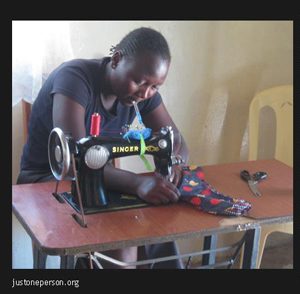
“While Mwanaidi was waiting for admission to college she earned money by sewing the “pancreas pillows” that Diabetes Education Services sells in the US. She used a donated treadle sewing machine, a pattern designed by Just One Person (JOP) executive director, Emma Sisia and traditional “leso” cloth. After paying Mwanaidi for her labor, Diabetes Education Services donates the profit from the sale of the Pancreas Pillow to help fund school scholarships and seminars for other deserving girls in rural Kenya. Other alumnae of JOP have followed suit and are continuing to produce these wonderful pillows to help ensure the sustainability of our program.”
 Scientists from New York University School of Medicine have discovered an association between areas with an abundance of fast food swaps and type 1 diabetes in children and adults. This finding is interesting because typically type 1 is not associated with cultural influences.
“Our research suggests that an adverse food environment has an important influence in type 1 diabetes, and a more thorough investigation of genetics, health behaviours and cultural influences should be considered for type 1 and type 2 diabetes.”
As we continue to research the link between diabetes and culture, it is important to consider what factors may have an influence on a patients lifestyle and what may put them at risk.
Learn more: Fast food availability linked to increase type 1 diabetes prevalence in New York – Journal of Endocrine Society
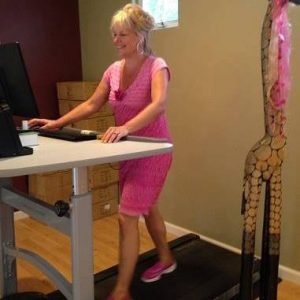 Every year on the first Wednesday of May, the American Diabetes Association presents “National Get Fit Don’t Sit Day,” to help spread the word on the dangers of sitting for long periods of time.
Here at Diabetes Education Services we believe creating healthy daily habits is imperative, particularly in the workplace. We will be participating today by doing fun stand up exercises each hour to ensure we aren’t sitting for too long!
We want to hear about your favorite short exercise for your workday. Share your activity by commenting on our Get Fit Don’t Sit Facebook post:
Diabetes Education Services Facebook post
The ADA recommends light physical activity every 30 minutes. Anything from walking to leg extensions at your desk. Help us spread awareness by telling your colleagues and community about National Get Fit Don’t Sit Day!
To help spread the message, enjoy the ADA toolkit:
National Get Fit Don’t Sit Day
For more inspiration, enjoy our exercise resource page:
Anne Carter, is not only in charge of operations and customer happiness at Diabetes Education Services, she is expanding her role to include reporting on the latest information and trends in the rapidly changing diabetes landscape.
Some of my favorite blog posts by Anne include:
Diabetes Alert Day Resource Page – March 27th is our opportunity to find people with undetected prediabetes and diabetes.
Question of the Week – Anne gently nudges Coach Beverly to write up a timely question to challenge and engage our community.
New Glucose Monitoring Contact Lens – Imagine a contact lens that you could wear that would light up if your glucose levels were high?
Interested in keeping up with our Blog Posts? We are working on a subscription format, but in the meantime, j
An estimated 1.5 million people are living with type 1 diabetes in the United States.
Ty
To add to the challenge, the daily management necessities of type 1 diabetes are not well understood by the public, school personnel, work environments and many health care settings. This can result in feelings of discrimination and frustration on the part of people living with type 1, their families and advocates.
With the rapidly increasing prevalence of this lifelong condition, we will be seeing more type 1 diabetes in the outpatient and inpatient settings. Diabetes educators will need to play a vital role in educating colleagues about type 1 and serving as advocates across the care continuum.
We hope you find this resource listing helpful and please let us know if other resources would benefit this page!
Rates of Type 1 and Type 2 Diabetes in Youth , 2017 – Rates of new diagnosed cases of type 1 and type 2 diabetes on the rise among children, teens
UCSF Diabetes Education Online Teaching Center – a fantastic free resource from UCSF that provides educational resources for people and families living with type 1.
NIH Clinical Tools and Patient Education Resource Center terrific online resource that allow users to search for content based on language, topic, disease state and more. All resources are free and can be reproduced.
American Diabetes Association Type 1 Resource Page – Lots of helpful information and links for people with type 1.
Juvenile Diabetes Resource Foundation – an organization dedicated to finding a cure for type 1 diabetes. Excellent resources and cutting edge information.
Type 1 Diabetes TrialNet – screens thousands of relatives of people with type 1 diabetes annually and conducts prevention studies with those at highest risk for the disease.
Environmental Determinants of Diabetes in the Young (TEDDY Study) seeks to uncover factors that may increase development of type 1 diabetes
Diabetes, Don’t Sugar Coat It Slide Presentation – this talk is created by Micayla Dollinger and is intended for 6-12 grade students to get them activated about diabetes prevention.
Exercise Resource Page – We created this resource page so that you would have helpful exercise resources available for you and your colleagues. There are handouts and links that you can share with patients too!
Apps for Diabetes – an array of apps that reviewers have found helpful for people living with diabetes.
ADA Standards of Care 2018 – The complete PDF Version.
FREE Quizzes Page – Test your diabetes knowledge on topics ranging from language, to medications, to prevention to gut bacteria and more!
FREE Resource Catalog – We put all of our free stuff on one page. Includes webinars, DiaBingo, article library, quizzes and more!
 Diabetes Alert Day – March 27th
Put on your diabetes detective hat!
March 27th is our opportunity to find people with undetected prediabetes and diabetes.
Most people with prediabetes have no idea they are living with elevated blood sugars and that they are at an increased risk of heart attack and stroke. Early discovery increases the potential for remission.
For type 2 diabetes, it takes an average of 6.5 years to discover. The Legacy Trial Results demonstrated that early and aggressive treatment of diabetes results in decreased risk of eye, kidney, nerve disease, heart attack and possible death.
Diabetes Educators can take a leadership role in their workplace and communities to uncover undetected diabetes.
Whether you work in the inpatient or outpatient setting, encourage colleagues to look at A1cs and fasting blood glucose levels to identify those with:
PreDiabetes: A1c of 5.7-6.4% or Fasting BG of 100-125mg or Undetected diabetes: A1c of 6.5% + or Fasting BG of 126 +
Newly discovered diabetes? Let’s inform the provider so immediate action can be taken to link the person to resources including a diabetes program referral, dietitian, pharmacist, eye care professional, dentist and more.
New prediabetes? Let’s connect people to a Diabetes Prevention Program in their community or encourage them to take advantage of the abundance of online resources and Apps to help with behavior change starting today.
ADA Alert Day E-Toolkit – Help your organization prepare for the Sound the Alert Day, Download the
ADA Diabetes Risk Test can identify those at risk and promote behavior change action for individuals and their communities.
Risk Test for PreDiabetes – A user friendly web page that evaluates risk and provides helpful info
“Are you at Risk?” Page by the American Diabetes Association – includes the Risk Test, strategies to lower risk and information on predidabetes.
Screening and Diagnosis of Diabetes Mellitus 2018 – One page cheat sheet that summarizes screening, risk status and diagnostic criteria for diabetes. A great tool for your practice setting or to share with providers.
I have been blessed to team teach with many inspiring, kind, knowledgeable and dynamic dietitians over a span of more than 20 years. They are trailblazers and advocates for improving the health of our communities, from the inpatient to outpatient settings. They have the best teaching tools (who doesn’t love the rubber chicken, food samples and empty cereal boxes) and a breadth of knowledge that they freely share with patients and colleagues alike.
I am pictured here with the amazing Dana Armstrong, RD, CDCES who was blending shakes (at 7am) for participants at our Diabetes Educator Course in San Diego.
Studies show that when people with diabetes meet with a Registered Dietitian, they lower their A1c 1-2% points.
Studies show that only 10% of people with Diabetes and Medicare are referred to a Dietitian.
Let’s keep encouraging our providers to refer people with diabetes to our local Registered Dietitians for nutrition coaching and behavior change action for a lifetime.
Thank you for all your amazing work, your number one fan,
Beverly Thomassian, RN, MPH, CDCES, BC-ADM
 As clearly demonstrated by the CDC Diabetes Prevention Program, prediabetes can be reversed and diabetes can be delayed by a change in lifestyle coupled with weight loss. With staggering statistics such as over 34% of Americans (over 80 million adults) are living with prediabetes, how can we motivate people to make a change for their health?
Companies like Omada Health (a digital behavior change program) are utilizing society’s relationship with technology to help people adjust their habits. The app uses an array of methods to help the participant stay dedicated to a lifestyle goal such as; peer counseling, coaching, app notifications, reminder texts, emails and more.
Working in the diabetes community, we understand that each person has their own unique lifestyle and behavior change approaches. Having array of ideas and recommendations to share can help improve outcomes. Omada Health is a wonderful interactive program that helps people stay focused on goals and also gives them the support of an online community and coach.
As we continue to see diabetes care partner with technology, staying current on the development of new programs can add an extra dimension of support and coaching in clinical practice. To learn more about Omada Health’s behavior program, click the link below!
“This Chef Lost 50 Pounds And Reversed Prediabetes With A Digital Program” – NPR
See a listing of this app plus others on our Diabetes Apps Resource Page

