
Subscribe
eNewsletter

Ready to get certified?
Free CDCES Coach App

eNewsletter
Free CDCES Coach App
Getting ready to take a test in the future? Many adults find test taking stress inducing, both in the study time leading up to it and during the exam itself.

Tufts University reported on a study on learning methods, particularly retrieval practice (learning by taking practice tests), and how this strategy can protect against the negative effects of stress.
The researchers analyzed two approaches to learning:
After a 24-hour break, half of each group was exposed to and experienced an episode of acute stress.
After this, both groups were given two memory tests to recall the words or images studied the previous day: one immediately after the stress scenario, and one twenty minutes after.
The stressed group who practiced retrieval practice remembered more items than their non-stressed counterparts who simply used multiple study periods (memorization). Those who used memorization and were exposed to a stressful scenario remembered the least out of the groups.
This study suggests that retrieval practice can help with long-term memory retention and guard against the adverse effects of stress!
We are proud to be using “retrieval practice” as the mode of studying for our practice tests and courses based on these scientific studies.
Our test results let students know if they chose the right our wrong answer. This approach encourages review of the material and retesting for better recall in finding the right answer. By omitting the answer key and encouraging retesting, we provide the opportunity for students to enhance long term knowledge retention and incorporate “retrieval practice” into their studies.
Read the full study here.
We hope you all appreciate and enjoy the test questions we come up with for our Question of the Week, Free Quizzes, and for all of our courses!
Interested in more practice? Our Test Taking Toolkit offers over 200 practice questions for the exam! You can purchase that here for only $49.
Sign up for Diabetes Blog Bytes – we post one daily Blog Byte from Monday to Friday. And of course, Tuesday is our Question of the Week. It’s Informative and FREE! Sign up below!
[yikes-mailchimp form=”1″]
“One in three Americans have Prediabetes but don’t know it!“
Help us raise awareness about diabetes this November by sharing the first step to prevention: prediabetes awareness and the fact it can be reversed. There is a great, FREE risk test and resources in English and Spanish for prediabetes below:

In a previous blog, we highlighted that many providers are not familiar with the diagnostic range for prediabetes and neglect to stress the importance of taking action to stop the progression to diabetes. In another blog we noted that many who receive an official determination of prediabetes are not referred to a diabetes prevention program.
The range for diagnosing prediabetes is an A1C is between 5.7 and 6.4% or if fasting blood glucose is between 100 and 125 mg/dL.
Prediabetes risk factors include:
“Do I Have Prediabetes?” website has excellent resources on prediabetes, and diabetes type 1 and type 2 for both health care providers and people with diabetes or who are concerned they may have prediabetes. Read more here.
Here is a list of Diabetes Prevention Programs throughout the United States.
Sign up for Diabetes Blog Bytes – we post one daily Blog Byte from Monday to Friday. And of course, Tuesday is our Question of the Week. It’s Informative and FREE! Sign up below!
[yikes-mailchimp form=”1″]

Dr. Banting was born on November 14, 1891. That is why we celebrate World Diabetes Day on November 14th.
During a hot summer in 1921, Dr.Banting secured space to test out his theory in the University of Toronto. Along with his colleague, Charles Best, and a bare bones lab, they conducted dozens of experiments on dogs, which ultimately led to the discovery of insulin.
Dr. Banting and Charles Best began their experiments ligating the pancreases of dogs, thinking this would prevent destruction by the digestive pancreatic juices, and then isolating the extract from the islet cells. They then processed the extract from the islet cells and injected this extract they called “insulin” into diabetic dogs. According to an audio Interview with Dr. Best, by July 1921, they had 75 positive examples of insulin lowering blood glucose levels in dogs.

In February 1922, doctor Frederick Banting and biochemist John Macleod published their paper on the successful use of a alcohol based pancreatic extract for normalizing blood glucose levels in a human patient.
Here are some photos of the first insulin bottles produced by the University of Toronto and Eli Lilly.
Soon, word of their discovery got out and the race was on to produce enough insulin to treat the flood of type 1 patients arriving in Toronto to receive this miracle injection.
But, as with any amazing discovery, there is always more to the story.
One of the biggest barriers to Banting was the simple fact that he was not involved in the field of diabetes research. The idea leading to the discovery of insulin came to him after preparing a lecture on the pancreas and diabetes, a subject he knew little about. He wasn’t a trained researcher and thus securing support for the project was initially difficult.
First Children to Receive Insulin
The first patient to receive insulin was a ‘welfare’ case at Toronto General Hospital – no clinical trial structure to say the least. People from Canada/US flooded into Toronto to receive treatment. Banting struggled with the lack of accessibility of insulin – volume needed, issues of purification.
Historical Insulin Powerpoint Slides – here is a collection of some of my favorite powerpoint slides, depicting the discovery of insulin.

The earliest patients were “selected”, some youths from Canada/US, some soldiers with diabetes (probably because of Banting’s service in the First World War) and then later some select private patients. During this time they were working hard to increase the volume and continue to improve the purification process. Insulin was available for testing in US, namely through Dr. Elliot Joslin in the late summer 1922.
Takes a Team

While Best played a critical and important role, credit must also go to Professor Macleod, from the University of Toronto, who provided the lab space, showed Dr. Banting how to operate on dogs, provided his student Best and suggested they switch from a saline to alcohol to purify the ‘extract’. Dr. Macleod also secured the support of JB Collip, the 4th man on the team and the fist person to purify insulin for human use. Best is also known for pushing Banting to return to the research during a particular dark period of failure.
Dr. Banting – Fun and Interesting Facts
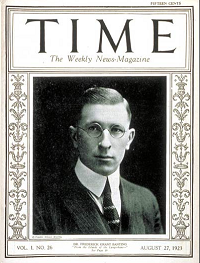
Want to Learn More About the Dr. Banting?
Visit Banting House FaceBook Page
Sign up for Diabetes Blog Bytes – we post one daily Blog Byte from Monday to Friday. And of course, Tuesday is our Question of the Week. It’s Informative and FREE! Sign up below!
[yikes-mailchimp form=”1″]

The University of Colorado Anschutz Medical Campus shared results from the T1D Exchange Clinic Registry. The results showed that, of 932 adults with type 1 diabetes, 61 used cannabis moderately, and their risk for DKA was more than twofold greater than in nonusers. This is due to the potential that cannabis can alter glycemic control.
In a study on cannabis use, those deemed moderate use were also found more often to be male, have less education, have a younger age at diabetes diagnosis, a higher A1c, less likely to use continuous glucose monitoring, and performed less self-monitoring of blood glucose.
Those who used cannabis moderately were found to have greater risk of DKA than those who did not use cannabis. They believe this may be due to cannabis delaying gastric emptying which is thought to play a role in disruption of blood glucose control.
Read more on this study here.
Sign up for Diabetes Blog Bytes – we post one daily Blog Byte from Monday to Friday. And of course, Tuesday is our Question of the Week. It’s Informative and FREE! Sign up below!
[yikes-mailchimp form=”1″]

Our Diabetes Detective Team scans the diabetes news to discover the most relevant info that Diabetes Educators need in their daily practice. We post one daily Blog Byte from Monday to Friday. And of course, Tuesday is our Question of the Week. It’s Informative and FREE! Sign up below!
Sign up for Diabetes Blog Bytes – we post one daily Blog Byte from Monday to Friday. And of course, Tuesday is our Question of the Week. It’s Informative and FREE! Sign up below!
[yikes-mailchimp form=”1″]


Happy Veteran’s day! We want to honor all veterans today, including our dads. Above are pictured Bob Dyck, Beverly Thomassian’s father who served in the Royal Canadian Air Force (1960-63); and Thomas Nugent, Taryn’s father who served in the U.S. Air Force during Vietnam (1972-76).
Sign up for Diabetes Blog Bytes – we post one daily Blog Byte from Monday to Friday. And of course, Tuesday is our Question of the Week. It’s Informative and FREE! Sign up below!
[yikes-mailchimp form=”1″]
Join Coach Beverly for an exploration into the 30 feet of lumen that affects daily well-being. This one-hour complimentary journey will expand participants view of how trillions of bacterial hitchhikers profoundly influence our health.

FREE webinar, Getting to the Gut – Meet Your Microbiome, airs Tuesday, November 12, 2019 at 11:30 a.m. Pacific Standard Time.
Beverly will discuss how foods, the environment and our medical practices impact gut bacteria over time and strategies we can take to protect these old friends.
Since we are anticipating a full-house, plan to arrive at the webinar at least 15 minutes early to hold your spot (first come, first serve basis). Don’t worry if you miss the live version, we will send you a link to the recorded version later that day.
Register below if you want to join us live, November 12 at 11:30 a.m. PST:
We offer this course as part of our Level 4 Bundle as well as an individual course! If you’re hoping for CE credit, you can purchase the individual course or the Level 4 Bundle in our store. Purchase comes with video, podcast, handouts, test, and CE Certificate.
Sign up for Diabetes Blog Bytes – we post one daily Blog Byte from Monday to Friday. And of course, Tuesday is our Question of the Week. It’s Informative and FREE! Sign up below!
[yikes-mailchimp form=”1″]

People with diabetes who delay getting blood pressure to target may be more likely to have heart attacks and strokes than their counterparts who manage it promptly, a recent study suggests.
A study conducted by Dr. Sridharan Raghavan of University of Colorado Anschutz Medical Campus, examined data on over 43,000 participants. Participants were all people with diabetes who started treatment for high blood pressure between 2002 and 2007.
Those who waited until their blood pressure was more elevated before beginning treatment were 10% more likely to have events like fatal heart attacks and strokes.
Raghavan stressed that lowering blood pressure in people with diabetes with hypertension “can mitigate some of the risk of atherosclerotic cardiovascular disease.” The study indicates that people with diabetes may have improved outcomes with a lower systolic blood pressure target than the ADA target of 140 mmHg. The American Heart Associations and the American College of Cardiology’s guidelines are to start treatment when systolic blood pressure is above 130 mmHg.
Using the lower standard of 130 systolic instead of starting treatment at the higher 140 systolic standard may result in fewer deaths from heart attacks and strokes.
Read the full study here.
Sign up for Diabetes Blog Bytes – we post one daily Blog Byte from Monday to Friday. And of course, Tuesday is our Question of the Week. It’s Informative and FREE! Sign up below!
[yikes-mailchimp form=”1″]