
Subscribe
eNewsletter

Ready to get certified?
Free CDCES Coach App

eNewsletter
Free CDCES Coach App

Click here to read our full September 2021 newsletter.
Featured Blogs
Upcoming Events & Resources
Did you miss the live conference? No worries! You can register now to watch on-demand
Whether you are new to diabetes or a seasoned expert, you’ll benefit from this virtual conference with the latest research plus critical content that you can immediately apply to your clinical practice.
If you are seeking a state-of-the-art review of current diabetes care, this course is for you. Our team has been fine-tuning this course for over fifteen years, and we know what you need. This program can also be a great addition to your CDCES or BC-ADM exam study plan.
Team of expert faculty includes:
In addition to informative lectures, we also use group activities and case studies to highlight the essential knowledge, skills, and strategies needed to succeed in diabetes education today!

CEs: Includes over 30 CEs
Program Info: 2021 Diabetes Educator Course Flyer & Schedule (subject to change)
Speakers: View Conference Faculty.
Dates: Your registration fee includes access to FREE podcast and all recorded webinars for one year.
Two Registration Options
Virtual DiabetesEd Specialist Conference Deluxe | Oct. 6-8 | 30+ CEs
Deluxe Virtual Program for $459 includes:
+Plus Syllabus, Standards and Swag:
2021 Diabetes Educator Course Flyer & Schedule (subject to change)
Virtual DiabetesEd Specialist Conference Basic | Oct. 6-8 | 30+ CEs
Basic virtual program for $359 includes:
2021 Diabetes Educator Course Flyer & Schedule (subject to change)
Team of Experts: Our team of expert faculty has been fine-tuning this course for over fifteen years and we know what you need to succeed! In addition to informative lectures, we also use group activities and case studies to highlight the essential knowledge, skills, and strategies needed to succeed in diabetes education today!
When you register for our Virtual Course, you have immediate access to these Bonus DiabetesEd University Online Courses – for FREE!
2021 Diabetes Educator Course Flyer & Schedule (subject to change)
Sign up for Diabetes Blog Bytes – we post one daily Blog Byte from Monday to Friday. And of course, Tuesday is our Question of the Week. It’s Informative and FREE! Sign up below!
[yikes-mailchimp form=”1″]
Accreditation: Diabetes Education Services is an approved provider by the California Board of Registered Nursing, Provider 12640, and Commission on Dietetic Registration (CDR), Provider DI002. Since these programs are approved by the CDR it satisfies the CE requirements for the CDCES regardless of your profession.*
The use of DES products does not guarantee the successful passage of the CDCES exam. CBDCE does not endorse any preparatory or review materials for the CDCES exam, except for those published by CBDCE.

Our August 31st Question of the week quizzed test takers on interventions. Over 90% of respondents chose the correct answer. Great job! We thought that this was an important topic to review, so we can pass on correct info to people living with diabetes.
Before we start though, if you don’t want any spoilers and haven’t tried the question yet, you can answer below: Answer Question
Question: JR is 43 with type 2 diabetes who shows up for their usual visit and happens to mention that they have had moments of feeling dizzy over the past few months. A few times, they have checked their blood sugars during these spells, and they were 121 and 136. JRs medications include glipizide 10mg BID, metformin 1000mg BID, lisinopril 20mg, atorvastatin 20mg. JR has lost about 10 lbs since their last visit by eating more whole foods and grains and less fast foods.
Based on this assessment, what is the next best action?
Answer Choices:
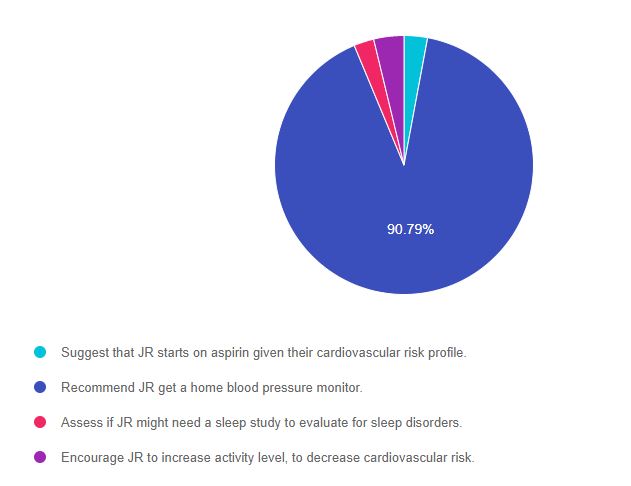
As shown above, the most common choice was option 3, the second most common answer was option 1, then option 2, and finally option 4.
If you are thinking about taking the certification exam, this practice test question will set you up for success. Test writers anticipate possible answers based on the details in the question. They will wave those “juicy answers” right under your nose. Your job is to weed through the particulars, pluck out the most important elements and choose the BEST answer.
Answer 1 is incorrect. 2.93% chose this answer, “Suggest that JR starts on aspirin given their cardiovascular risk profile.” Aspirin therapy is recommended for those 50 and older with existing or at risk for a cardiovascular event. Since JR is younger than 50, this is not the best answer.
Answer 2 is correct. 90.79% of you chose this answer, “Recommend JR get a home blood pressure monitor.” Yes, GREAT JOB. Most of you chose this best answer. Most likely, the dizziness is a result of lower blood pressure secondary to weight loss and treatment with an ACE Inhibitor (lisinopril). The ADA Standards recommend that people on blood pressure medications self-monitor their blood pressure at home to detect changes in pressure that warrant a reduction or intensification of anti-hypertensive therapy.
Answer 3 is incorrect. 2.51% of respondents chose this answer, “Assess if JR might need a sleep study to evaluate for sleep disorders.” While it is true that many people with diabetes have sleep disorders, in this case study there is not enough supporting clinical symptoms to support a sleep study. For example if JR was complaining of waking up tired or waking up gasping for air, plus they exhibit other risk factors, then further sleep evaluation might be warranted.
Finally, Answer 4 is incorrect. 3.77% chose this answer, “Encourage JR to increase activity level, to decrease cardiovascular risk.” Encouraging activity to improve health is an important part of self-care coaching. However, in this case, since JR is complaining of “dizziness”, for safety, we might even back off a little from recommending activity until we determine the cause of JRs dizziness.
We hope you appreciate this week’s rationale! Thank you so much for taking the time to answer our Question of the Week and participate in this fun learning activity!
Want to learn more about this topic and more?
Did you miss the live conference? No worries! You can register now to watch on-demand
Whether you are new to diabetes or a seasoned expert, you’ll benefit from this virtual conference with the latest research plus critical content that you can immediately apply to your clinical practice.
If you are seeking a state-of-the-art review of current diabetes care, this course is for you. Our team has been fine-tuning this course for over fifteen years, and we know what you need. This program can also be a great addition to your CDCES or BC-ADM exam study plan.
Team of expert faculty includes:
In addition to informative lectures, we also use group activities and case studies to highlight the essential knowledge, skills, and strategies needed to succeed in diabetes education today!
CEs: Includes over 30 CEs
Program Info: 2021 Diabetes Educator Course Flyer & Schedule (subject to change)
Speakers: View Conference Faculty.
Dates: Your registration fee includes access to FREE podcast and all recorded webinars for one year.
Two Registration Options
Virtual DiabetesEd Specialist Conference Deluxe | Oct. 6-8 | 30+ CEs
Deluxe Virtual Program for $459 includes:
+Plus Syllabus, Standards and Swag:
2021 Diabetes Educator Course Flyer & Schedule (subject to change)
Virtual DiabetesEd Specialist Conference Basic | Oct. 6-8 | 30+ CEs
Basic virtual program for $359 includes:
2021 Diabetes Educator Course Flyer & Schedule (subject to change)
Team of Experts: Our team of expert faculty has been fine-tuning this course for over fifteen years and we know what you need to succeed! In addition to informative lectures, we also use group activities and case studies to highlight the essential knowledge, skills, and strategies needed to succeed in diabetes education today!
When you register for our Virtual Course, you have immediate access to these Bonus DiabetesEd University Online Courses – for FREE!
2021 Diabetes Educator Course Flyer & Schedule (subject to change)
Sign up for Diabetes Blog Bytes – we post one daily Blog Byte from Monday to Friday. And of course, Tuesday is our Question of the Week. It’s Informative and FREE! Sign up below!
[yikes-mailchimp form=”1″]
Accreditation: Diabetes Education Services is an approved provider by the California Board of Registered Nursing, Provider 12640, and Commission on Dietetic Registration (CDR), Provider DI002. Since these programs are approved by the CDR it satisfies the CE requirements for the CDCES regardless of your profession.*
The use of DES products does not guarantee the successful passage of the CDCES exam. CBDCE does not endorse any preparatory or review materials for the CDCES exam, except for those published by CBDCE.

LS uses an insulin pump and CGM. Most recent report reveals LS is running 56% time in range and 44% above target range. LS asks for help with carb counting. A typical breakfast includes: ½ cup of milk, 2 tablespoons peanut butter and 1 piece whole grain bread, 3 oz’s of grapes and one cup of black coffee with Splenda. LS’s insulin to carb ratio for breakfast is 1:12, for lunch and dinner is 1:15.
Based on this, how much insulin does LS need for breakfast?
Click here to test your knowledge!
Want to learn more about this topic and more?
Did you miss the live conference? No worries! You can register now to watch on-demand
Whether you are new to diabetes or a seasoned expert, you’ll benefit from this virtual conference with the latest research plus critical content that you can immediately apply to your clinical practice.
If you are seeking a state-of-the-art review of current diabetes care, this course is for you. Our team has been fine-tuning this course for over fifteen years, and we know what you need. This program can also be a great addition to your CDCES or BC-ADM exam study plan.
Team of expert faculty includes:
In addition to informative lectures, we also use group activities and case studies to highlight the essential knowledge, skills, and strategies needed to succeed in diabetes education today!
CEs: Includes over 30 CEs
Program Info: 2021 Diabetes Educator Course Flyer & Schedule (subject to change)
Speakers: View Conference Faculty.
Dates: Your registration fee includes access to FREE podcast and all recorded webinars for one year.
Two Registration Options
Virtual DiabetesEd Specialist Conference Deluxe | Oct. 6-8 | 30+ CEs
Deluxe Virtual Program for $459 includes:
+Plus Syllabus, Standards and Swag:
2021 Diabetes Educator Course Flyer & Schedule (subject to change)
Virtual DiabetesEd Specialist Conference Basic | Oct. 6-8 | 30+ CEs
Basic virtual program for $359 includes:
2021 Diabetes Educator Course Flyer & Schedule (subject to change)
Team of Experts: Our team of expert faculty has been fine-tuning this course for over fifteen years and we know what you need to succeed! In addition to informative lectures, we also use group activities and case studies to highlight the essential knowledge, skills, and strategies needed to succeed in diabetes education today!
When you register for our Virtual Course, you have immediate access to these Bonus DiabetesEd University Online Courses – for FREE!
2021 Diabetes Educator Course Flyer & Schedule (subject to change)
Sign up for Diabetes Blog Bytes – we post one daily Blog Byte from Monday to Friday. And of course, Tuesday is our Question of the Week. It’s Informative and FREE! Sign up below!
[yikes-mailchimp form=”1″]
Accreditation: Diabetes Education Services is an approved provider by the California Board of Registered Nursing, Provider 12640, and Commission on Dietetic Registration (CDR), Provider DI002. Since these programs are approved by the CDR it satisfies the CE requirements for the CDCES regardless of your profession.*
The use of DES products does not guarantee the successful passage of the CDCES exam. CBDCE does not endorse any preparatory or review materials for the CDCES exam, except for those published by CBDCE.
Our August 24th Question of the week quizzed test takers on thick calluses coupled with leg pain. 61% of respondents chose the correct answer. We thought that this was an important topic to discuss further, so we can pass on correct info to people living with diabetes.
Before we start though, if you don’t want any spoilers and haven’t tried the question yet, you can answer below: Answer Question
Question: JR has lived with type 1 diabetes for over twenty years. JR arrived in the clinic with thick calluses on both feet and complaints of calf pain when walking for more than 10 minutes. JR’s pulses are difficult to palpate.
What diagnosis best matches JR’s presentation?
Answer Choices:
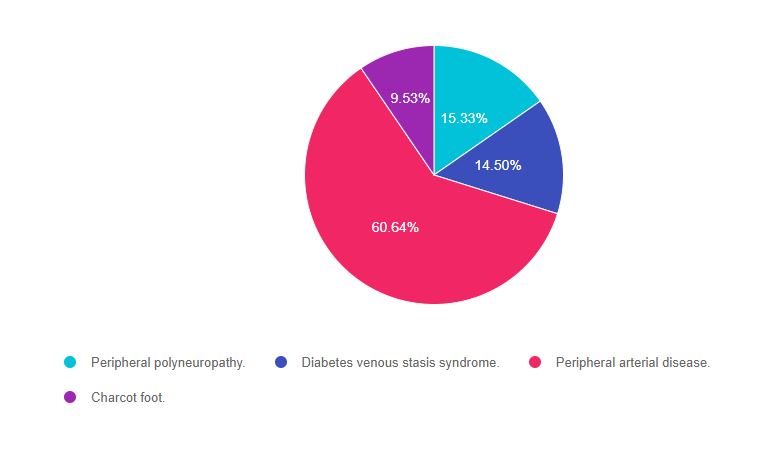
As shown above, the most common choice was option 3, the second most common answer was option 1, then option 2, and finally option 4.
If you are thinking about taking the certification exam, this practice test question will set you up for success. Test writers anticipate possible answers based on the details in the question. They will wave those “juicy answers” right under your nose. Your job is to weed through the particulars, pluck out the most important elements and choose the BEST answer. If you want to learn more about lower extremities, we invite you to join our Virtual Course or check out our Level 2 Online Courses.
Answer 1 is incorrect. 15.33% chose this answer, “Peripheral polyneuropathy.” This juicy answer is tempting, however it does not match the symptoms detailed by JR. A person with peripheral polyneuropathy will typically complain of numbness, tingling and leg pain at night. They may also have thick calluses. However, there are two clues that indicate a mismatch between question and answer. JR is “complaining of calf pain when walking for more than 10 minutes with difficulty locating pulses.” These chief complaints indicate a different pathology. Keep reading to find out more.
Answer 2 is incorrect. 14.50% of you chose this answer, “Diabetes venous stasis syndrome.” This is another juicy answer with a made up condition that is designed to sound familiar. In general, with venous disease, pulses are still palpable since there is adequate blood flow to lower extremities. There are two clues that indicate a mismatch between question and answer. “JR is complaining of calf pain when walking for more than 10 minutes with difficulty locating pulses.” These chief complaints indicate a different pathology. Keep reading to find out more.
Answer 3 is correct. 60.64% of respondents chose this answer, “Peripheral arterial disease.” YES, this is the BEST answer. Great job. JR is exhibiting the classic signs of inadequate arterial blood flow to the lower extremities, or peripheral arterial disease. JR’s complaints of “calf pain when walking for more than 10 minutes with difficulty locating pulses” indicate poor arterial circulation and warrant referral to a provider for complete CV risk assessment.
Finally, Answer 4 is incorrect. 9.53% chose this answer, “Charcot foot.” This answer is tempting. Charcot foot is characterized by severe foot inflammation and structural collapse. Since JR is “complaining of calf pain when walking for more than 10 minutes with difficulty locating pulses”, these symptoms do not match the usual complaints associated with Charcot foot. Good try, see answer 3 for more info.
We hope you appreciate this week’s rationale! Thank you so much for taking the time to answer our Question of the Week and participate in this fun learning activity!
Want to learn more about this topic and more?
Did you miss the live conference? No worries! You can register now to watch on-demand
Whether you are new to diabetes or a seasoned expert, you’ll benefit from this virtual conference with the latest research plus critical content that you can immediately apply to your clinical practice.
If you are seeking a state-of-the-art review of current diabetes care, this course is for you. Our team has been fine-tuning this course for over fifteen years, and we know what you need. This program can also be a great addition to your CDCES or BC-ADM exam study plan.
Team of expert faculty includes:
In addition to informative lectures, we also use group activities and case studies to highlight the essential knowledge, skills, and strategies needed to succeed in diabetes education today!
CEs: Includes over 30 CEs
Program Info: 2021 Diabetes Educator Course Flyer & Schedule (subject to change)
Speakers: View Conference Faculty.
Dates: Your registration fee includes access to FREE podcast and all recorded webinars for one year.
Two Registration Options
Virtual DiabetesEd Specialist Conference Deluxe | Oct. 6-8 | 30+ CEs
Deluxe Virtual Program for $459 includes:
+Plus Syllabus, Standards and Swag:
2021 Diabetes Educator Course Flyer & Schedule (subject to change)
Virtual DiabetesEd Specialist Conference Basic | Oct. 6-8 | 30+ CEs
Basic virtual program for $359 includes:
2021 Diabetes Educator Course Flyer & Schedule (subject to change)
Team of Experts: Our team of expert faculty has been fine-tuning this course for over fifteen years and we know what you need to succeed! In addition to informative lectures, we also use group activities and case studies to highlight the essential knowledge, skills, and strategies needed to succeed in diabetes education today!
When you register for our Virtual Course, you have immediate access to these Bonus DiabetesEd University Online Courses – for FREE!
2021 Diabetes Educator Course Flyer & Schedule (subject to change)
Sign up for Diabetes Blog Bytes – we post one daily Blog Byte from Monday to Friday. And of course, Tuesday is our Question of the Week. It’s Informative and FREE! Sign up below!
[yikes-mailchimp form=”1″]
Accreditation: Diabetes Education Services is an approved provider by the California Board of Registered Nursing, Provider 12640, and Commission on Dietetic Registration (CDR), Provider DI002. Since these programs are approved by the CDR it satisfies the CE requirements for the CDCES regardless of your profession.*
The use of DES products does not guarantee the successful passage of the CDCES exam. CBDCE does not endorse any preparatory or review materials for the CDCES exam, except for those published by CBDCE.
JR is 43 with type 2 diabetes who shows up for their usual visit and happens to mention that they have had moments of feeling dizzy over the past few months. A few times, they have checked their blood sugars during these spells, and they were 121 and 136. JRs medications include glipizide 10mg BID, metformin 1000mg BID, lisinopril 20mg, atorvastatin 20mg. JR has lost about 10 lbs since their last visit by eating more whole foods and grains and less fast foods.
Based on this assessment, what is the next best action?
Click here to test your knowledge!
Want to learn more about this topic and more?
Did you miss the live conference? No worries! You can register now to watch on-demand
Whether you are new to diabetes or a seasoned expert, you’ll benefit from this virtual conference with the latest research plus critical content that you can immediately apply to your clinical practice.
If you are seeking a state-of-the-art review of current diabetes care, this course is for you. Our team has been fine-tuning this course for over fifteen years, and we know what you need. This program can also be a great addition to your CDCES or BC-ADM exam study plan.
Team of expert faculty includes:
In addition to informative lectures, we also use group activities and case studies to highlight the essential knowledge, skills, and strategies needed to succeed in diabetes education today!
CEs: Includes over 30 CEs
Program Info: 2021 Diabetes Educator Course Flyer & Schedule (subject to change)
Speakers: View Conference Faculty.
Dates: Your registration fee includes access to FREE podcast and all recorded webinars for one year.
Two Registration Options
Virtual DiabetesEd Specialist Conference Deluxe | Oct. 6-8 | 30+ CEs
Deluxe Virtual Program for $459 includes:
+Plus Syllabus, Standards and Swag:
2021 Diabetes Educator Course Flyer & Schedule (subject to change)
Virtual DiabetesEd Specialist Conference Basic | Oct. 6-8 | 30+ CEs
Basic virtual program for $359 includes:
2021 Diabetes Educator Course Flyer & Schedule (subject to change)
Team of Experts: Our team of expert faculty has been fine-tuning this course for over fifteen years and we know what you need to succeed! In addition to informative lectures, we also use group activities and case studies to highlight the essential knowledge, skills, and strategies needed to succeed in diabetes education today!
When you register for our Virtual Course, you have immediate access to these Bonus DiabetesEd University Online Courses – for FREE!
2021 Diabetes Educator Course Flyer & Schedule (subject to change)
Sign up for Diabetes Blog Bytes – we post one daily Blog Byte from Monday to Friday. And of course, Tuesday is our Question of the Week. It’s Informative and FREE! Sign up below!
[yikes-mailchimp form=”1″]
Accreditation: Diabetes Education Services is an approved provider by the California Board of Registered Nursing, Provider 12640, and Commission on Dietetic Registration (CDR), Provider DI002. Since these programs are approved by the CDR it satisfies the CE requirements for the CDCES regardless of your profession.*
The use of DES products does not guarantee the successful passage of the CDCES exam. CBDCE does not endorse any preparatory or review materials for the CDCES exam, except for those published by CBDCE.
Whether you are new to diabetes or a seasoned expert, you’ll benefit from this virtual conference with the latest research plus critical content that you can immediately apply to your clinical practice.
If you are seeking a state-of-the-art review of current diabetes care, this course is for you. Our team has been fine-tuning this course for over fifteen years, and we know what you need. This program can also be a great addition to your CDCES or BC-ADM exam study plan.
Team of expert faculty includes:
In addition to informative lectures, we also use group activities and case studies to highlight the essential knowledge, skills, and strategies needed to succeed in diabetes education today!
CEs: Includes over 30 CEs
Program Info: 2021 Diabetes Educator Course Flyer & Schedule (subject to change)
Speakers: View Conference Faculty.
Two Registration Options
Virtual DiabetesEd Specialist Conference Deluxe | 30+ CEs
Deluxe Virtual Program for $459 includes:
+Plus Syllabus, Standards and Swag:
2021 Diabetes Educator Course Flyer & Schedule (subject to change)
Virtual DiabetesEd Specialist Conference Basic | 30+ CEs
Basic virtual program for $359 includes:
2021 Diabetes Educator Course Flyer & Schedule (subject to change)
Team of Experts: Our team of expert faculty has been fine-tuning this course for over fifteen years and we know what you need to succeed! In addition to informative lectures, we also use group activities and case studies to highlight the essential knowledge, skills, and strategies needed to succeed in diabetes education today!
When you register for our Virtual Course, you have immediate access to these Bonus DiabetesEd University Online Courses – for FREE!
2021 Diabetes Educator Course Flyer & Schedule (subject to change)
Sign up for Diabetes Blog Bytes – we post one daily Blog Byte from Monday to Friday. And of course, Tuesday is our Question of the Week. It’s Informative and FREE! Sign up below!
[yikes-mailchimp form=”1″]
Accreditation: Diabetes Education Services is an approved provider by the California Board of Registered Nursing, Provider 12640, and Commission on Dietetic Registration (CDR), Provider DI002. Since these programs are approved by the CDR it satisfies the CE requirements for the CDCES regardless of your profession.*
The use of DES products does not guarantee the successful passage of the CDCES exam. CBDCE does not endorse any preparatory or review materials for the CDCES exam, except for those published by CBDCE.
For our August 17th Question of the Week, 39% of respondents chose the best answer. This is due in part to our error. We mis-keyed the best answer for the first 96 respondents (we quickly fixed it as soon as we discovered the error). So, you may want to retake this question before you read on to discover the answer. Coach Bev sincerely apologizes if this caused any of you distress! But today, we are making it right. Thanks for your patience and ongoing participation!
Before we start, if you don’t want any spoilers and you tried the question on Tuesday morning, you can answer below: Answer Question
Question 1: Which of the following are considered diabetes autonomic neuropathies?
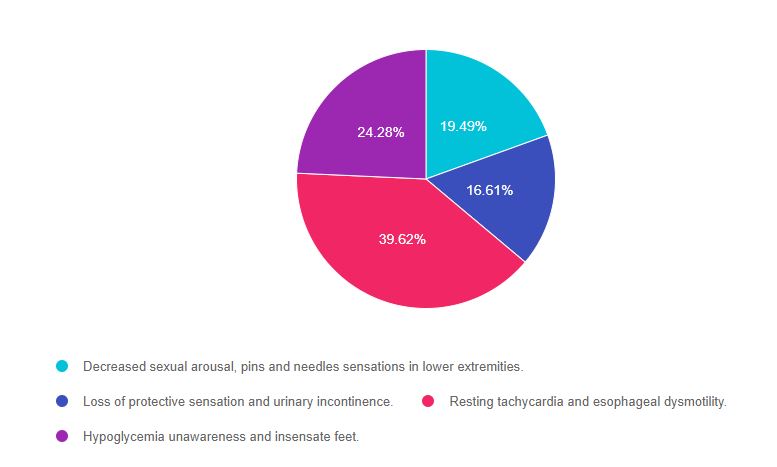
As shown above, the most common choice was option 3, the second most common answer was option 4, then option 1, and finally option 2.
If you are thinking about taking the certification exam, the content of this practice test question will set you up for success. Don’t forget to leverage your common sense and vast health care knowledge to get the best answer for specialty topics like microvascular disease. Be familiar with nerve disease presentation and screening as listed in the ADA Standards of Care on Microvascular health and treatment options. We also invite you to join our webinar (see below). Also, the tests will often provide a 2 part answer, one part being correct and the other part incorrect. Of course, if any part of the answer is incorrect, it is not the best answer. A great test taking tip to hold onto to when your sympathetic nervous system is in full gear. You got this, Coach Beverly
A note on Autonomic Neuropathy. This condition causes nerve damage to the autonomic nervous system which is in charge of digestion, sexual function, heart rate, and the adrenergic flight or fight response. The autonomic nervous system also “oversees” the energy-conserving parasympathetic response including bladder control, heart rate slowing, eye pupil constriction, and more.
Answer 1 is incorrect, 19.49% chose this answer, “Decreased sexual arousal, pins and needles sensations in lower extremities.” This is a juicy answer. Autonomic dysfunction can affect sexual function, but it doesn’t affect libido or sexual desire. In addition, the pins and needles sensation is due to the nerve damage associated with peripheral neuropathy. Since both parts of this answer aren’t correct, this answer is false.
Answer 2 is incorrect, 16.61% of you chose this answer, “Loss of protective sensation and urinary incontinence.” Loss of protective sensation is associated with peripheral neuropathy. However, urinary incontinence is often a result of autonomic neuropathy. Since both parts of this answer aren’t correct, this answer is false.
Answer 3 is correct, 39.62% of you chose this answer, GREAT JOB! “Resting tachycardia and esophageal dysmotility.” Elevated heart rate while resting is a concerning sign and is often associated with cardiac autonomic neuropathy and increased risk of a cardiac event. Autonomic neuropathy can affect the motility of the entire GI track, including the esophagus. The more commonly recognized GI autonomic neuropathy is gastroparesis. Since both conditions, resting tachycardia and esophageal dysmotility, are associated with autonomic neuropathy, this is the best answer.
Answer 4 is incorrect, 24.28% of you chose this juicy answer “Hypoglycemia unawareness and insensate feet.” Since hypoglycemia unawareness is associated with a diminished adrenergic response to low blood glucose levels, it is considered an autonomic neuropathy. However, insensate feet are due to peripheral nerve damage associated with ongoing hyperglycemia. Since both parts aren’t correct, this answer is false.
We hope you appreciate this week’s rationale! Thank you so much for taking the time to answer our Question of the Week and participate in this fun learning activity!
Want to learn more about this topic?
Join us for our
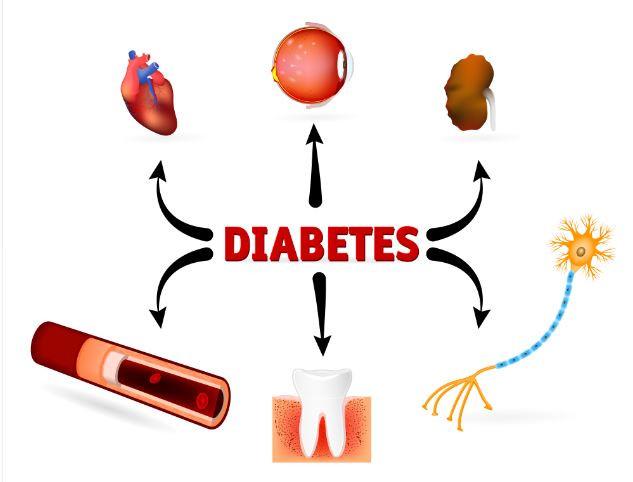
This course provides you with the need-to-know information regarding the microvascular complications of diabetes. We start with a brief overview of the pathophysiology and clinical manifestations then sum up with prevention strategies and screening guidelines. This straight-forward program will provide you with information you can use in your clinical setting and also provides critical content for the diabetes educator exam.
Objectives:
Can’t make it live? All paid registrants are guaranteed access to the video presentation, handouts and podcasts.
Sign up for Diabetes Blog Bytes – we post one daily Blog Byte from Monday to Friday. And of course, Tuesday is our Question of the Week. It’s Informative and FREE! Sign up below!
[yikes-mailchimp form=”1″]
Accreditation: Diabetes Education Services is an approved provider by the California Board of Registered Nursing, Provider 12640, and Commission on Dietetic Registration (CDR), Provider DI002. Since these programs are approved by the CDR it satisfies the CE requirements for the CDCES regardless of your profession.*
The use of DES products does not guarantee the successful passage of the CDCES exam. CBDCE does not endorse any preparatory or review materials for the CDCES exam, except for those published by CBDCE.
We are so excited to announce our DiabetesEd Specialist Scholarship Recipients!
We received dozens of applications for our annual Making a Difference Scholarship and the Flower Scholarship gifted from an anonymous donor! It was a great personal joy for our team to read these scholarship applications. Each applicant is serving communities with a great need and going “above and beyond” to promote and provide accessible diabetes care and education. It is always a very difficult decision for all of the judges, and we read each application in careful detail considering the financial need, impact, volunteerism, and readiness to take the CDCES exam.
We greatly appreciate the good work of all the applicants and thank them for their service!
This year we are offered 3 Scholarship Options for our Virtual DiabetesEd Specialist Conference, October 6-8, 2021.
Congratulations Chantel Wade, his year’s Flower Scholarship Recipient!
Chantel Wade is the recipient of our “Flower Scholarship.” Chantel is an ambulatory RN and the lead in the Patient Education Department at her local health center. There she serves a diverse population of individuals from different socioeconomic backgrounds, seeing many people who are on Medicare, Medi-Cal or are uninsured. She uses a hands-on, interactive approach with those she works with; she is committed to meeting people where they are by creating custom care plans that meet their individual needs. Outside of work, she is active in her local Fellowship Church and other organizations where she volunteers her time and expertise to offer pre-diabetes and diabetes education.
Congratulations Keira McCrary, “Making a Difference Exemplar Scholarship” Recipient!
Keira McCrary is the recipient of our “Making a Difference Exemplar Scholarship” because of her dedication to her community. Keira works as a Registered Dietician who provides direct care services to Native American tribal communities in her area. In her work, she supports people living with diabetes through all stages of life with programs such as home meal delivery for elder tribal members and the Native Youth Preventing Diabetes Organization. Through Native Youth Preventing Diabetes Organization Keira assists in the education of tribal youth in the areas of diabetes prevention, nutritional education, physical activity, behavioral health, and more. She also creates user-friendly tools for those she works with such as informational “how-to” diabetes-friendly recipe videos and a weekly newsletter.
Congratulations Logan Mumphrey, “Making a Difference Scholarship” Recipient!
Logan Mumphrey is our second recipient of our “Making a Difference Scholarship” for many reasons! Logan is currently working towards his MSN/FNP and has worked as the primary nurse and clinical coordinator for transgender health services helping to build the program from the ground up. This program provides gender-affirming care that goes beyond hormone therapy including care navigation, surgery coordination, assistance with identity document changes, peer support, and much more. Logan is passionate about diabetes care and education and hopes that by becoming a CDCES, it will allow him to provide more support for those he works with so they can manage their diabetes with a gender-affirming lens.
This year we are offered 3 Scholarship Options which include:
The goal of these scholarships are three-fold: