This article is a result of post-vacation curiosity that I couldn’t shake.
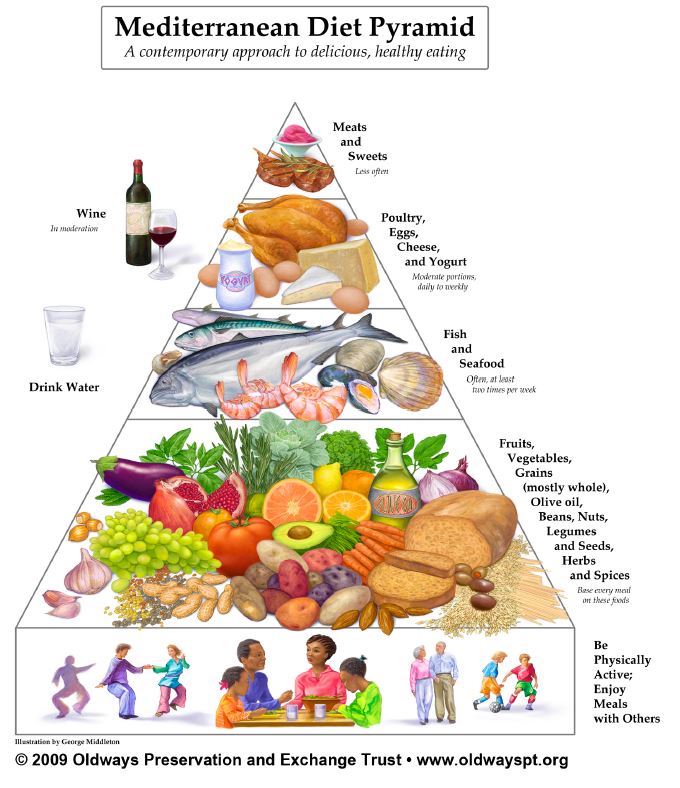
After 10 days of walking and eating my way through Venice, Florence and Rome, I began to wonder, “How do Italians succeed at keeping at such a healthy weight compared to Americans?”
As a health care professional, I had some general guesses, but no science to back it up.
To solve the mystery, I consulted with Italians, did some Internet research and came up with some stats. None of this gathered information has completely answered my question, but it did succeed at providing more “food for thought”.
My guesses of how Italians keep lean:
How do America and Italy compare on key indicators?
Activity level – according to data published in Nature and captured from smart phone data, Italians walk 522 steps more a day than Americans. This extra 522 steps a day translates to over 3,600 steps a week. In short, Italians walk 95 miles more a YEAR than Americans.
I am pictured here in Piazza San Marco in Venice during a rain shower. In Venice, walking is the primary form of transport, given that no cars are allowed on the roads, making it fantastically quiet and pedestrian friendly.
After dinner stroll “Passeggiata”
I asked a colleague of mine from Italy what she thought is the secret to Italians lower BMI. She said, “I think it is because walking is ingrained in societal patterns; Italians walk daily as part of their routine. Even going for a “passeggiata” (an evening stroll) is a common experience. It is not a hard walk by any means – more of a see and be seen – but it gets families or couples or friends out in the evening.”
A recent study in Diabetologia exalts the benefits of the after dinner time stroll. It seems that a short walk after meals is better for blood sugar than walks at other times of the day. Research indicates that short 10 – 15 minute post dinner walk is VERY effective at lowering post meal blood glucose, especially after higher carbohydrate meals. Which is great news for people with prediabetes and diabetes.
However, the research didn’t look at changes in body weight, so I have no data to report on the impact passeggiata on BMI, yet.
Keeping Healthy at Work
Similar to many professionals, the majority of our work here at Diabetes Education Services, is done sitting down at a desk. Anne and I decided to take action to keep healthy and stay energized. We wanted to share some of our activities with you and hear how you like to keep healthy in your workplace.
1. We compete for miles. We both have FitBits so we track our daily steps. Plus, we share a LifeSpan Treadmill Desk, which helps us work and walk at the same time. Each of us take 2 hour turns walking and working at a clip of 2.5 miles per hour. We also walk while talking on the phone.
Anne Carter, Director of Operations on the left, me on the right on the Treadmill Desk.
2. We drink gallons of spa water. We doctor it up by adding mint, lemons, berries, watermelon and whatever else is in season. It’s a fun and refreshing way to keep hydrated through out the day.
3. We lift weights at 2pm. We noticed we were getting sluggish in the afternoon and our creativity slumps. To beat this brain drain, we do strengthening exercises with four pound weights and upbeat music. At first, we were slow to fully commit, but now, it’s just a part of our daily routine.
4. We are committed to sleep.
With our FitBits, we track our nightly sleep hours, including deep sleep, time awake, REM and light sleep. Sleep decreases stress hormones, promotes creativity and gives us stamina. We can sometimes be heard bragging about getting 8 plus hours of sleep and the benefits of a great pillow!
5. We share healthy snacks. We decided to skip baked goods and junk food in the office (except the occasional black licorice and chocolate covered almond). Instead, we munch on fresh fruit, nuts, goat cheese medallions and kombucha with chia seeds.
6. Most importantly, we cheer each other on! When we get a good night’s sleep, walk a little extra or complete a difficult project, we compliment each other on a job well done. If one of us doesn’t feel like lifting those weights, the other one just starts and pretty soon, we are back on track.
Prevention Campaign Resources
Help patients and communities prevent diabetes!
Over 30% of Americans are living with prediabetes. Most don’t know they have it. As diabetes detectives, we can help find prediabetes and encourage people to take action starting today to prevent moving over to type 2 diabetes.
Looking for Tools to help patients and communities at risk of type 2 diabetes take action? Take a look at the newly updated National Diabetes Prevention Program Toolkit >>
Action now can make a difference.
The CDC Diabetes Prevention Program (DPP) demonstrated a 58% reduced risk of developing type 2 diabetes for those living with prediabetes. In the DPP, participants worked with educators in a group setting to lose 5%-7% of their body weight and increase physical activity to at least 150 minutes a week. These lifestyle changes yielded big successes.
Starting in 2018, Medicare will provide payment for participants attending approved DPP programs.
This National Diabetes Prevention Program Website provides information on setting up a Diabetes Prevention Program, and lots of resource for educators and patients alike. Check it out!
This blog explores the relationship between cancer and diabetes. We differentiate the risk of cancer for people with type 1 and type 2 diabetes. Lastly, we explore the importance of diabetes educators in promoting lifestyle change and being involved early detection and cancer prevention.
Together, we can help those living with diabetes take early action and get appropriate screenings!
Type 1 and Type 2 Diabetes
What’s the Link?
Cancer is the 2nd Leading Cause of Death in the United States.
Diabetes is the 7th leading cause of death.
What is the intersection between diabetes and cancer?
In 2010, Diabetes and Cancer, a Consensus Statement was the first official report that brought this connection to light. Since that initial publication, our understanding of this co-relationship continues to evolve. This article highlights these newer findings.
There are risk factors that are common to both diseases:
In addition, there are some possible mechanisms for a direct link. People with diabetes and cancer share:
In both conditions, cellular inflammation exists and some researchers have suggested that the abundance of glucose feeds hungry tumor cells.
Cancer and Diabetes Rates
Type 1 Diabetes and Cancer – Risk Compared to general population.
Increased Cancer Risk of:
Decreased Cancer Risk of:
Type 2 Diabetes and Cancer – Risk Compared to general population.
Increased Cancer Risk of:
Decreased Cancer Risk of:
Prevention and Screenings are Critical
Since the link between diabetes and cancer seems to be due in part to shared risk factors such as obesity, diet and inactivity, we can continue to promote the usual lifestyle adjustments:
Diabetes Medications and Cancer
Some diabetes medications should not be used in patients at risk of certain cancers.
Download Medication PocketCard for reference »
Metformin may have some cancer protective qualities.
Metformin is a plant based derivative. It originates from French Lilac, Galega Officinalis.
Results of a growing number of observational human studies suggest that treatment with metformin (relative to other glucose-lowering therapies) is associated with reduced risk of cancer or cancer mortality.
There are trials underway to see if metformin is associated with slowing cellular aging and increasing telomere length.
As diabetes educators, we can help increase awareness of the association between cancer and diabetes. We can inform and advocate to make sure patients get appropriate screenings with a focus on early detection.
Want to learn more?
Join us to explore the relationship between cancer and diabetes and to use a case study approach to determine best strategies to manage hyperglycemia during chemotherapy on steroids.
Diabetes and Cancer Course – Earn 1.5 CEs >>
This On Demand Presentation now available
Earn 1.5 CEs and learn more about this important topic.

A study published earlier this month by Diabetologia tested a possible link between oral hygiene and new-onset diabetes.
In an attempt to determine if there is a relationship between periodontal (gum) disease and the rate of new-onset diabetes, Yoonkyung Chang, Ph.D., and researches at the Ewha Woman’s University College of Medicine in Seoul, South Korea, analyzed a series of data collected by the National Health Insurance System-Health Screening Cohort (NHIS-HEALS). This data which was collected from 2003 to 2006, across more than 188,000 subjects, found a positive link between oral care and new-onset diabetes.
Of the included subjects, 17.5% had periodontal disease. After a median follow-up of 10.0 years, diabetes developed in 31,545 (event rate: 16.1%, 95% CI 15.9%, 16.3%) subjects.
The correlation between periodontal disease and new-onset diabetes remained positively associated even after adjusting the data for demographics and lifestyle choices such as regular exercise, alcohol consumption, and vascular risk factors, among others.
The good news is that the study did find that regular tooth brushing (3x a day) had a negative association with new-onset diabetes.
To read more about this study, click here.
Sign up for Diabetes Blog Bytes – we post one daily Blog Byte from Monday to Friday. And of course, Tuesday is our Question of the Week. It’s Informative and FREE! Sign up below!
[yikes-mailchimp form=”1″]
For the Question of the week, QoW, test takers usually choose the correct answer 70-80% of the time. However, for one question of the week, about 40% of respondents chose the correct answer.
So, we thought this would be a perfect opportunity for another answer rationale. We’ll explore this question and the best answer in more detail and throw in some test-taking tips along the way. Before we start though, if you don’t want any spoilers and haven’t tried the question yet, you can answer below:
Question of the week:
What is a common educator or provider barrier to care for the LGBTQ population?
Answer Choices:

As shown above, the most common choice was option 4, the second most common answer was option 1, then option 2, and finally option 3.
Option 1 is incorrect. Being aware of our personal bias is not a barrier. It helps us to explore and be cognizant of our personal beliefs.
Option 2 is incorrect. This answer considers that the same sex couple may be interested in pursuing having children. In addition, this response shows the educator or provider is aware this is a barrier.
Option 3 is incorrect. People in the LBGTQ community may want the opportunity to discuss relationship issues as it allows them to feel respected as a person, get your support and understanding as to how their social structure relates to their diabetes care.
Option 4 is the correct answer. Assuming a person is straight or belongs to the LGBTQ population is a common barrier to providing person-centered care. Learn more about effective communication in our January Newsletter with our guest contributor, Ms. Theresa Garnero.
We hope you appreciate this week’s rationale and keep studying hard! Thank you so much for taking the time to answer our Question of the Week and participate in this fun learning activity!
Footer 1
Garnero, T. L. (2010) Providing Culturally Sensitive Care for LGBT with Diabetes. Diabetes Spectrum, 23(3): 178-182. https://doi.org/10.2337/diaspect.23.3.178
Sign up for Diabetes Blog Bytes – we post one daily Blog Byte from Monday to Friday. And of course, Tuesday is our Question of the Week. It’s Informative and FREE! Sign up below!
[yikes-mailchimp form=”1″]
Our body responds to stress by releasing hormones that increase glucose levels to provide muscles with the fuel they need to engage in battle. This system works well if you don’t have diabetes. However, for people living with insulin deficiency and /or resistance, chronic stress can make glycemic control even more challenging. In addition, stress can cause a detour in the best laid plans to eat healthier and exercise more. Hence, the “Double Whammy” of diabetes and stress.
We asked our special guest contributor to share her expertise on stress and provide us with some coping strategies we can pass along to our patients. Thanks Cathy!
How does daily stress impact people?
Most adults experience some level of stress on a daily basis. Everything from the minor annoyance of a traffic jam to the life-altering commitment of caring for a chronically ill family member can lead to the familiar feelings of uneasiness, muscle tension, difficulty concentrating, changes in sleep and appetite, irritability, headaches, gastrointestinal problems, increased heart rate, trembling, and even feeling faint. Stress affects the physical functioning of the body as well as common behaviors, making it particularly challenging for people with diabetes.
How does stress increase blood glucose levels?
When faced with a stress or danger, the body initiates an immediate and well-coordinated fight or flight response that allows
a person to fight the danger or flee it. Stress hormones, like adrenaline and cortisol, are released causing an elevation in glucose levels. In people without diabetes, this glucose surge is beneficial; it provides energy for muscles to fight off the danger or to outrun it. The system is based on the assumption that the extra glucose will be spent while conquering the dangerous situation, allowing the body to return to a normal (baseline) state. For centuries this system has allowed humans to always be ready to handle threats to their survival.
How have the effects on stress impacted human’s overtime?
It’s rare for modern stressors to require physical fighting or fleeing. Stressors are more often encountered while sitting still — paying bills, sitting in traffic, working at a desk, or having a difficult conversation. Unfortunately the fight or flight response is so ingrained and automatic that it does not allow for differentiation between stress that requires action and stress that requires other types of responses. If the stressor does not necessitate the use of muscles, glucose levels can climb in the bloodstream stimulating the pancreas to increase insulin release.
What is the impact of stress on people with diabetes?
Stress has a dual effect on diabetes. Life stressors can affect behavior by influencing decision-making abilities (such as snacking on unintended foods or skipping exercise). Plus, stress activates the body’s fight or flight response increasing glucose levels circulating in the blood. Recognition of the double impact of stress on individuals with diabetes highlights the need for effective stress management as an integral part of diabetes management programs.
What are some tools that Diabetes Educators can share?
Several techniques can be employed to help alleviate stress. Perhaps the most important skill is to learn to identify stressors. Often individuals report feeling weighed down and stressed out. It can be surprisingly difficult to pinpoint the causes of those feelings. However, taking some time to discuss them with another person can be helpful in naming the stress-causing demands on their lives. Once identified, one can work to lessen or eliminate the stress or to increase their ability to manage the stress.
There are numerous effective ways to reduce feelings of stress, making it possible to find a technique that fits into the lifestyle and values of the individual who will be using it. An active, energetic person might find that exercise is a great stress-reducer. Alternatively, a person who values calm and quiet may prefer taking several slow, deep breaths to encourage relaxation.
Several relaxation techniques, such as progressive muscle relaxation (PMR), meditation, journaling and guided imagery, have actually been shown to reduce glucose levels in people with diabetes in addition to reducing feelings of stress. There are many books and internet resources available that can provide more detail or instruction on these techniques. In some cases, individuals find it helpful to enlist the help of a therapist who is trained in ways to help reduce stress and change thought patterns.
While no one likes the feeling of stress, it’s clear that it is especially detrimental to those with diabetes. Featuring stress management in diabetes management programs can bring about positive changes psychologically as well as physically.
Special thanks to our guest contributor, Cathy A. Bykowski, from Tampa, Florida. Her research and clinical interests revolve around the relationship between mental and physical health, and in particular, how psychological factors affect diabetes outcomes. She is actively recruiting participants for her FREE Stress and Mood Management Program to complete her PhD. Please share this valuable resource with your patients.
In our Ask an Expert series, Beverly Thomassian answers commonly asked patient questions.
Help! I’m an over-corrector
Anytime I have a blood sugar low, I take it as license to eat. Muffins, chocolate, pizza—you name it. As a result, I gained 8 pounds last year! How can I tame this habit?
First, if you are getting low blood sugars a few times a month, it could be a sign you are taking more diabetes medication than you need. Talk to your provider about decreasing your diabetes medication dose. If that’s not the case, then try and follow the 15 -15 rule: If your blood sugar is less than 70, try to limit yourself to only eating 15 grams of carbohydrate and then recheck blood sugar in 15 minutes and if still below 70, eat 15 more grams. Have preplanned 15 gram carb snacks easily available such as; small box of raisins, an apple, a 6oz juice box.
Guilty and down in the dumps
Type 2 diabetes runs in my family. For the last two years, my doctor has told me to lose 25 pounds because my blood sugars put me in the pre-diabetes range. Well, now I have full-blown type 2. I feel guilty and depressed. How can I find the motivation to do what I need to do?
Start by giving yourself permission to let go of the past. Be encouraged that even though you have diabetes, you can still have a healthy life. Starting today, write a list of what brings you joy in your life. This “joy list” can be used to light your spark of motivation and encourage small changes in your activity level and eating habits. Commit to making one change that you can realistically accomplish. For example, “I will drink water instead of soda” or “I will get up and move every hour”. Also meeting with a diabetes educator or attending a support group can be very helpful.
Confused about “good” and “bad” foods
I’m newly diagnosed with type 2 and confused: I thought I would have to cut out sugar. But my diabetes educator tells me no foods are off limits. Isn’t the sugar in foods making by blood sugar levels high?
Yes, you can eat foods with sugar, you just have watch portion sizes and not eat too much at one time – a strategy called “carb counting”. Many starchy foods are healthy and are full of nutrients and fiber, even though they are broken down to sugar in your blood. These include fruits, whole grains, milk, beans and starchy vegetables (potatoes, corn etc.). Other carb sources such as desert and snack foods, offer less nutritional value, so they would be considered a special treat to enjoy on occasion. And if possible, avoid sugary drinks and sodas to help with weight and blood sugar control.