
Subscribe
eNewsletter

Ready to get certified?
Free CDCES Coach App

eNewsletter
Free CDCES Coach App
In our August Newsletter, we highlight several exciting new releases! Nasal Glucagon has been approved, generic Dapagliflozin has been released, and Cleveland Clinic has synthesized a chart of supplements and their efficacy for people with diabetes!

Read this month’s newsletter before August 16 to see how you could get a $50 discount.
Click here to read our newsletter
Sign up for Diabetes Blog Bytes – we post one daily Blog Byte from Monday to Friday. And of course, Tuesday is our Question of the Week. It’s Informative and FREE! Sign up below!
[yikes-mailchimp form=”1″]The marketing application for a generic version of Farxiga, or dapagliflozin has received tentative approval from the US Food and Drug Administration (USFDA). Alembic Pharmaceuticals received a nod for its abbreviated new drug application for Dapagliflozin Tablets in 5 mg and 10 mg strength.

The approved product is therapeutically equivalent to the reference listed drug product Farxiga Tablets.
No information on pricing has been posted yet, but the hope is that as patents expire, more affordable generic diabetes medications will be made available.
Dapagliflozin belongs to the SGLT-2 Inhibitor class of diabetes medications. To read more, download our FREE Diabetes Medication Pocket Cards.
Sign up for Diabetes Blog Bytes – we post one daily Blog Byte from Monday to Friday. And of course, Tuesday is our Question of the Week. It’s Informative and FREE! Sign up below!
[yikes-mailchimp form=”1″]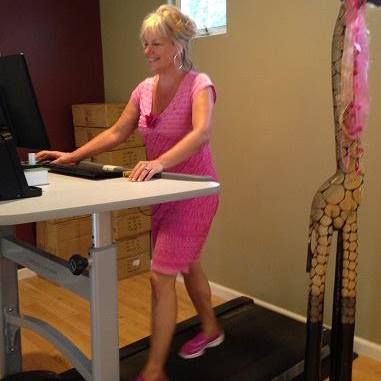
New studies show that sitting for too long can impair health and even shorten life expectancy. It’s difficult to keep active in a world of screens, movie theaters, and desk jobs. However, studies are showing that body awareness and movement is necessary. The goal is to get up at least every hour of sedentary time, to improve posture and metabolic rate.
Medical News Today published an article on proper posture while sitting, showing just how difficult it is to maintain good postural health, with over ten variables to consider. Sitting and staying in one position for more than an hour increases the likelihood of poor posture, decreased metabolism, and inhibits blood flow, which can worsen circulation problems for people with diabetes.
Here are several strategies to lessen their sedentary time and get healthier:
Office Fitness Industry News encourages employers to spend their wellness funds on standing desks or treadmill desks, rather than spending money on a wellness program that offers employees under-utilized gym memberships.
Standing desks help improve posture by allowing people to stand, stretch, and interrupt their sitting time. Simply standing more can help tone muscle, increase metabolism, and prevent diabetes complications. However, some may have difficulty standing for long periods of time. A treadmill desk may feel more natural and compounds the benefits of standing desk: burning extra calories, increasing creativity in the workplace, and potentially even increasing mental acuity for kinesthetic learners or those with ADD.
Even if an employer won’t provide a standing or treadmill desk, just standing up every hour helps counteract a lot of the issues associated with sitting too much.
Taking brief exercise breaks during the day can help tremendously. It doesn’t require going to the gym, or even using your full 10 – 15 minutes in the morning or afternoon. HIIT, or High Intensity Interval Training, only needs to be done in 30 second bursts to be effective. This can include 30 seconds of sprinting in place or doing quick push-ups against a counter (such as in a break room or bathroom). You can find more HIIT exercises that can be done in just 30 seconds, here.
Many people may only get two 10-15 minute breaks per day plus lunch, but that doesn’t mean they have to be chained to a desk at all other times. Refilling water bottles or glasses every hour can help interrupt sitting and also offer a refreshing mental break from staring at a screen or papers. If the job requires reviewing or reading documents, try doing this while standing or pacing to interrupt the monotony of sitting.
Suddenly switching from sitting to standing can be tough on lower extremities, and for those already standing most of the day because of their job, proper foot care is important to lessen fatigue and prevent ending the day on the couch until bed.
Wearing thicker socks and cushioned sole inserts can help during the day. Ending the day with an Epsom salt foot bath and lotion can help ease soreness, increase circulation, and help you get back on feet the next day.
NEAT means non-exercise activity thermogenesis. All it requires is simple stretches, twists, and bends to break up your sitting every hour. Practicing NEAT helps increase circulation, ease back pain and muscle aches, and increase daily range of motion, which will eventually make getting nore active easier too.
Staying mindful about sitting duration and taking any of these steps to move more can help lead to a longer and better quality of life. To see more on how to counteract or avoid sitting disease, see Just Stand’s Office, School, and Home resources.
See our Exercise Resource Page for a bunch of wonderful handouts and movement ideas.

Our Diabetes Detective Team scans the diabetes news to discover the most relevant info that Diabetes Educators need in their daily practice. We post one daily Blog Byte from Monday to Friday. And of course, Tuesday is our Question of the Week. It’s Informative and FREE! Sign up below!
Join us in-person to learn from four expert instructors in beautiful San Diego, CA for an intensive 3 day course to prepare you for the CDCES. All course content has been updated to reflect the updated CDCES content outline.
Our course covers all of the following topics to increase your confidence in taking the CDCES® AND includes 13 online bonus courses!
Sign up for Diabetes Blog Bytes – we post one daily Blog Byte from Monday to Friday. And of course, Tuesday is our Question of the Week. It’s Informative and FREE! Sign up below!
[yikes-mailchimp form=”1″]While most know there are great benefits to getting out in nature, Medical News Today has released a study showing that simply viewing nature can reduce cravings such as smoking, excessive drinking, and unhealthy eating.

Walking in nature has been shown to reduce cortisol and improve mood. Now though, research suggests even simply seeing green spaces through your window can reduce unhealthy cravings!
As health care professionals, we can recommend nature viewing as a stress-relieving intervention that can be incorporated daily for extra health benefits. Whether using public green spaces, looking through your bedroom or office window, or visiting a neighborhood garden, all of these have been associated with lessening the frequency and intensity of cravings.
This is great new for people trying to quit habits such as smoking, excessive drinking, and unhealthy eating. Read more from Medical News Today for full details.
Sign up for Diabetes Blog Bytes – we post one daily Blog Byte from Monday to Friday. And of course, Tuesday is our Question of the Week. It’s Informative and FREE! Sign up below!
[yikes-mailchimp form=”1″]Based on a study published in Diabetes Care in April 2019, it appears that there is a positive association between use of topical corticosteroids and new incident diabetes.

A Danish case-control study collected health care data from people who were diagnosed with new onset Type 2 diabetes in Denmark and the United Kingdom.
A total of 115,218 in Denmark and 54,944 in the UK were identified with new diabetes.
The researchers found that topical corticosteroid use was significantly associated with new onset diabetes of diabetes in both groups. In the Danish group (adjusted odds ratio was 1.35) and U.K. group (adjusted odds ratio was 1.23).
They also found that there was a significant dose response relationship. The more potent the steroid the higher the incident risk of diabetes.
The next question to be addressed is if topical steroid cream increases blood glucose in those with existing diabetes.
Read the “Association Between Topical Corticosteroid Use and Type 2 Diabetes in Two European Population-Based Adult Cohorts” Diabetes Care Abstract here.
Sign up for Diabetes Blog Bytes – we post one daily Blog Byte from Monday to Friday. And of course, Tuesday is our Question of the Week. It’s Informative and FREE! Sign up below!
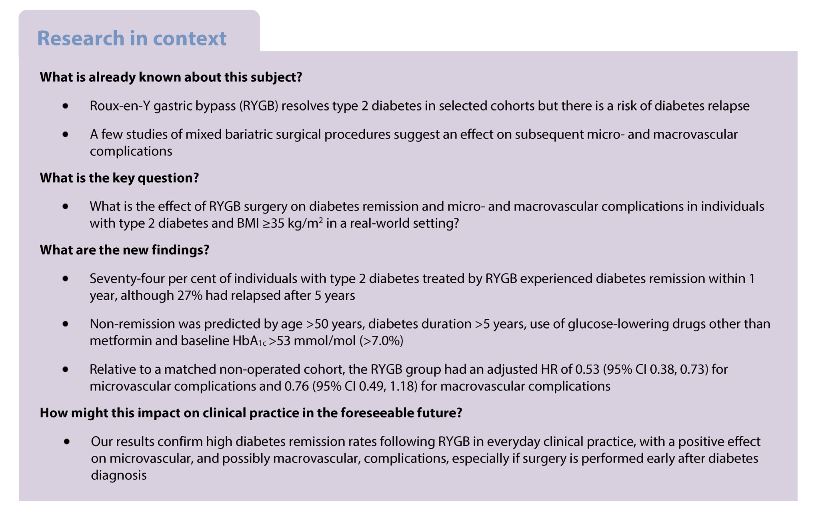
[yikes-mailchimp form=”1″]A recent study conducted by the Aarhus University Hospital in Denmark found that three out of every four persons living with obesity and type 2 diabetes who receive a RYGB ( Roux-en-Y Gastric Bypass) experience remission within one year. Remission is defined as blood glucose levels at non-diabetes range without using diabetes medications.
This study followed 1,111 individuals who had an elevated BMI and type 2

The results of this study for people with type 2 and a BMI of 35 or greater who had RYGB:
In addition, those who had RYGB surgery had a significantly reduced risk of microvascular and possibly macrovascular complications compared to those who did not have surgery.
According to the authors of the study, RYGB is associated with a high remission rate and a decreased rate of vascular complications, especially if surgery in performed early after diabetes diagnosis.
For more information on this topic, read the full study in Diabetologia- Effect of Roux-en-Y gastric bypass surgery on diabetes remission and complications in individuals with type 2 diabetes: a Danish population-based matched cohort study.
Sign up for Diabetes Blog Bytes – we post one daily Blog Byte from Monday to Friday. And of course, Tuesday is our Question of the Week. It’s Informative and FREE! Sign up below!
[yikes-mailchimp form=”1″]
Our Diabetes Detective Team scans the diabetes news to discover the most relevant info that Diabetes Educators need in their daily practice. We post one daily Blog Byte from Monday to Friday. And of course, Tuesday is our Question of the Week. It’s Informative and FREE! Sign up below!
Join us in-person to learn from four expert instructors in beautiful San Diego, CA for an intensive 3 day course to prepare you for the CDCES. All course content has been updated to reflect the updated CDCES content outline.
Our course covers all of the following topics to increase your confidence in taking the CDCES® AND includes 13 online bonus courses!
Sign up for Diabetes Blog Bytes – we post one daily Blog Byte from Monday to Friday. And of course, Tuesday is our Question of the Week. It’s Informative and FREE! Sign up below!
[yikes-mailchimp form=”1″]