
Subscribe
eNewsletter

Ready to get certified?
Free CDCES Coach App

eNewsletter
Free CDCES Coach App
Please check out this fantastic resource by “Mom loves best” – The 111 Benefits of Breastfeeding – For Babies, Moms & Everyone Else


The “Plant-based movement” has gained increasing popularity within the past few years, with more people turning to fruits and vegetables to help improve their health. As interest increases, as does research. A study conducted suggest four main foods that can have big benefits to the heart, such as lowering your cholesterol and blood pressure!
The fours foods said to benefit cholesterol include:
Multiple governmental organizations such as the European Association for the Study of Diabetes are beginning to recognize and further investigate this particular diet as a prevention plan for cardiovascular diseases.
Particularly the recommended foods above, called the “Portfolio” diet, which includes an intake of 42 grams of nuts, 20 grams of soluble fiber, 2 grams of plant sterols, and 50 grams of plant protein. The study concluded, “overall, the analysis found that sticking to the Portfolio diet lowers total cholesterol levels, as well as triglycerides (which are the most common fat types in the human body), blood pressure, and C-reactive protein (which is a marker of inflammation).”
As research continues, we are seeing more and more evidence that a plant-based diet is not only restorative to your health, but can also be preventative.
Check out additional Plant Based Eating Resources here.
You can learn more – “These four foods are proven to lower your cholesterol” by Medical News Today
 According to a statement made recently by Eli Lilly, they have submitted a nasal glucagon treatment to the FDA. The treatment would be for cases of severe hypoglycemia in adults and children with diabetes. This treatment would be the first of it’s kind, a nasal spray, to treat low blood glucose emergencies in those with diabetes.
“The submissions put us one step closer to bringing this innovative rescue medicine to the diabetes community and filling an important need in the treatment of severe hypoglycemia,” said Thomas Hardy, Senior Medical Director, Lilly Diabetes, told Endocrine Today.
The way glucagon is currently administered can be a complicated process, requiring the administer to reconstitute the powder and other steps. This can be a confusing process, particularly if you are a caregiver a a child with diabetes. The new nasal glucagon would deliver the medicine in a powder form in an easy, ready to use format. Many people already understand how to use nose spray, making this functional but also realistic in a hypoglycemic emergency.
“This is important and different. You don’t want people to get low [blood sugar], but they do. It’s not a pretend problem, and the fact that the science is clear that people don’t know how to treat it makes it a real problem. With this nasal glucagon kit, anyone could rescue them.”
To learn more about the new nasal glucagon – Lilly submits NDA for nasal glucagon by Helio Endocrine Today
 By: Sofia Sepulveda
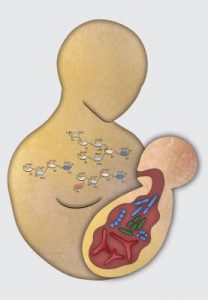
A recent study by the Department of Pediatrics and Child Health has found that breastfeeding has a major impact on the kind of gut bacteria that a baby develops. Babies that were breastfed in this study showed to have more beneficial gut bacteria that decreases risk of obesity in their future.
Breast milk plays a critical role in the present and future health of an individual. Breast milk ” contains, oligosaccharides which are complex sugars that feed specific gut bacteria.” It specifically fed the good bacteria in the gut that has a positive effect on how fat is stored and burned. These oligosaccharides are not present in infant formula. This may contribute to increased weight and risk of obesity for formula fed babies.
This particular study assessed over 1,000 infants during their first year of life. Stool samples were taken during month 3 and month 12 and were used to test for gut bacteria diversity. Weight differences became apparent around the 3 month mark, as the babies receiving formula were typically overweight or at risk. Only 19 percent of the babies who were breastfed were overweight or at risk compared to 33 percent of the formula fed babies.
The research emphasizes that breastmilk has “many important bioactive components that influence appetite and weight gain, including growth factors and hormones, which are not present in infant formulas.” This weight difference is most likely due to the nutrients contained in breast milk that are not found in formula.
Microbes have a very special role in the way that we digest food. Individuals accumulate these microbes in many different ways and may be affected by, “the type of delivery, whether the baby or mother gets antibiotics, and what the baby is fed and when solid foods are introduced.” Not having a healthy array of microbes is associated with weight gain and increased the likelihood of obesity during infancy.
 For more information, visit “Infant formula could change gut bacteria, contribute to childhood obesity”
To help get the word out visit World Breast Feeding Week Resource Page
You can also learn more about Women and Diabetes with our webinar below or via the “Women and Diabetes Resource Page”
Here at Diabetes Education Services, we are excited to celebrate “World Breastfeeding Week” for so many reasons!
“There could be greater health benefits for women from breastfeeding than previously recognized,” said lead study author Erica Gunderson of the Kaiser Permanente Division of Research in Oakland, California.
Compared to women who didn’t breastfeed at all, mothers who nursed babies for at least six months were 48 percent less likely to develop diabetes.
Rates of breastfeeding are on the rise. More than 75% of women initiate breastfeeding and by one year 25% are still breastfeeding. There are many wonderful benefits linked to breastfeeding, lowering the risk of allergies, obesity, respiratory infections and now diabetes!
In spite of the benefits of breastfeeding, some women may face barriers to success, including lack of social support, lack of paid leave and lack of onsite childcare. Since breastfeeding provides a tremendous benefit for the child, mom and society, we want to keep encouraging women to breastfeed and create environments that support success.
“Longer breastfeeding tied to lower diabetes risk for mothers” – Lisa Rapaport for Reuters Health
To help get the word out visit World Breast Feeding Week Resource Page
You can also learn more about Women and Diabetes with our webinar below or via the “Women and Diabetes Resource Page”

Want to learn more about Women and Diabetes, enroll in our Level 2 – Women and Diabetes online course:
Women with diabetes are confronted with a variety of issues that require special attention, education and understanding. This course reviews those special needs while focusing on Gestational Diabetes and Pre-Existing Diabetes. Included are the most recent diagnostic criteria, management goals and prevention of complications during pregnancy. A helpful review for the CDCES® Exam and for those who want more information on Women with Diabetes.
We will be providing a Live Webinar Update on May 18, 2018.

 At Diabetes Ed Services, we are passionate about getting the word out on sugar! We even created a “Joy of Six” campaign, to raise awareness on the health risks of added sugar and the benefits of enjoying less. This awareness is not only important to the diabetes community, but for anyone looking to lead a healthy lifestyle.
A recent study was conducted in Germany that measured the correlation between a parent’s knowledge of sugar count in food and childhood obesity. Findings concluded that parents who underestimated the amount of sugar in common food products, were more likely to have an overweight child.
In the United States 18% of elementary school age children are obese.
It is almost impossible to monitor a child’s diet completely, particularly with cafeteria lunches and sleepovers. The cause of childhood obesity is complex but one thing is clear; too much added sugar and obesity are strongly correlated.
The study suggests that parents can help children stay at a healthy weight by addressing their sugar consumption.
Start by setting a sugar goal for the family. The World Health Organization and American Heart Association recommend up to 6 teaspoons a day (or 24 gms) of added sugar.
The entire family is encouraged to read labels, to stay on target and reduce added sugar consumption.
One strategy that can help, “parents (can) sweeten foods themselves. “Mix natural yogurt with fruit,” Dallacker says. “Parents who do this would hardly feel compelled to add 11 sugar cubes.””
Learn more – “Parents Aren’t Good Judges of Their Kids’ Sugar Intake” by The New York Times
Learn more about sugar intake, ways to avoid sugar and how to spot hidden high sugar offenders with our “The Joy of Six” resource page.
Download the Sugar Rush app from Fooducate to see how much sugar has been added to your food. Just scan the bar-code of any product and instantly see a breakdown of naturally occurring and added sugar.
 Full-fat dairy is typically thought of as being detrimental to health due to the high content of saturated fats. However, a new study begins to question this commonly known ideology.
A recent study conducted by Dr. Dariush Mozaffarian from the Friedman School of Nutrition Science and Policy at Tufts University, challenges this popular opinion. The study reveals that whole-fat dairy does not seem to raise cardiovascular risk. Interestingly enough, some of the fats present may actually reduce your risk of heart attack and stroke.
Until recently, governmental organizations such as the United States Department of Agriculture (USDA) and the U.S. Department of Health & Human Services have advised people to avoid full-fat dairy in order to steer clear of “bad” cholesterol.
However, after studying the fatty acids contained in full-fat products, “none of the three fatty acids examined correlated with the risk of total mortality. In fact, high circulating levels of heptadecanoic fatty acid were associated with a lower risk of death from heart disease.” In fact, adults with higher levels of fatty acids overall, were 42% less likely to die of stroke.
As consumers we are often fed conflicting opinions about diet, which can make staying knowledgeable about all the options seem overwhelming. However, as diabetes educators, we want to stay aware of the many changes and developments made in the nutrition world and how this new information can benefit our diabetes community. The question now is, should the dietary guidelines be revised?
This research was funded by NIH, read the full article here. “Serial measures of circulating biomarkers of dairy fat and total and cause-specific mortality in older adults: the Cardiovascular Health Study”
To learn more, enjoy the summary article “Full-fat dairy may actually benefit heart health” by Medical News Today
Test your knowledge by clicking here.
This weeks question reflects the new ADA Guidelines for Cardiovascular Disease and Diabetes.
And we invite you to join our newly updated webinar on this important and critical topic.
 Cardiovascular Disease and Diabetes
Want to learn more about the current standards for Diabetes and CV Disease? This course takes a close look at insulin resistance syndrome and vascular complications. We discuss the impact of vessel disease from the heart to the toes. Included is a discussion of identifying and preventing vascular disease and the goals of care.
Cardiovascular Disease Management- American Diabetes Association Standard of Care – Jan 2018
Lower Extremity Information
Plant Based Eating Resources